
NHTSA: Nearly 1.2 million Tesla Model 3 and Model Y vehicles under investigation

The National Highway Traffic Safety Administration (NHTSA)’s Office of Defects Investigation (ODI) says it has received 156 complaints alleging a suspension failure in model year (MY) 2018-2020 and 2023 Model 3 and MY 2021-2023 Model Y vehicles.
The estimated population of affected vehicles is 1,198,300. ODI says none of the reported incidents involved crashes, fires, injuries, or fatalities.
According to a July 29 ODI notice, the suspension failure involves detachment of the front lower lateral link, which can potentially cause a loss of vehicle directional control.
“In most cases, there was no advance warning or indication that the suspension failure would occur,” the notice states. “Some cases cite noises occurring prior to failure, but note that the vehicle provides no visual warnings. Once the failure occurs, the vehicle may not be drivable, thus requiring a tow.”
The ODI notes that Tesla has previously recalled vehicles for lateral link detachments through two recalls — Recall 21V-835 and Recall 23V-235. The first addressed 2,791 MY 2019-2021 Tesla Model 3 vehicles due to a production issue, and the latter addressed 422 2018-2019 Tesla Model 3 vehicles that had experienced similar failures to those recalled under 21V-835.
“The subject failures for this investigation exceed the scope of these recalls and do not appear to be related to the production issue that prompted those recalls,” the ODI notice states. “ODI is opening this Preliminary Evaluation to determine the underlying cause, scope, and severity of the potential problem and to fully assess the potential safety-related issues.”

Reuters reports that Tesla ranked seventh by recall volume in Q2 and has issued three recalls affecting about 234,000 vehicles, according to recall management firm BizzyCar.
Reuters also reported in December 2023 that Tesla “had internally tracked chronic failures of suspension and steering components for years, even as it frequently blamed the damage on driver abuse in communications with customers and U.S. regulators.”
On July 30, the NHTSA announced a series of actions “to accelerate American automated vehicle (AV) innovation.”
It says the initiatives “build on the Trump Administration’s ongoing efforts to help developers safely deploy AVs while enhancing road safety for Americans.”
In a press release, NHTSA states that, as a part of the U.S. Department of Transportation’s Innovation Agenda, Secretary Sean Duffy has directed NHTSA to implement the following AV policy changes:
-
- “Allow Zoox to commercially deploy its robotaxis through a temporary exemption: This temporary exemption will allow the commercial deployment of up to 2,500 vehicles annually for two years, subject to an enhanced, adaptable oversight structure that can evolve as Zoox’s technology advances.
- “Accelerate development of first-ever AV performance standards through a partnership with SAE Industry Technologies Consortia (ITC): This partnership will fund a three-year, $5 million “A2SCEND” consortium, bringing together experts to gather data and accelerate creation of the first-ever AV performance standards. This project will inform a single national standard for AV safety to eliminate the patchwork regulatory landscape that has stifled innovation for years.
- “Publish an interim final rule that allows vehicles manufactured prior to an exemption to be eligible for a commercial deployment exemption: This rule will modernize the application process and improve access to exemptions for innovators, including AV developers, by granting the NHTSA Administrator the discretion to apply temporary exemptions to vehicles manufactured prior to the effective date of an exemption grant.
- “Streamline the application process for Part 555 exemptions by updating guidance and soliciting feedback from the public: By updating the Part 555 exemption process—which allows automakers to temporarily sell a limited number of non-compliant vehicles, primarily to test new technologies—NHTSA is aiming to create a more flexible oversight structure for exemptions and summarize recent AV framework activities, including expanded exemption pathways, streamlined crash reporting, and ongoing efforts to modernize Federal Motor Vehicle Safety Standards (FMVSS).
- “Establish a new Federal Docket for public feedback on NHTSA’s updated safe AV development and deployment guidance: NHTSA is updating its technical guidance for AVs for the first time since 2017—focusing on key safety areas like emergency responder interactions, safety management systems, remote assistance, and post-crash behavior to help the industry scale up driverless deployments safely.”
NHTSA says it’s also reviewing an exemption application from Robomart, Inc., which requests a temporary exemption from certain FMVSS No. 500 requirements for a low-speed vehicle operated by an ADS without a human driver onboard. The press release states that NHTSA will publish a separate notice seeking public comment on the merits of the exemption request once the initial evaluation is complete.
“NHTSA supports the safe development and deployment of automated vehicles. By removing unnecessary barriers to innovation, developing industry guidance, and providing strong enforcement oversight while we create performance requirements, NHTSA is taking a balanced approach to AV regulation,” said NHTSA Administrator Jonathan Morrison. “These advancements will ensure that the United States continues to lead the world in AV technology in a safe and responsible manner.”
Images
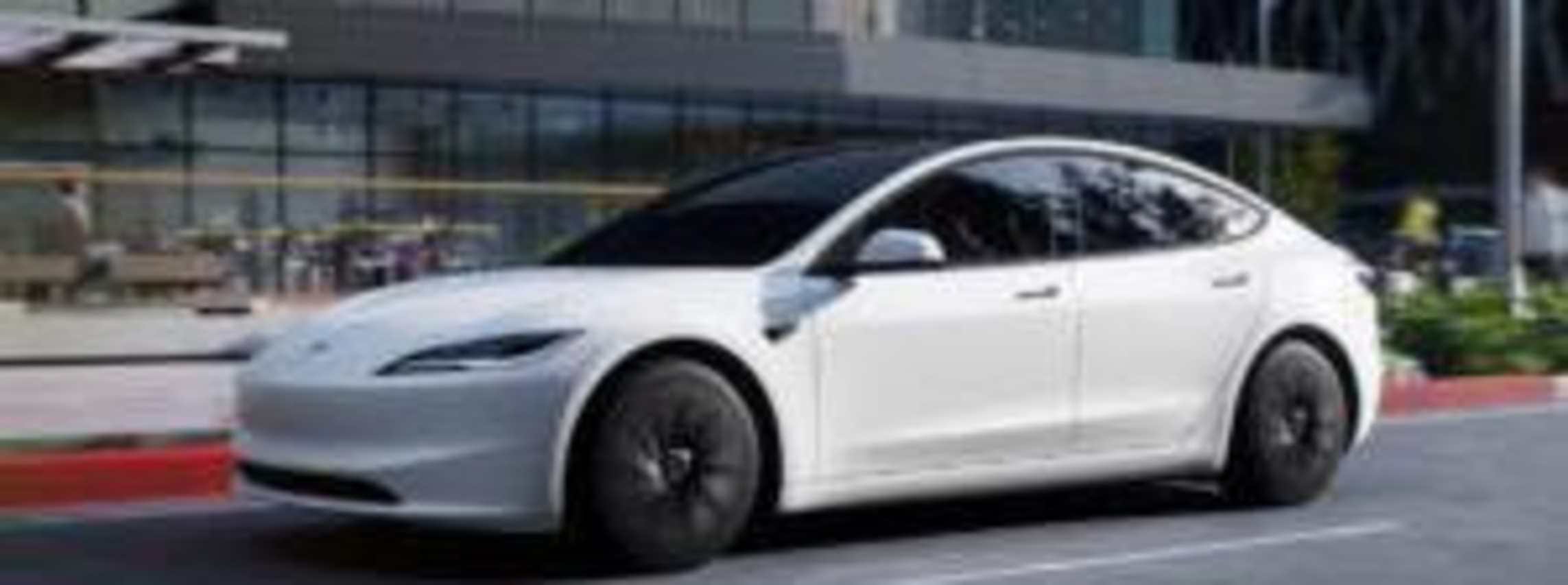
Featured image: Telsa Model 3 (Provided by Tesla)
Tesla Model Y (Provided by Tesla)