
Former Montana insurance official urges OEM-compliant repairs to protect consumers

Frank Cote, former chief deputy insurance commissioner and government affairs director for the Montana Commissioner of Securities and Insurance (CSI), said the collision repairs that auto manufacturers say need to be done should be.
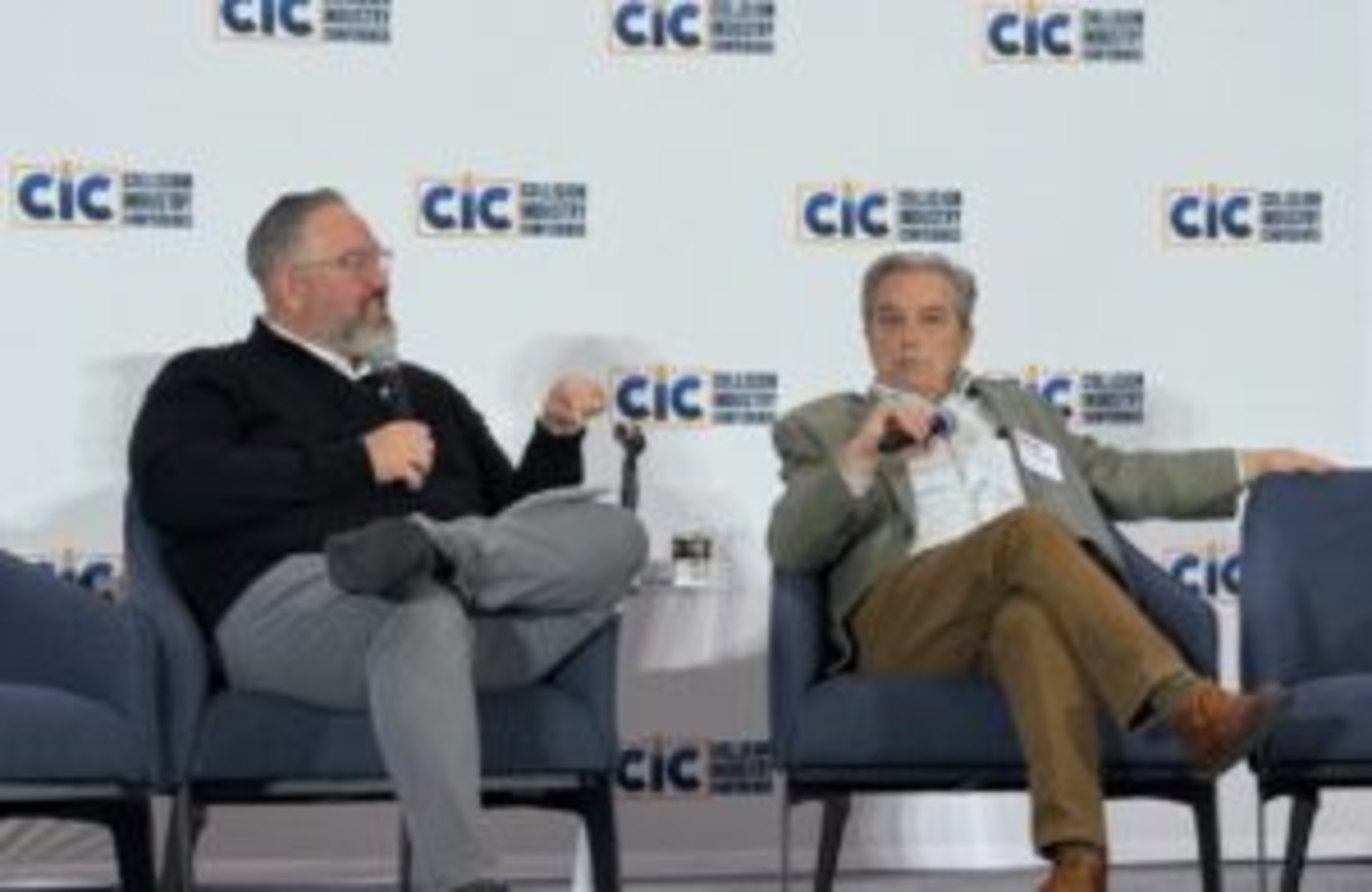
Cote was interviewed by Society of Collision Repair Specialists (SCRS) Executive Director Aaron Schulenburg on stage during the Collision Industry Conference (CIC) Nov. 4 meeting in Las Vegas, as part of the “Industry Experiment” podcast-style segment. The discussion centered on consumer protection from the perspectives of collision repairers, insurers, and regulators; the challenges regulators face; and how accountability could be strengthened to improve consumer interest safeguards.
“We want to understand what the manufacturer says because we don’t want to be doing things that aren’t needing to be done and adding cost, but if the manufacturer is saying it needs to be done and you don’t do it, think about that $42 million claim [John Eagle case] because that’s you,” Cote said.
“If I’m a direct repair shop and I’m sitting in this room right now, I’m nervous. First thing I’m going to do is go back and look at what my contract says for that direct repair [program] because am I liable if I don’t do the safety checks because I’m not getting paid for them?”
In March, with a 49-1 vote in favor, Montana bill SB 356 was moved out of the Senate and to the House Business and Labor Committee, which would have required insurance to cover OEM procedures. The bill was later tabled in the House and died in the standing committee.
Bill sponsor, Sen. Barry Usher (R-19), told the Senate during a reading of the bill that it was about safety inspections.
“There are standards that manufacturers have,” Usher said, such as those that include safety inspections of seatbelts and air bags following a collision.
He added that some insurance companies are fighting OEM procedures that include safety inspections.
“This [bill] gets them in line and guarantees more safety for the consumers,” Usher said.
Cote shared at the November CIC meeting that he’s battling with an insurance company over his personal 2024 Chevrolet Silverado. He said the company doesn’t want to pay the full cost for blending and is pushing back on following proper painting procedures and safety checks. When he spoke at the SEMA Show, he was looking at paying 25% of the repair cost out of pocket.
“I’m going to get made whole,” he said. “No doubt in my mind, I will be made whole, but it won’t be because of anything other than the experience and expertise I have. And that’s not to sound arrogant, it’s just I’ve been doing it a long time. The average consumer doesn’t have that, and they’re going to give up… I’ve been on the fight for four months now, and it still hasn’t been resolved, but it will be.”
Cote mentioned a right-to-appraisal bill is expected to be filed during Montana’s next legislative session. Texas and Washington passed RTA bills earlier this year after several years of work with legislators.
“It literally says in the statute that the Montana Insurance Department shall interpret these laws to the benefit of the consumer,” Cote said.
“That is very clear to me that we’re not there to represent the insurance industry or the body shops or whoever. We’re there to represent the consumer.”
About 18 months ago, Cote noticed many consumer complaints coming to CSI about the Consumer Affairs Division siding with insurers.
“When I looked into it, what I found is that the consumer isn’t educated — the consumer doesn’t understand what they’re fighting for,” he said. “They just know they have money out of pocket or whatever the situation was. They filed a complaint, the industry responded, and we closed the file because the consumer didn’t know how to respond.”
In response, Cote said CSI began allowing body shops to file complaints on behalf of their customers.
“When the response from the industry came, there was an educated person on the other side who could then respond to that complaint,” he said. “That ultimately helped resolve a lot of complaints to the favor of the consumer.”
Schulenburg noted the outcome of a complaint in favor of consumers involved blending operations, and the apparent knowledge that Cote had on the topic in his response last year, when he was still deputy insurance commissioner.
“While we appreciate that Liberty Mutual has issued numerous payments on this claim, that does not justify it from paying for all costs of covered repairs that are reasonable and objectively supported by evidence,” Cote wrote.
For several years, collision repair facilities often dealt with inadequate labor times in estimating systems for blending until a 2022 study conducted by SCRS led CCC/MOTOR, Audatex, and Solera to make changes.
The study found that blending a panel takes, on average, over 30% more time than a full refinish of the same panel, rather than the 50% less time allocated in the three estimating systems.
“I understood that in order to do my job as the deputy insurance commissioner, it was imperative for me to become educated in how this operates,” Cote said at the CIC meeting.
He added that he worked with collision repair shops to get educated on the issue.
“One of the things I want to make sure that I did from the stage here today is encourage the folks in this room that are in the collision repair industry to reach out and help educate their insurance departments,” Cote said. “It is critically important that they do that… Go to the deputy commissioner and their Consumer Affairs Division and talk to them about what it is you want to do in helping them do their job and educating them… Why aren’t insurance department people in the room [at CIC meetings]? It would be very beneficial to have them be invited to this program and for them to see and understand the importance of OEM repairs and those kinds of things.”
Schulenburg asked Cote what state insurance departments can do if an insurer doesn’t want to pay for a part of the repair that the shop says is necessary, and if the customer wants it done, they have to pay out of pocket.
“That’s where it gets tricky, and it’s very fact-specific,” Cote said. “There are times when it is clear that the consumer has been wronged, and we can fix that based upon our statute and our rules, and our court case law. But there are times when it is, as the kids would say, ‘It’s a 67.’ As a regulator, I don’t want to say [to] the insurance industry, ‘You’re evil.’ [And] ‘They’re bad, you just need to pound on them.’ Because you don’t. You need to have a good working relationship with the industry.”
He added that based on his experience, a good working relationship with insurance companies meant that, in some cases, consumers were given the benefit of the doubt by the insurers. Cote noted, however, that with fewer adjusters coming to shops and everything done by phone or computer, body shops are losing touch with insurance companies.
When asked what one bold reform he would recommend to improve consumer protection that all states could consider, Cote said a set of procedures or guidelines for the insurance and auto repair industries, outlining what needs to be done and how.
“Sort of a blueprint, a template, something so that everybody can be on the same page,” he said.
Specific to how in-vehicle technology might potentially present new risks for consumers or different avenues for them to advocate for themselves, Cote said the insurance industry should benefit from it.
“In theory, it is to make that vehicle much more safe, and ultimately, that helps the insurance industry,” he said. “In some ways, it hurts the collision repair industry because, in theory, there’s less accidents, but it really should be helping the insurance industry. I get that it’s expensive to fix that technology, but ultimately, they’re saving money, and they should be wanting as an industry to make sure that all the safety checks are done after a collision… because that will simply help them in the long run.”
Images
Featured image: Society of Collision Repair Specialists (SCRS) Executive Director Aaron Schulenburg interviews Frank Cote, former Montana deputy insurance commissioner, on stage during the Collision Industry Conference (CIC) Nov. 4, 2025, meeting in Las Vegas.