
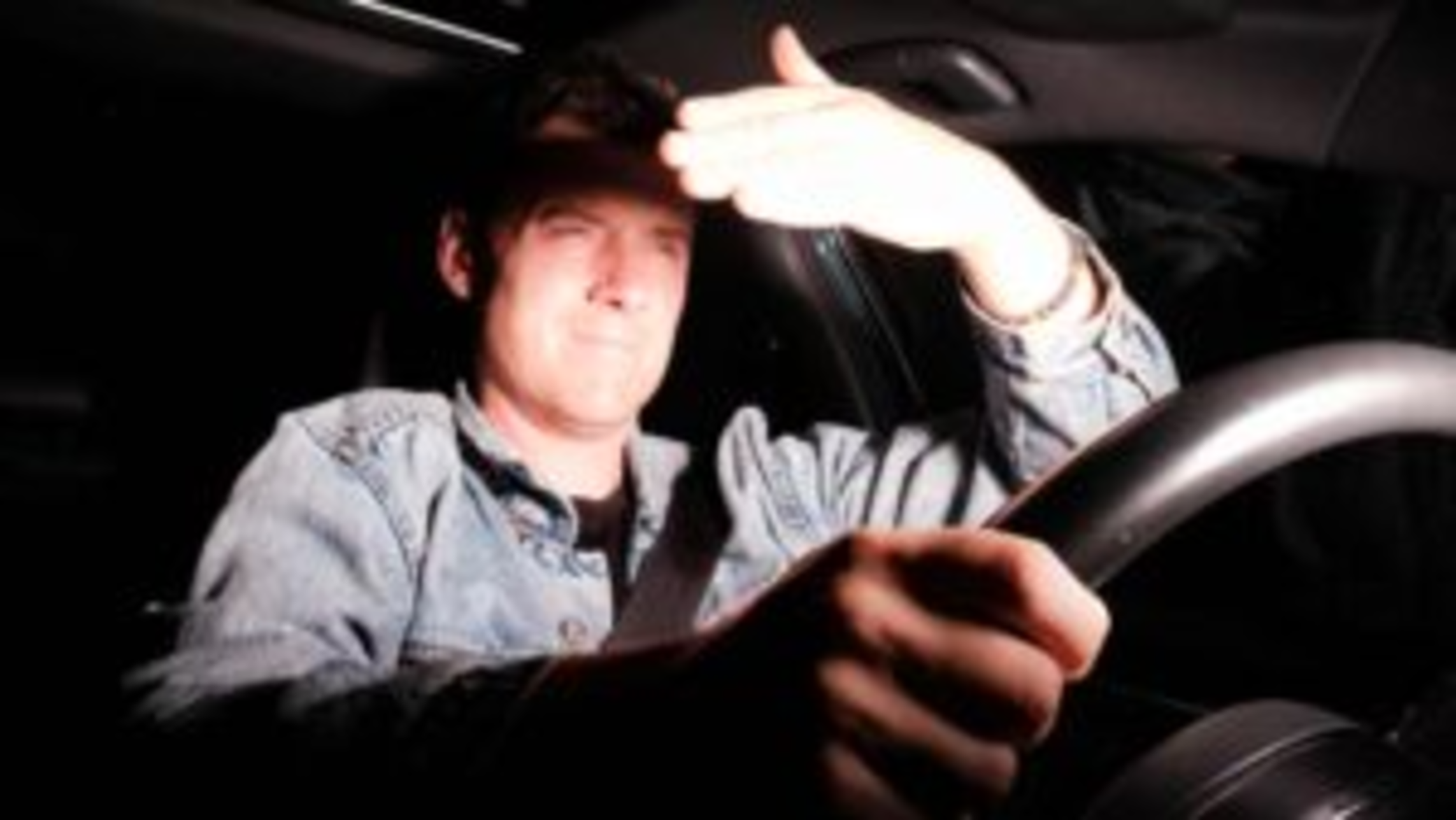
IIHS study says crashes haven’t increased due to headlight glare

The Insurance Institute for Highway Safety (IIHS) reports that while complaints are on the rise from drivers about blinding headlights, glare only causes “a tiny fraction” of nighttime crashes.
“Although it can certainly be uncomfortable, headlight glare contributes to far fewer crashes than insufficient visibility,” said IIHS President David Harkey in a press release. “But that doesn’t mean reducing glare isn’t an important goal — one that we’ve long focused on at IIHS in addition to improving illumination.”
IIHS found that the percentage of nighttime crashes caused by headlight glare changed little over the past decade. And from 2015 to 2023, it was cited as a factor in only one or two out of every 1,000 nighttime crashes across 11 U.S. states, according to IIHS’s new study.
“While the amount of light given off by headlights increased over this period — slashing crashes caused by poor visibility — there was essentially no change in how often glare was mentioned in crash reports,” the release says.
Federal headlight standards for minimum and maximum brightness haven’t changed since 1997; however, the headlight rating program begun by IIHS in 2016 has helped to drive a shift in headlight design in the U.S. fleet, according to the release.
The program has led manufacturers to use LED headlamps on more models and pay attention to headlight aim. Headlights are penalized in the program if low beams produce excessive glare.
When IIHS released its first headlight ratings in 2016, one out of more than 80 headlight systems evaluated received a good rating, compared with about 51% of the headlights tested on model year 2025 vehicles. About 16% of the headlights tested today are rated marginal or poor, compared with 82% in 2016.
“Those changes have resulted in a dramatic reduction in crashes that occur due to poor visibility,” the release says. “A previous IIHS study of police-reported crashes showed that vehicles with good ratings for visibility in the IIHS headlight test are involved in 19% fewer nighttime single-vehicle crashes and 23% fewer nighttime pedestrian crashes than vehicles with poor-rated headlights.”
IIHS says glare-involved crashes are harder to quantify because they often cause the affected driver to run off the road while the glare-producing vehicle isn’t involved in the crash. Without identifying the uninvolved vehicle, there’s no way to know how its headlights perform in IIHS tests or whether the driver neglected to switch from high beams to low beams.
The new study sought to address this by evaluating how often glare is cited as a factor in crashes now that headlight ratings have improved.
IIHS Principal Research Engineer Matthew Brumbelow examined data from 11 states in which police can list glare as a contributing factor in crash reports; however, only two of the states distinguish between glare at night and glare caused by the sun.
Out of around 24 million total crashes, fewer than 150,000 were caused by glare, and a far smaller fraction were both coded for glare and occurred at night, according to IIHS.
“With a few exceptions, these nighttime glare crashes accounted for only one or two out of a thousand crashes per year in all 11 states,” the release says. “Moreover, while this glare rate ticked up and down a little, it remained relatively constant over the study period and certainly did not show a steady increase coinciding with the improvement in IIHS headlight ratings. In fact, the glare rate was highest in 2015 and lowest in 2020.”
“Drivers older than 70 seem to be most affected by headlight glare, while those between 55 and 60 don’t appear to have an increased crash risk,” Brumbelow said in the release. “It’s also possible that the better visibility that newer vehicles provide for their own drivers provides some defense against glare from oncoming headlights, in the way that other people’s headlights don’t seem as bright during the day.”
Along with improving the visibility provided by headlights, automakers have made progress in reducing the amount of glare their headlights produce. In IIHS testing, 21% of headlights available on 2017 models produced excessive glare. For 2025 models, that dropped to 3%. In the institute’s scoring system, excessive glare makes it impossible to earn a good or acceptable rating.
Headlight glare still can be improved, IIHS added.
“One way to address that problem is to focus on preventing the crash types associated with glare,” the release says. “Reducing lane departures — with improved lane markings and in-vehicle lane departure warning and prevention features, for example — could cut the already small number of glare-related crashes by more than half.”
High-beam assist, which automatically switches headlights from high beams to low beams when it detects vehicles ahead, could mitigate the problem of drivers neglecting to do so manually, IIHS said. The IIHS rating program awards bonus points for this feature.
Adaptive driving beam headlights are another promising development, according to IIHS. These systems adjust the headlight beam pattern to dim only the portions directed at other vehicles while maintaining full high-beam illumination otherwise. However, regulatory hurdles have delayed their adoption in the U.S., and no vehicles in the country were equipped with adaptive driving beam headlights by the end of 2024.
Images
Featured photo provided by IIHS