
Toyota, MIT complete 100th project through collaborative research center

Toyota marked the completion of its 100th project through the Collaborative Safety Research Center (CSRC).
Massachusetts Institute of Technology (MIT) say a key foundation for the 100th project is CSRC’s ongoing support for MIT’s Center for Transportation and Logistic’s (CTL) Advanced Vehicle Technology (AVT) Consortium.
“AVT was conceptualized over a decade ago as an academic-industry partnership to promote shared investment in real-world, naturalistic data collection, analysis, and collaboration — efforts aimed at advancing safer, more convenient, and more comfortable automobility,” Bryan Reimer, founder and co-director of AVT, said in a release.
AVT has drawn together over 25 organizations — including vehicle manufacturers, suppliers, insurers, and consumer research groups — to invest in understanding how automotive technologies function, how they influence driver behavior, and where further innovation is needed, he said.
“This work has enabled stakeholders like Toyota to make more-informed decisions in product development and deployment,” Reimer said.
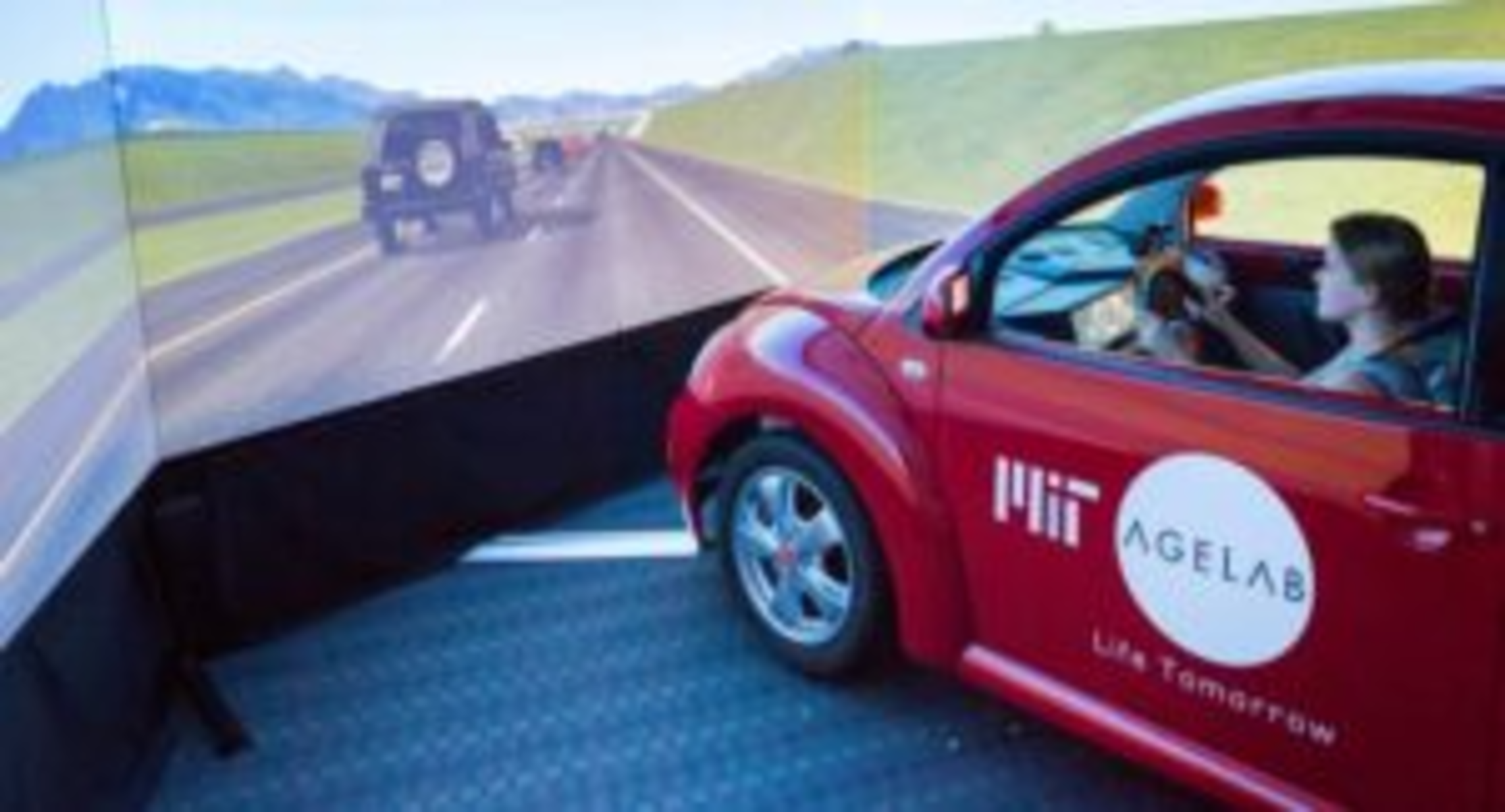
A more than decade collaboration between MIT’s Age Lab and Toyota is recognized as a key contributor to advancement in automotive safety and human-machine interaction, the release says.
The 100th projects markes a milestone for the collaboration, Reimer says.
“Toyota, through its Collaborative Safety Research Center, is proud to be a founding member of the AVT Consortium,” says Jason Hallman, senior manager of Toyota CSRC, in the release. “Since 2011, CSRC has collaborated with researchers such as AVT and MIT AgeLab on projects that help inform future products and policy, and to promote a future safe mobility society for all. The AVT specifically has helped us to study the real-world use of several vehicle technologies now available.”
Technologies such as lane-centering assistance and adaptive cruise control are among the technologies that AVT has specifically studied, the release says. It says the widely-used technologies benefit from an understanding of how drivers interact with automation.
“AVT uniquely combines vehicle and driver data to help inform future products and highlight the interplay between the performance of these features and the drivers using them,” says Josh Domeyer, principal scientist at CSRC, in the release.
MIT’s pedestrian-driver interaction research with CSRC helped develop a foundational understanding that drivers and pedestrians use their movements to communicate during routine traffic encounters, Domeyer says in the release.
“This concept informed the deployment of Toyota’s e-Palette at the Tokyo Olympics, and it has been captured as a best practice in an ISO standard for automated driving system communication,” he added.
The driving datasets continue to serve as a foundation for behavioral safety strategies, the release says. This includes identifying moments of distraction to understanding how drivers multitask behind the wheel.
“By studying the natural behaviors of drivers and their contexts in the AVT datasets, we hope to identify new ways to encourage safe habits that align with customer preferences,” Domeyer says. “These can include subtle nudges, or modifications to existing vehicle features, or even communication and education partnerships outside of Toyota that reinforce these safe driving habits.”
While automakers research how to advance autonomous driving features, a new advocacy group is working to create regulations around self-driving technology, according to Wired.
Safe Autonomous Vehicles Everywhere in the United States (SAVE-US) was formed as a safety organization that seeks to create a unified set of responsible, commonsense regulatory guidelines around autonomous vehicles, their website says.
“Today, autonomous vehicles operate under a patchwork of insufficient guidelines that endanger lives and allow carmakers to set their own safety standards with minimal oversight,” the webpage says. “We aim to ensure that the benefits of autonomous vehicles are realized for drivers, passengers, and pedestrians alike, accompanied by strong safety standards, transparency and oversight, and meaningful accountability.”\
Shaping state and national policies that put safety first, foster public trust and create a responsible path for the future of transportation is the goal of the organization.
Wired reports that currently 14 states don’t have autonomous vehicle related laws and those that due range from stringent (California) to relatively permissive (Arizona, Texas).
=According to Wired, the concept for the organization was born after two SAVE-US advisors met outside administrative hearings where the California Department of Motor Vehicles argued Tesla should temporarily lose its license to manufacturer and sell vehicles because of alleged false advertising of its Full Self-Driving and Autopilot driver assistance features. A judge has yet to make a decision in the case.
Autonomous Vehicle industry Association (AVIA) representatives and repeatedly attended state and federal meetings voicing support for regulatory frameworks that provide guidelines to automakers.
During a hearing in Texas last year, AVIA General Counsel Ariel Wolf said AVIA supports regulation adjustments that allow the Department of Motor Vehicles (DMV) to suspend or revoke the registration of AVs in certain circumstances. It also supports giving the DMV the authority to review AV registrations.
Nick Steingart, Alliance for Automotive Innovation (Auto Innovators) director of state affairs, said asked the legislators to consider a few key points as they moved forward with future regulations. This includes allowing the federal government to regulate design structure and safety standards while the state government regulates the operation of vehicles, licensing regulations, and rules of the road.
IMAGE
Feature photo courtesy of MIT Center for Transportation and Logistics.