
Ford CEO puts focus on repair technician shortage impact to the economy during town hall

Ford CEO Jim Farley made the need for more repair technicians a focus in his discussion on the essential economy during a Ford Pro Accelerate conference on Tuesday.
“Today, this morning, there will be 600,000 empty stalls in our dealerships, no technicians to work in them,” Farley said during the opening discussion of the town hall.
He said Ford puts an incredible focus on recruiting technicians.
“Every month, my leadership team around the globe gets together and we measure the shortage of technicians in every country,” Farly said.
The shortage of trade workers is a major problem for the economy, he said.
“The problems in the essential economy are problems for all of us,” Farly said. “They lead to inflation, higher housing costs, delays in projects, lack of opportunity. But the success in the essential economy will unlock so much opportunity for all of us.”
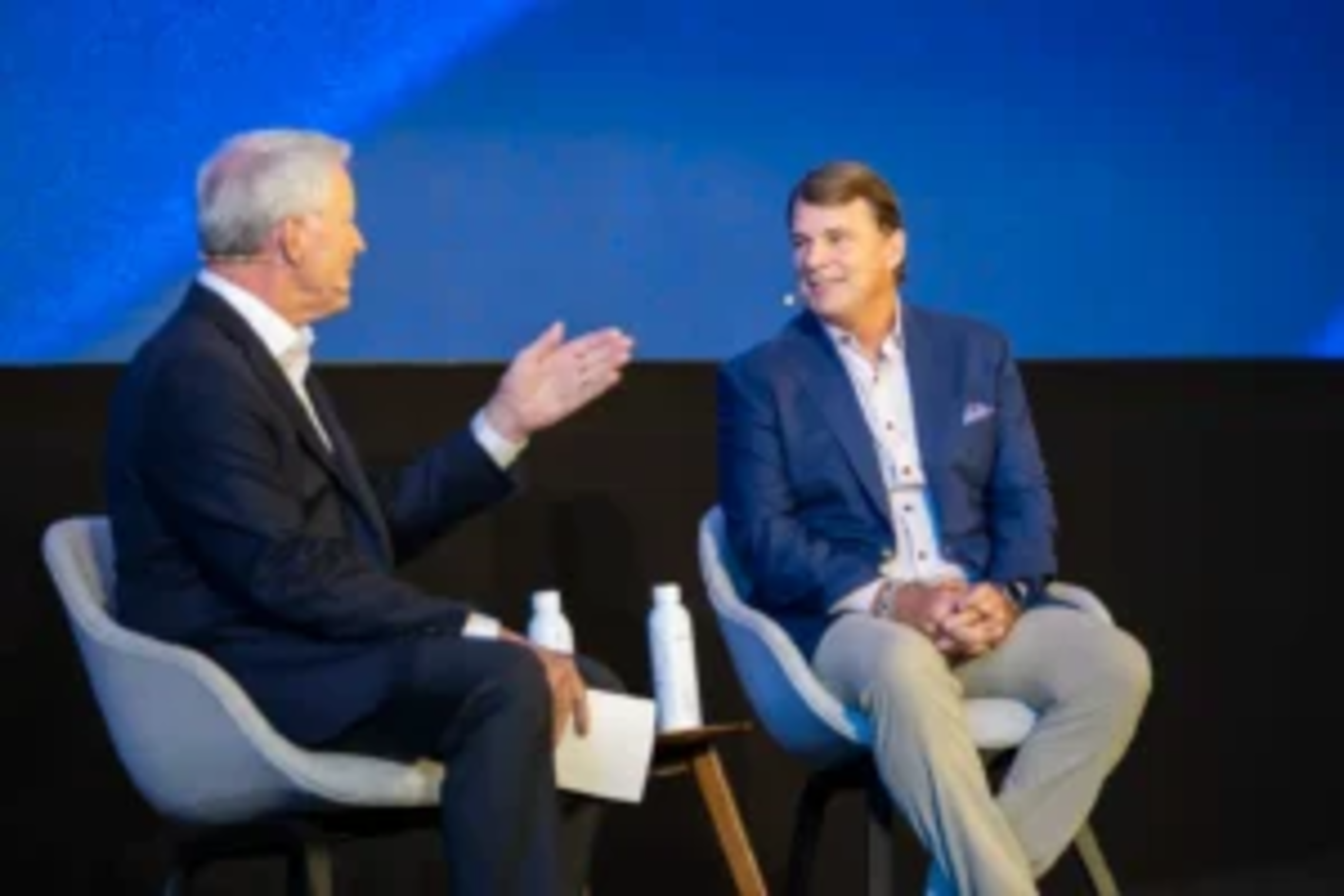
During the first hour of the town hall, Farley discussed issues that are impactful to the economy with David Westin of Bloomberg.
Farley described apprentice programs in other countries, explaining how workers at Ford plants in Germany started out as apprentices at a younger age while in school.
“When my team and I travel to places like Germany, China, and Korea, we see that we’re pretty far behind,” Farley said. “They get it. What they do is invest. If anything comes out of today, it’s this: we need to figure out how to invest in the people who build things.”
Farley said one of the biggest problems in our nation is the hesitancy of people to go into trade jobs.
“As a society, we don’t really reward people for doing this type of work like we used to,” Farley said.
Society has put more emphasis on four-year colleges and white collar jobs, he said.
Farley said he started looking at the technician shortage after talking to entry-level workers during the UAW strike. He said the new agreement was to get full wages for entry-level workers. He added that entry-level workers told him during the strike that they needed three jobs to make ends meet.
There are $100,000-plus jobs that are unfilled but need training, Farley said.
“You can’t work on a diesel F150 if you haven’t been trained for a minimum of five years,” Farley said.
Westin asked if AI would help with the shortage.
“There will be a lot of productivity opportunity,” Farley said. “If you are repairing a heavy duty F150, augmented reality AI is a game-changer. Just ask my team, they will tell you. We need to use AI to make those repairs much simpler for people, but it’s also a risk. The efficiency in automation always rips through our economy, and it will take jobs away from all of our economy.”
However, very few AI companies pitch ideas that would help make car repair more efficient, or assist factory workers, he said. He said most AI companies focus on white collar efficiency.
AI also means the construction of more data centers, Farley said.
“Who is going to build all these data centers? We have huge construction companies here today, they will tell you this is a big issue for them,” Farley said.
Westin said, “We have a tendency in this country to say, ‘The government should fix it.’ How much of this is a government issue? How much is it a private sector issue, or other?”
Farley said the private sector should be involved in making the change but small business owners, like Ford Pro consumers, don’t have the same resources.
“I don’t think we can rely on the government to do this, but they can do more than they are,” Farley said. “It comes down to our communities. We need our communities to step up, and Ford can support the communities.”
He said this includes state, county, and local educators as well as local businesses working together.
Farley said he does see momentum from mayors and county leaders, but the conversation is harder the higher it goes.
Yet, later in the day, U.S. Secretary of Labor Lori Chavez-DeRemer sat on a panel where she spoke about the federal government’s attention on the issue, according to a Ford blog.
“We’re up against a timeline,” she said. “We have to make sure the diversity of educational options is right and that everybody is at the table.”
During Farley’s conversation, Westin mentioned that the Trump administration has called for an emphasis on vocational training. He asked if Ford was seeing that yet.
“Not yet, but what we do see is more local leaders willing to make the change,” Farley said. “We have to come up with some programs. If Ford has to take the lead, or other companies have to sacrifice our short-term profitability to put more people in the workforce as apprentices, I think we are going to have to.”
He said this option doesn’t work for small businesses.
Larger businesses need to invest in vocational schools so that small businesses have a place to recruit workers, he said.
Farley said he’s started having discussions with philanthropy organizations, such as Bloomberg Philanthropies.
When asked about Trump’s tariffs, Farley said that the president has been committed to companies like Ford that make all their products in the U.S. However, he said this only expands the demand problem.
“We are going to need more technicians,” Farley said. “If Ford is more successful in the U.S., we are going to need more vehicles repaired. I see the policy is very well-intended, but in the end, it is just going to be an issue. It may show up in inflation or in workage delays.”
He said it is too early to tell how tariffs will impact the economy, but said it will put a higher premium on doing things within the country.
“Everything will be more expensive,” Farley said. “There will be a period where we have to sort out what the tariffs are.”
IMAGE
Photo of Ford CEO Jim Farley and David Westin of Bloomberg during Ford’s Pro Accelerate conference on Sept. 30, 2025. (Courtesy of Ford)