
IIHS engineer says speed limit setting is shifting toward protecting pedestrians, nonmotorists

Insurance Institute for Highway Safety (IIHS) Senior Research Transportation Engineer Wen Hu says the way speed limits are set is changing from their effect on drivers to that of vulnerable road users, such as pedestrians and bicyclists.
“Increasingly, states and communities are considering the needs of nonmotorists — and are slowing vehicles down,” Hu wrote. “When I first started out in transportation engineering, the field was centered around vehicles; the goal was to make traffic move smoothly and minimize delays. The safety and comfort of pedestrians, bicyclists, and other nonmotorists wasn’t a priority.”
And that lack of forethought, she added, has likely contributed to a high rate of U.S. pedestrian deaths. Hu noted that pedestrian fatalities make up nearly a fifth of all road deaths and have increased 78% since 2009.

Wen Hu/IIHS
“Fortunately, our field has begun to wake up to the need to protect pedestrians and other vulnerable road users,” she wrote. “Transportation agencies are turning to new strategies, including lowering speed limits.”
While the default limit (where a speed limit isn’t posted) on residential and densely populated urban streets is typically 25-30 mph, drivers tend to travel 5 to 10 mph faster, according to the article.
Hu cited 2024 IIHS research that found the effect of crash speed on pedestrian injury risk is magnified for vehicles with taller front ends, beginning at lower speeds.
“Pedestrians struck at 20 mph had a 46% chance of sustaining at least a moderate injury, such as a broken bone or concussion, and an 18% chance of a serious injury, such as a broken bone that protrudes from the skin,” an IIHS release states. “At 35 mph, the risk of moderate injury climbed to 86% and the risk of a serious injury rose to 67%. As far as fatalities were concerned, pedestrians struck at 20 mph had only a 1% chance of dying from their injuries, but at 35 mph, the risk reached 19%; at 50 mph, it exceeded 80%.”
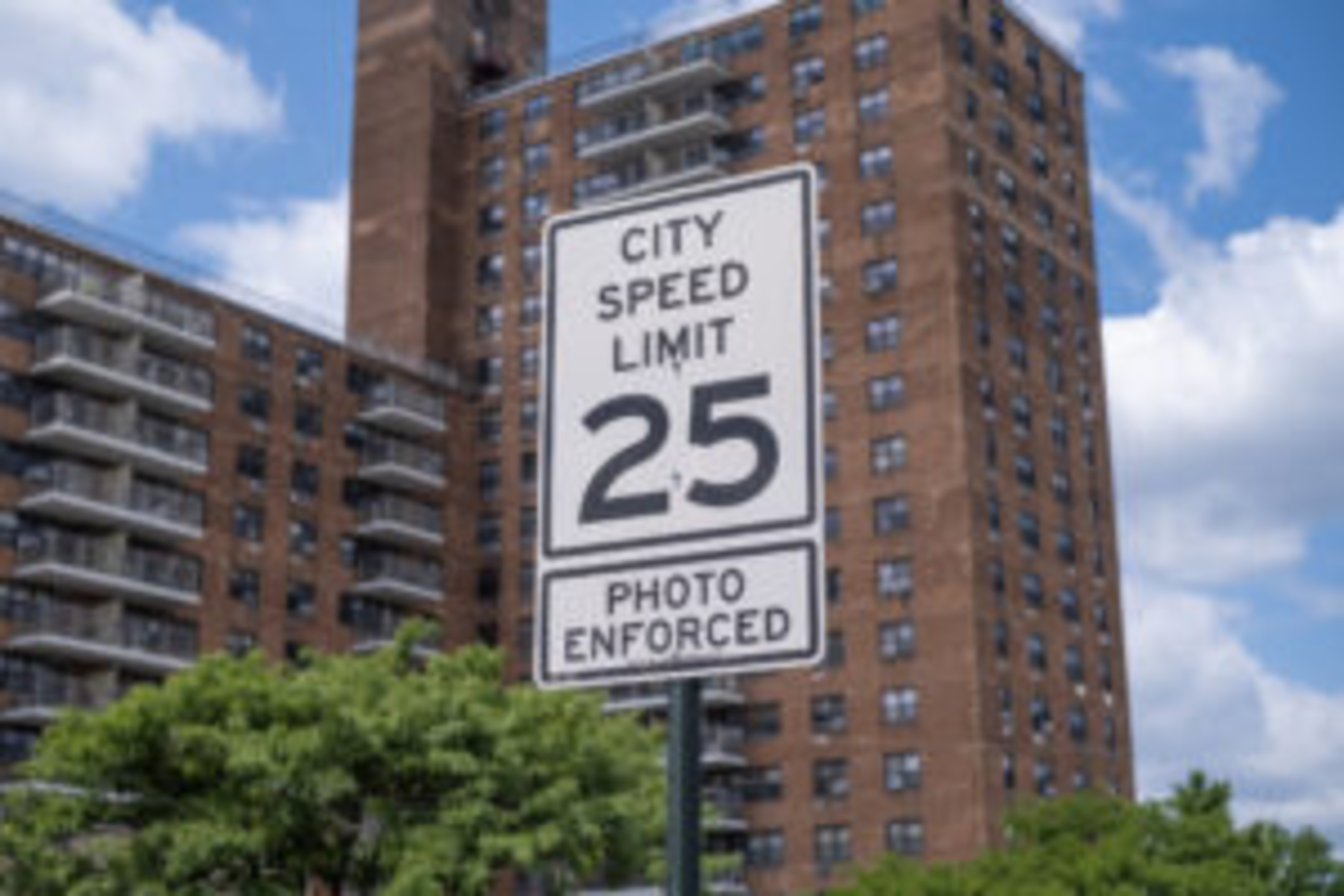
Hu says a growing number of cities are reaching the conclusion that lowering their default speed limits or assigning lower limits to more streets could save lives. For example, Portland, Oregon, officials lowered the speed limit on most residential streets in the city to 20 mph in and have continued to reduce speed limits on higher-speed roads. And this year, Albany, New York, reduced city street speed limits to 25 mph.
However, she noted that local governments don’t always have the authority to make these changes, as state laws often require local communities to perform engineering studies to justify a lower speed limit.

“The practice of setting speed limits around the 85th percentile speed — the speed that 85% of drivers are traveling at or below in free-flowing conditions — can be another hurdle for local communities seeking to lower speed limits,” Hu wrote.
“This method, which in effect lets drivers make the rules, does not account for the vulnerability of road users outside of vehicles. In addition, a speed limit set this way is a moving target: After a speed limit is raised to meet the current 85th percentile speed, a new, higher 85th percentile speed usually emerges.”
Hu noted that guidance in the most recent edition of the Manual on Uniform Traffic Control Devices (which governs all road markings, speed limits, stop signs, and traffic signals across the U.S.) and from the National Association of City Transportation Officials calls for road context-appropriate considerations in setting speed limits, including land use, non-vehicle road users, and crash history.
“Reducing speed limits is just one of the tools in the speed management toolbox, and it’s not always the right one for a given situation,” Hu concluded. “Other ways to effectively reduce speeds include engineering changes such as speed bumps and lane narrowing, speed feedback signs, and better enforcement through speed safety cameras — though the latter often faces the same hurdle of state authorization before localities can act. Even when speed limits are lowered, jurisdictions should consider adding some of these other measures to enhance the speed reduction effects and achieve long-term, sustainable results.”
IIHS-HLDI recently launched a new vision, called 30×30, which aims to reduce fatalities 30% by 2030. Hu said one of the actions in achieving the goal is to lower speed limits.
Images
Featured image credit: U.Ozel.Images/iStock