
DEKRA: Vehicle safety has improved over last 40 years but more needs to be done to reduce deaths

The development of vehicle technology in recent decades has significantly advanced passive safety systems and greatly improved brake performance, cornering stability, and lighting, according to the latest research from DEKRA. The findings also prove a lower survival chance for passengers riding in older vehicles.
DEKRA is a leading global safety testing and inspection firm that was established 100 years ago.
“Continuous innovation and the implementation of advanced safety systems have significantly reduced the risks in road traffic,” said Markus Egelhaaf from DEKRA Accident Research, in a press release.
Moving forward, he suggests that high safety standards set by legislation, and especially by vehicle manufacturers, should remain intact and not be compromised in favor of electronic gadgets and increased connectivity with smartphones.
Those findings and more are detailed in DEKRA’s 2025 road safety report, “The Changing Face of Mobility.”
“Road safety is a key concern across the globe. While some countries have significantly reduced the number of traffic fatalities, many others are still struggling with high figures,” the report states. “However, the goals set under ‘VisionZero,’ i.e., no fatalities or serious injuries in road accidents where possible, are still far from being achieved. Nevertheless, the DEKRA Vision Zero Map does show that there are already many cities across the globe which recorded no traffic fatalities in at least one year or even several successive years… When viewed globally, the number of traffic fatalities fell by just 5% between 2010 and 2021.”
The report notes that U.S. road safety is “influenced by a wide range of legal and regulatory interventions at state level,” including speed restrictions, DUI and cell phone use laws, and the required use of seatbelts, child restraint systems, and helmets.
“While some states have implemented stricter regulations and safety standards, others have less restrictive rules,” the report states.
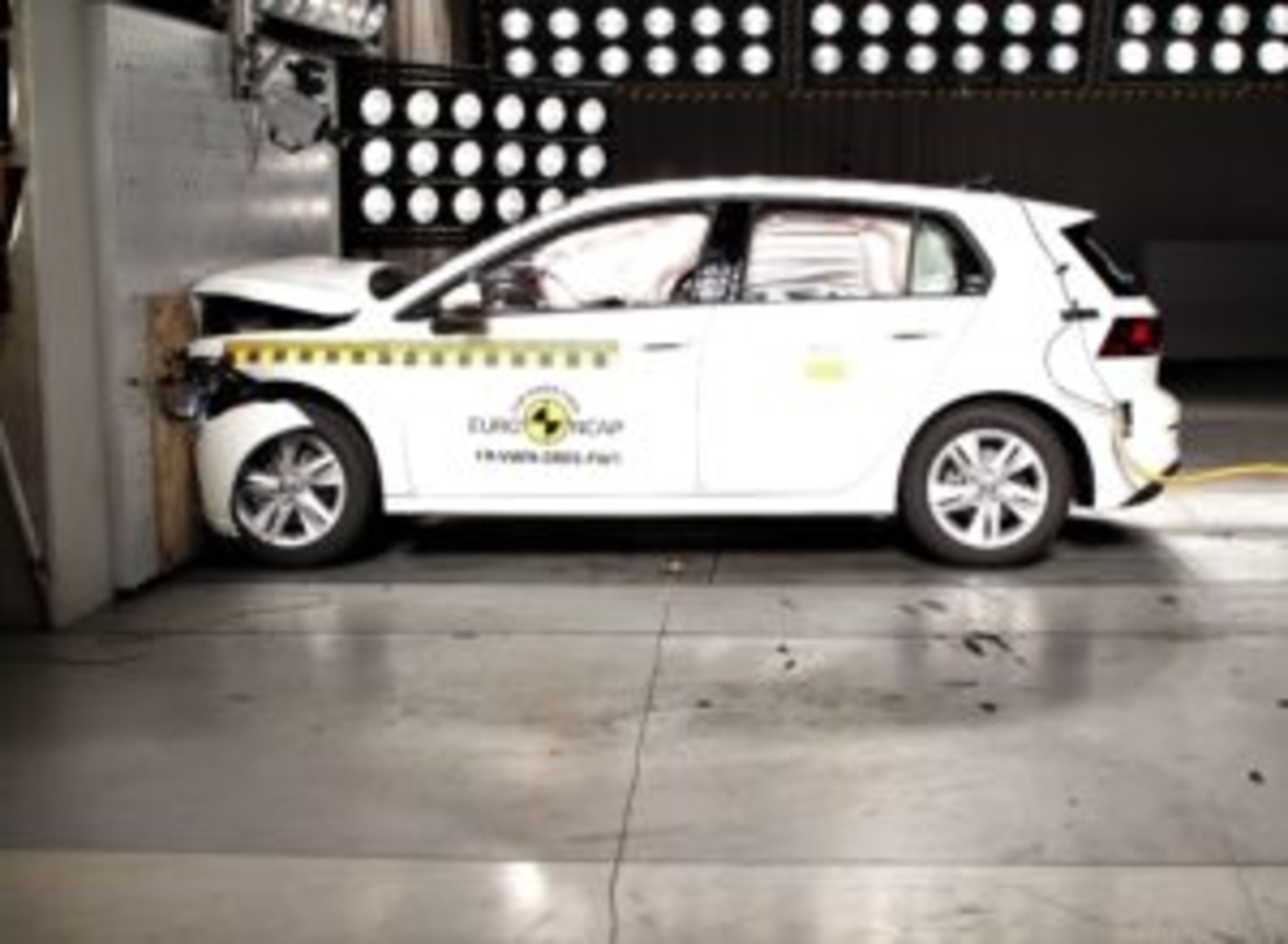
A recent DEKRA crash test with a VW Golf II (built between 1983 and 1992) was compared with a Euro NCAP test of a VW Golf VIII (built since 2019).

The test with the Golf II at the DEKRA Crash Test Center in Neumünster was based on the offset frontal crash test used by Euro NCAP until 2020. In this test, the vehicle collides with a barrier at a speed of 64 km/h (around 40 mph) with 40% overlap. A deformation element is mounted on the barrier to simulate the energy absorption of the opposing vehicle.
The test demonstrates a head-on collision between two identical vehicles traveling at 50 to 55 km/h (around 31 to 34 mph).

“In the Golf II, occupants would have had little chance of surviving this head-on collision due to the collapse of the passenger compartment, the deep penetration of vehicle components into the passenger compartment, the deceleration, and the impact on the steering wheel,” Egelhaaf said in the release.
In the Golf VIII, however, DEKRA says the occupants would have likely sustained minor injuries in the same crash scenario.
“The entire passenger compartment remained completely intact, and the occupants were very well protected by the front and side air bags in combination with the seat belts, belt tensioners, and belt force limiters,” Egelhaaf said.
DEKRA also conducted numerous comparative tests using a VW Golf II from 1989 in sound technical condition and a VW Golf VIII from 2024.
In the first series of tests, braking characteristics were examined at different speeds on varying surfaces and road conditions. In all cases, the braking distance of the new vehicle was around 30% shorter than that of the old vehicle.
To test cornering stability — the speed range in which a vehicle can safely swerve or corner — DEKRA conducted a standardized double-lane-change simulation. Sudden evasive maneuvers were made around an obstacle, and then each vehicle was steered back into the original lane.
DEKRA says tires, chassis, vehicle type, and driver assistance systems (especially electronic stability program) play an important role on the vehicle side.
The maximum speed at which a professional test driver could safely perform the maneuver was 65 km/h (around 40 mph) in the Golf II and 75 km/h (around 47 mph) in the Golf VIII.
While the Golf II dipped deeply on the outside of the curve at the front, causing the rear wheel on the inside of the curve to lose contact, the dip was significantly less pronounced in the Golf VIII, and there was no loss of contact, according to DEKRA.
“However, this test drive made it clear that even modern technology has its limits, beyond which a skid can no longer be prevented,” said Egelhaaf.
When it comes to lighting, while the Golf II’s halogen headlights were considered a significant improvement over the previous technology, they no longer hold up.
Halogen lighting offered a much greater range and improved asymmetrical road illumination, but LED headlights, which come standard on the Golf VIII, are “in a completely different league,” according to Egelhaaf.
In addition to offering many design options, LED lights provide significantly better and more even illumination of the road, which DEKRA notes is “a clear advantage for the visibility of pedestrians and cyclists.”
In contrast to halogen headlights, the bright, almost white light color is striking and similar to daylight, enabling more relaxed and less tiring driving in the dark, DEKRA said.
The two vehicles also differ when seen from the rear. The smaller rear lights of the Golf II are not as visible with the classic light sources as the significantly more striking rear lights of the Golf VIII, according to DEKRA. With the LED elements, they have a higher luminosity, and, thanks to the low space requirement of the diodes, there are many more possibilities for construction and design.
The third brake light is a safety feature that is now mandatory in certain countries and is still missing on the old Golf. DEKRA concluded that the third brake light not only increases visibility from behind in the dark, but also signals more clearly to following traffic that the vehicle is braking.
“Overall, the tests have shown the progress that has been made in vehicle safety over the past 35 years,” said Egelhaaf.
According to preliminary figures from the EU Commission, EU countries recorded 19,800 traffic fatalities in 2024 — a 70% decrease from the “inglorious record levels” seen in the 1970s, the report states.
“However, compared with 2023, the figure was reduced by only 3%, which is far too little to achieve the EU’s declared goal for 2030 of halving the number of traffic fatalities from the 2019 baseline,” DEKRA wrote in the report.
“Thus, although progress has undoubtedly been made, many challenges remain before we can ensure safe mobility for everyone at all times. This is particularly true with respect to vulnerable road users such as pedestrians, cyclists, and the occupants of motorized two-wheelers, who remain at greatest risk. When viewed globally, there is still much to do to improve road safety, especially in low-income countries.”
A statement included in the report from Antonio Avenoso, the executive director of the European Transport Safety Council (ETSC), argues that “Europe’s approach to tackling road safety is in trouble.”
“The EU, and its Member States, have agreed on targets to cut road deaths by half in the decade to 2030,” he said. “But, according to the current trend, deaths are set to fall by only a quarter. There were 20,400 road deaths in the EU in 2023 — down just 1% on the previous year. While this was a 10% reduction since 2019 — the baseline for the 2030 target — the downward trend has flat-lined in several Member States and risen in others. In March last year, the European Court of Auditors issued its first-ever report on road safety, saying that the EU and its Member States will need to ‘move their efforts up a gear’ to reach the 2030 targets.”
Avenoso added that the ETSC urges a new commitment from policymakers to achieve the EU’s existing target, noting “the goal is achievable, but it will take urgency and leadership.”
Regarding the goal, DEKRA concludes, “It is clear that, based on what we have seen time and time again in past decades, our work to improve road safety cannot simply be a short-term campaign — it must be an ongoing process. The key is to ensure that preventative technical, organizational, and infrastructure measures are all coordinated to prevent accidents and reduce their impacts.”
DEKRA previously revealed research showing how a low-speed collision into a trailer hitch could result in far more damage to a vehicle than what’s visible from the exterior.
The SCRS OEM Collision Repair Technology Summit talk, held Nov. 7, 2019, by DEKRA Services Managing Director Christian Ruecker, raised questions about the value of photo estimating and parking lot damage assessments conducted by a repairer, consumer, or insurer.
Ruecker concluded that, “[E]ven a trained and experienced professional will need to disassemble the vehicle to accurately judge the true damage to a vehicle. Think about your loved ones getting into a car where the owner decided not to repair the damage because of a ‘minor accident!'”
Images
Featured image: Front crash test photo of a 2019 VW Golf provided by Euro NCAP
Images of crash-tested VW Golf II vehicles provided by DEKRA