
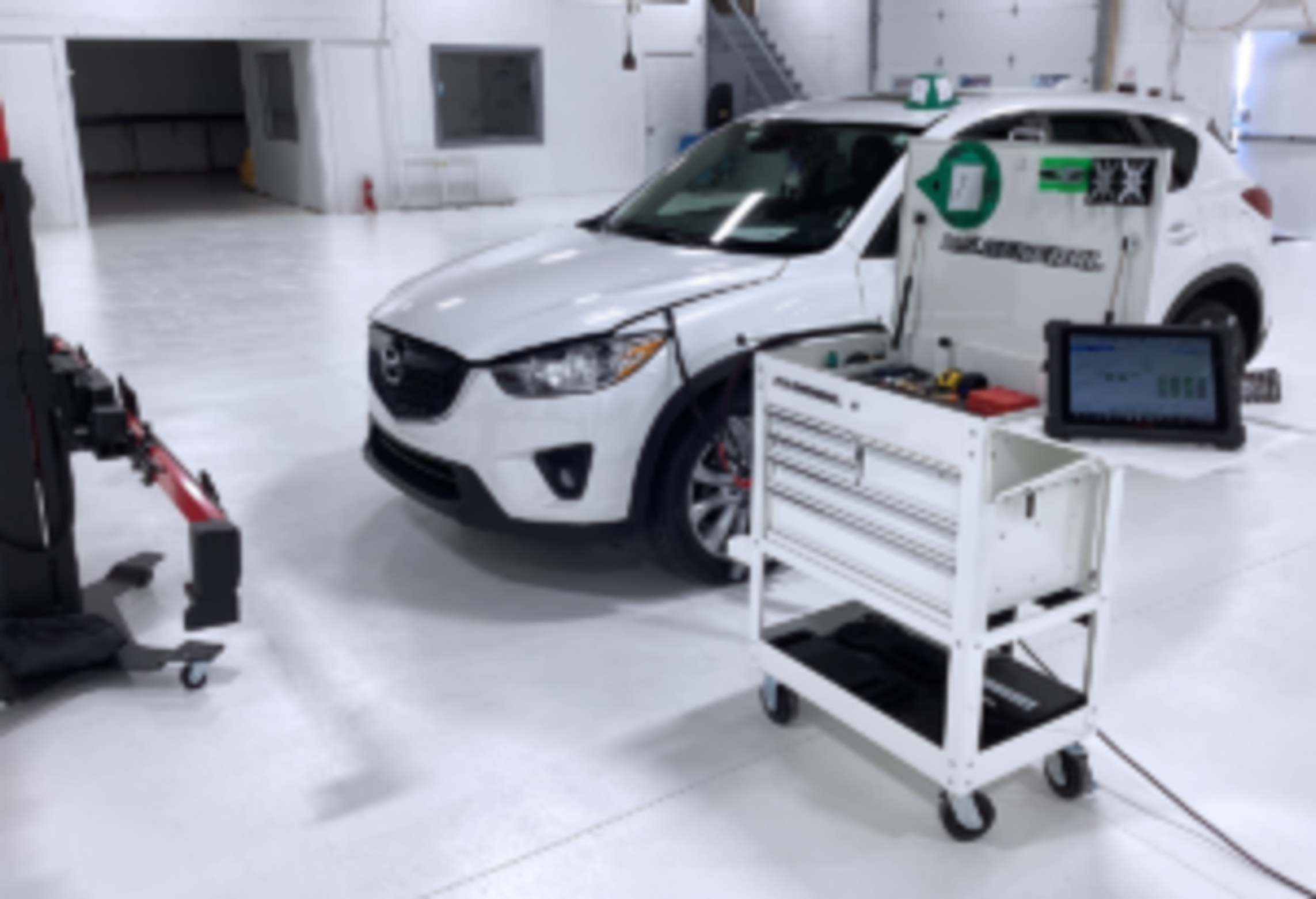
A majority of collision repair facilities are subletting calibrations, survey finds

About 65% of collision repair facilities are subletting calibrations, according to survey results from the University of North Florida.
Researchers surveyed 5,000 businesses classified as collision repair and painting service providers. There were 304 completed responses.
Nearly half of the responses were from independently owned, single-location operations, with about 64% employing five or fewer technicians and 26% employing six to 10. Twenty percent of the shops were national MSOs, and the remainder consisted of franchises, dealer body shops, and regional MSOs, the report says.
Seventy-seven percent of respondents said that scans were conducted by in-house technicians, followed by services performed through sublet arrangements.
Of the 197 businesses that outsourced calibrations, the majority (95) are smaller operations with five or fewer technicians. Thirty-seven percent (73 shops) of the group had between six and 10 technicians.
Thirty-eight shops (13%) performed calibrations in-house, 25 shops (8%) sublet some calibrations and performed others in-house, and 23 shops (8%) used a dealership, according to the survey results.
Nine shops said they use remote options for calibrations. The remaining shops all said they used some mixture of subletting, in-house, remote, and dealership options.
“Due to the shortage of in-house ADAS calibration expertise, many auto repair shops depend on external vendors for the needed calibration service,” the report states. “While outsourcing is a common practice, especially among small operations, this study does not evaluate the quality, consistency, or accuracy of subcontracted ADAS calibration or that brand-specific services are being carried out. As ADAS systems continue to be added to the fleet of vehicles, further research is needed to assess the reliability and safety implications of outsourcing ADAS calibration services.”
Lawsuits involving missed or improper calibrations of ADAS systems are upticking across the country, according to Rebekah Cooper, product liability attorney at The Cooper Firm, who spoke recently with BodyShop Business’s Jason Stahl during an Under the Radar video segment.
Cooper said it wouldn’t be an exaggeration to say there are about a dozen pending cases across the country at any given time. She explained during the interview that cases have involved forward collision warning, lane departure warning, automatic emergency braking, and occupant sensors. It could also include backup cameras, she said.
She said technology is evolving, and so is litigation, which she believes will continue as more autonomous features are introduced to the market.
Collision repair shops are still liable even if they sublet the calibration work, Cooper said.
“If there’s an injury caused by an employee of Home Depot, as their employer, Home Depot is liable under an agency theory, meaning you take responsibility for what this person or sublet entity does,” Cooper said. “There are ways where you could attempt to get out of liability as the sublet or the body shop delegating the work. It’s not advisable without giving you attorney advice. I wouldn’t count on that. That’s not likely to be compelling to a judge. And frankly, it’s not likely to be compelling to a jury because if you think about this, at the end of the day, this claim is going in front of 12 people who probably drive cars and are going to say, ‘Wait a second, if I take my car to Joe’s Body Shop and Joe decides to use Smith, I don’t want Joe to get out of his responsibility because I went to him.’”
Cooper said it is important for shops to vet the businesses they sublet calibration work to.
While the University of North Florida focuses on a possible shortage of experienced technicians as the cause for subletting, it doesn’t discuss other industry elements that could be leading to subletting.
State Farm rolled out calibration requirements to Select Service repair facilities nationwide during the spring. At the time, multiple repair professionals, in and out of State Farm’s network, shared concerns about pressure to meet the insurer’s prices for calibrations.
Shops said they were told to either meet the prices laid out by State Farm or use calibration providers that had agreed to do the job at that price.
IMAGE
Featured image provided by Car ADAS Solutions