
SCRS corrects common industry misconceptions on ceramic coatings

A presentation from the Society of Collision Repair Specialists (SCRS) Education Committee on Tuesday addressed misinformation and things to be mindful of regarding ceramic coatings.
During the SCRS Board’s open meeting in Philadelphia, SCRS Secretary Andrew Batenhorst said ceramic coatings are still susceptible to mineral deposits, etching, scratching, abrasions, swirl marks, wear, and rock chips.
“Coatings, I think they get a bad rap sometimes that they’re a cure-all and they can do everything for your paint and make everything nice and pretty and look good, but they still are prone to having problems — mainly with mineral deposits,” he said. “That’s probably the No. 1 thing that I see happening is people wash their car, and they think because there’s hydrophobic properties to the coating that that will eliminate the risk of getting mineral deposits.
“Mineral deposits are still going to occur as the water evaporates off the panel… They’ll actually damage the coating to the point where if it sits on the surface for too long, you’ll no longer be able to extract them chemically, and now you have to abrade them in order to remove them, which will take the coating off at the same time.”
Another common misconception is that vehicles with ceramic coatings can go longer periods of time without being washed. Batenhorst said that’s not the case.
“Keep in mind that you can’t abrade a ceramic coating, or else you’ll start stripping it off the vehicle,” he said. “If you let things sit on the surface of the paint for too long, they will embed themselves into the coating and then the coating can’t perform as well as it’s supposed to. And that includes things like swirl marks, or love marks as I like to call them, from people who use a quick detailer or something like that without proper lubrication. That just adds more and more wear to the coating itself.”
Batenhorst added that graphene is an often-used but misleading marketing buzzword that’s synonymous with ceramic coatings.
“Graphene as a chemical compound is not really effective in coating, and if there is any percentage of graphene in a coating, it’s very, very minimal,” he said. “It’s not really adding any protection.”
There are three main types of coatings currently on the market, according to Batenhorst.

“SiO2 coatings are probably the most popular on the market right now,” Batenhorst said. “They’re very affordable. They’re easy to apply. You’ll notice when they’re applied, they rainbow and they’re evaporating off. They ride inside a carrier solution, and that makes it easy for users to put them on without having to have a lot of training, but they only last for one to two years.”
The strongest coatings on the market right now are made with SiC, which can last for over 10 years, he added.
“Those form a chemical bonding process with the actual clear coat of the panel of the vehicle,” he said.
Batenhorst also shared some tips for shops to use during check-in:

Batenhorst said the best way to identify coatings on vehicles is to ask the customer. However, manufacturers typically install a warranty sticker near the VIN label or somewhere in the door jamb. The third option is to use an ultrasonic mil thickness gauge, keeping in mind that some cheaper standard gauges may not be accurate.
When it comes to insurance reimbursement, Batenhorst said shops should consider the number of containers that will be used for the job, or whether a whole container will be used, and the shelf life if it isn’t.
“How the product is sold to you is really important because you may end up having to buy a kit that includes a primer polish or some special applicator,” Batenhorst said. “These are other materials that are going to get consumed during that application process, and how you charge that out needs to obviously coincide with the understanding of what goes into putting it on the car.”
Also, Batenhorst said the gloss variance with adjacent panels should be determined, which can be an upsell to customers as well by showing them the current loss percentage of the paint on the vehicle versus how much it increases after the coating.

Having aftercare products in the shop lobby is also a great upsell, or providing customers with a small bottle of a ceramic booster as a thank you for having the service done in your facility, Batenhorst added.
To remove ceramic coating, no special equipment is needed because it’s removed during paint preparation, according to Batenhorst. Bake cycles also have no impact on coating integrity.
When applying, the surface must be swirl/haze free with all polishing contaminents removed.
Before applying on fresh paint, consult with the OEM about how long to wait. Typically, seven to 10 days is long enough, Batenhorst said.
Images
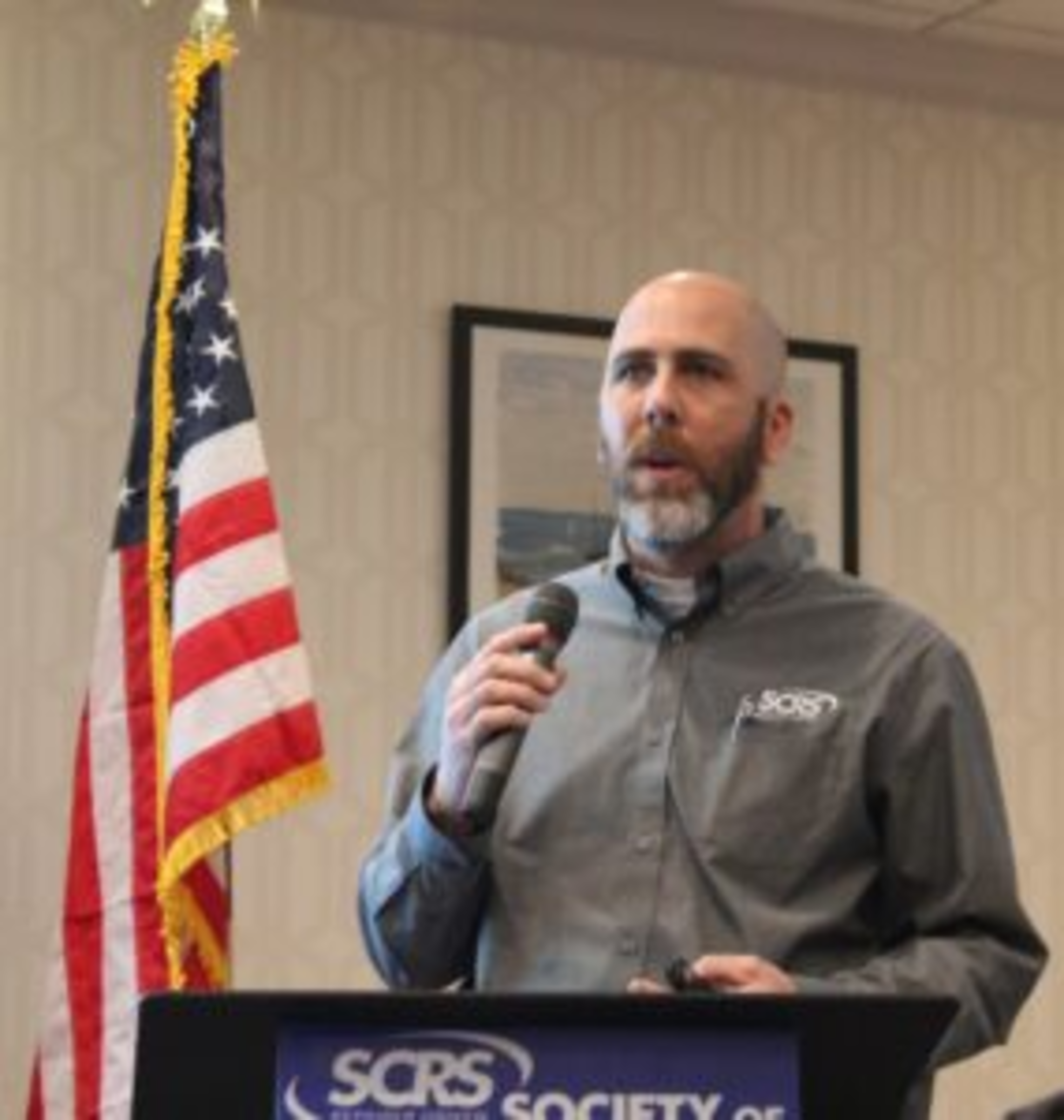
Featured image: Andrew Batenhorst speaks during the July 22, 2025, SCRS Board’s open meeting in Philadelphia, Pennsylvania. (Lurah Lowery/Repairer Driven News)
Presentation slides courtesy of SCRS/Andrew Batenhorst