
Maine legislator criticizes governor for failing to sign amended ‘right to repair’ law

Maine Gov. Janet Mills didn’t sign into law a bill passed by the legislature that its proponents say would’ve amended the state’s new “automotive right to repair” law with consumer data privacy in mind.
Now, one lawmaker has openly criticized Mills in a Portland Press Herald op-ed. In Maine, if legislation isn’t passed by the end of a session, the governor has three days at the beginning of the next session to veto it. If there isn’t a veto, the bill automatically becomes law.
“Did you know that current Maine law states that an ‘independent entity,’ with no government oversight, is required to store and give access to all of your vehicle-generated data? It’s true,” wrote Rep. Amanda Collamore (R-District 68).
Collamore was a member of the Maine Automotive Right to Repair Working Group, which was tasked with establishing guidelines for the entity under the Data Access Law. It also required the group to pen a report to the legislature on its recommended amendments to the law.
In May, one bill, LD 1228 — “An Act to Clarify Certain Terms in the Automotive Right to Repair Laws,” moved forward out of a package of five introduced this session to amend the new law, which was passed by referendum in 2023.
The Maine Joint Committee on Housing and Economic Development’s majority report to amend the Data Access Law was passed by the legislature in June, 135-12 in the House and 21-14 in the Senate.
Effective Jan. 5, 2025, all automakers were obligated to provide access to vehicle data via a standardized and owner-authorized platform.
The majority report would’ve amended the law to add a definitions section, eliminate the previously proposed “independent entity,” and use telematics language that largely mirrors proposals in the federal Safety as First Emphasis (SAFE) Repair Act championed by automakers and repairers.
LD 1228 would’ve established the Motor Vehicle Right to Repair Commission, which the report states, “is charged with, among other things, monitoring and assessing implementation of and manufacturers’ compliance with the requirements of that law.”
The language of the law would make clarifying changes regarding required equipment, access to diagnostic and repair functions, and enforcement, according to the majority report.
“After more than two years of bipartisan work, the Maine Legislature passed LD 1228, a bill designed to protect consumer privacy and clarify how vehicle-generated data is stored and accessed, Collamore wrote in her July 15 op-ed. “It is a thoughtful, forward-looking response to a growing technological and legal issue affecting vehicle owners across our state.
“But, instead of signing the bill into law, the governor allowed it to move into a sort of legislative limbo until the legislature reconvenes in January 2026 for the second regular session. During this time, Maine vehicle owners are left unprotected, and an ongoing lawsuit remains unresolved, an outcome that could have been avoided with a simple signature… This bill struck a careful balance, ensuring that only nonpersonal, repair-related data could be accessed by repairers and only with the vehicle owner’s consent.”
Collamore contends that the bill would’ve safeguarded consumer vehicle data, keeping it secure, “while maintaining consumer choice about where their vehicles are serviced and repaired.”
“Independent repairers play a vital role in Maine’s economy, especially in rural areas where dealership access is limited,” she wrote. “LD 1228 simply ensures that these trusted professionals can continue providing safe, reliable and affordable repairs in an era when digital data is just as essential as a wrench or socket.”
She noted as well that by delaying approval of the bill, Mills has prolonged “a costly legal fight” regarding access and storage of vehicle telematics.
“The legislature did its job,” Collamore concluded. “It’s time for the executive branch to catch up.”
In January, the Alliance for Automotive Innovation (Auto Innovators) filed suit to challenge Maine Attorney General Aaron Frey over the enforcement of the state’s 2023 Data Law because the “independent entity” it calls for doesn’t exist.
Auto Innovators seeks declaratory and injunctive relief. As of Thursday, Frey hadn’t filed a response to the lawsuit with the court.
“Because compliance with the Data Law is impossible and the Data Law is unconstitutionally vague, the Data Law violates due process and harms vehicle manufacturers,” the complaint states. “Moreover, any means of compliance with the law that does not ensure cybersecurity, including any compliance strategies without the establishment of the ‘independent entity,’ is preempted by federal law.”
In reaction to the legislature’s approval of LD 1228, Maine Automotive Right to Repair Coalition Director Tommy Hickey told Autobody News last week that the coalition plans to “fight to ensure that there will be a standardized method of getting car owners and consumers their own repair information.”
Hickey served on the working group with Collamore, listed as representing independent repair facilities.
“We’re going to have to come up with a plan of attack to make sure that this does not become law,” he said in the article. “And if it does, how we can get back what 84% of Mainers voted for in 2023?
“I think the manufacturers have worked with some legislators and teamed up with them to mislead the legislature into believing that an LD 1228 is a ‘small tweak’ to the right to repair ballot initiative. I think that’s kind of how it was, so I ultimately don’t blame the legislature if that’s what this was coined as, but it was untrue.”
Eric Luftig, who was named the aftermarket parts manufacturer’s representative on the working group, added in the Autobody News article that “there’s real concern that LD 1228 does not reflect the will of the voters, or the needs of the aftermarket ecosphere.”
“We remain committed to advocating for solutions that uphold the will of Maine voters — promoting fair competition, protecting small independent repair shops, and ensuring Mainers have the freedom to choose where they service their vehicles and the parts they use in those repairs,” he said.
Jeff Groves, who was listed as representing the aftermarket parts distributors and retailers on the working group, told Autobody News he was disappointed LD 1228 passed.
“An amendment made by the bill sponsor in committee changed important language supported by 84% of Maine voters in the referendum in November 2023 that was key to consumer choice and access to data,” he said.
Images
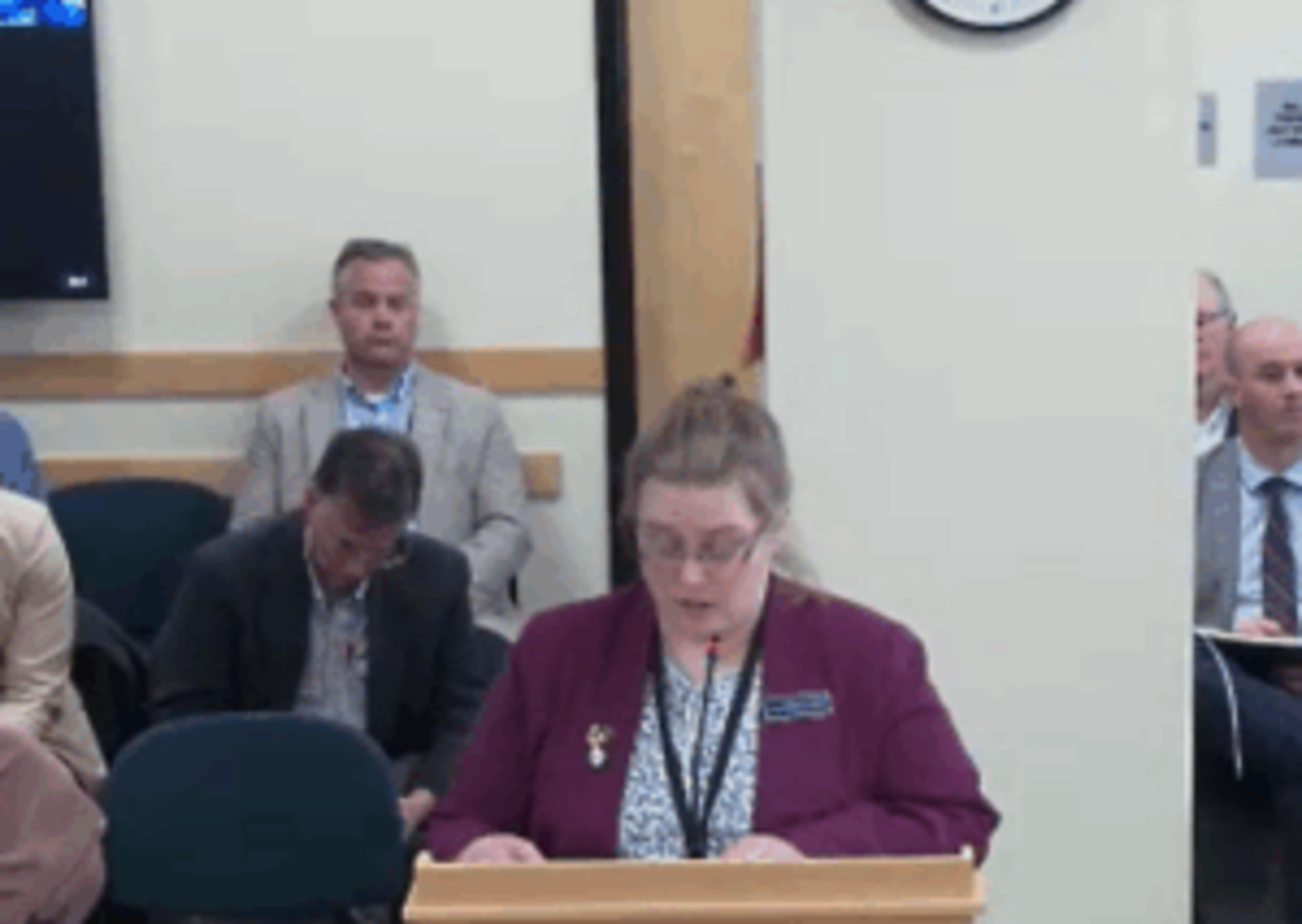
Featured image: Rep. Amanda Collamore testifies before Maine’s Joint Standing Committee on Housing and Economic Development during a public hearing held on April 10, 2025. (Video screenshot)