
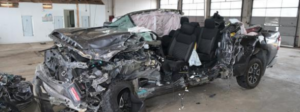
Dealer, installer and manufacturers of aftermarket suspension lift kit sued in wrongful death case

An aftermarket suspension lift kit that raised the height of a Ford F-150 by six inches is at the center of a wrongful death lawsuit following a crash that killed a Georgia man.
Defendants in the case include the driver of the truck, the dealer that sold the truck, the business that installed the suspension lift-kit and the manufacturer of the aftermarket equipment.
Charles Holloway Jr. was killed in what was an otherwise survivable crash when the driver of the Ford F-150, Scott Douglas Kneiss, crossed the center line during the late morning of Jan. 8 and struck Holloway’s vehicle head-on, the suit alleges.
“The lifted Ford F-150 overrode and bypassed the Toyota Tundra’s engineered crash protection systems and entered the occupant compartment and driver survival space of the Toyota Tundra,” court documents state. “The lift kit caused catastrophic intrusion into the occupant survival space of the Toyota Tundra.”

The lawsuit was filed on behalf of Holloway’s wife, Lolita Holloway, in the Georgia State Court of Gwinnet County in September. The Cooper Firm, including Rebekah Cooper, is representing Lolita Holloway. Cooper spoke about the risk of not following OEM procedures during a Collision Industry Conference (CIC) in February.
“The aftermarket lift kit raised the ride height, suspension geometry, frame rails, and crash structures of the Ford F-150 well above OEM factory specifications and crash compatibility zones,” the court filing states. “As a result, when the lifted Ford F-150 struck the front of Mr. Holloway’s Toyota Tundra, the elevated frame rails and crash structures of the Ford F-150 bypassed the structural frame rails, crash-energy management systems, and occupant protection structures of the Toyota Tundra.”
The document also alleges that the lift kit and modified suspension interfered with and degraded the F-150’s crash avoidance, collision mitigation and warning systems, preventing them from operating as designed and from avoiding or mitigating the collision with Holloway’s vehicle.
It also overrode and bypassed the Toyota Tundra’s crash protection systems, the documents state.
The filing claims that Courtesy Ford dealership, GRJ Offroad, Sport Truck, Fox Factory (Sport Truck’s holding corporation) and RealTruck “caused and enhanced the fatal occupant intrusion and fatal injuries by designing, manufacturing, marketing, distributing, installing, integrating, promoting, and selling a lift kit that defeated crash compatibility, bypassed the F-150’s collision avoidance systems, and bypassed the Toyota Tundra’s engineered crash protection systems.”
It adds that defendants knew or should have known that raising the suspension geometry, frame rails, and ride height of pickup trucks above factory specifications and OEM engineered crash compatibility zones created an unreasonable danger to occupants of the other passenger vehicles operating on public roadways.
They also should have known that lift kits can bypass the structural frame rails, crash-energy management systems and occupant protection systems of passenger vehicles.
The suit points to prior crashes, prior claims litigation, engineering analysis, crash testing, industry literature, real-world wrecks and the basic principles of physics as places the defendants could have learned about catastrophic occupant compartment intrusion.
“Defendants knew or should have known that OEM manufacturers, including Ford, warned against materially altering suspension geometry and ride height beyond factory specifications,” the suit states.
“Defendants knew or should have known that aftermarket lift kits defeat, alter, impair, and interfere with OEM-tested crashworthiness performance and crash energy management systems,” the filing states.
The suit also argues that the lift kit was defective and unreasonably dangerous when designed, manufactured, marketed, distributed, integrated, sold, installed and placed into the stream of commerce.
Courtesy Ford and the lift kit defendants had a continuing duty to warn users, installers, purchasers and the motoring public concerning the dangers associated with the subject lift kit and suspension modifications, the suit adds.
The court documents also point to Georgia law that says it is unlawful to alter the suspension system of any private passenger motor vehicle which may be operated on any public street or highway more than two inches above or below the factor recommendation for any vehicle.
It adds that the law is to protect the motoring public from the dangers associated with vehicles that have been modified in ways that adversely affect their handling, stability and crash compatibility.
Image
Photos of vehicles involved in the collision from case file.