
Hyundai article dives into evolution and future of automotive steel sheets

Hyundai explores the evolution of automotive steel sheets and what it could look like in the future in an article it posted earlier this week.
“As electrification progresses rapidly, the requirements for automotive steel sheets have become significantly more complex,” according to the article. “Material design must now take into account not only crash safety and lightweighting — which were critical for internal combustion engine vehicles — but also the structural characteristics of electric vehicles.”
Hyundai Senior Research Engineer Cheolkyun Shin said automotive steel sheets must strike a balance between high strength, crash safety, formability, weldability, and the potential for weight reduction.

The article points to advanced high-strength steel (AHSS) as a part of the evolution of steel sheets. It adds that as steel becomes stronger, it becomes more difficult to work with.
“AHSS has evolved to simultaneously enhance body safety and reduce weight,” Shin says in the article. “However, as strength increases, there is a limitation in forming complex parts; consequently, technologies that improve formability and crash performance while maintaining high strength have become increasingly important in recent years.”
Third-generation ultra-high-strength steel is a result of those efforts, the article states. It adds that as steel has evolved, so has the technology used to turn steel into automotive parts.
High-strength steel sheets are difficult to form into complex shapes at room temperature, the story states. Hot stamping heats the steel sheets to a high temperature to soften them, then shapes them into the desired form using a die.
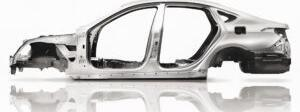
“Ultra-high-strength steel and hot-stamped steel produced in this way are primarily used in body structural components — such as the center pillar, side sills, and roof rails — that suppress deformation of the passenger compartment during a collision,” the article notes. “By designing the strength and thickness of the steel sheets to match the specific role of each component, manufacturers can ensure the necessary safety while reducing unnecessary weight. This approach delivers the dual benefits of improved vehicle safety and efficiency.”

As carbon emissions regulations expand, automakers have to look at the processes used to make auto parts, the article notes.
“This is because we can only comprehensively assess a vehicle’s total carbon footprint throughout its entire lifecycle by considering the carbon emissions generated during the production of batteries, components, and materials such as steel and aluminum,” the article states.
Shin adds that carbon emissions generated by steel sheet production can be reflected in the automaker’s supply chain emissions and the vehicle’s life cycle assessment.
Residual elements in scrap, such as copper and tin, must be managed at the start of producing high-grade automotive steel sheets, the article states.
In electric arc furnaces, iron is melted, and nitrogen from the atmosphere can easily enter the molten steel, the article adds.
Another senior research engineer, Seunghwan Shin, says the higher nitrogen content reduces ductility and the “aging phenomenon,” in which the physical properties of steel sheets change over time. Seunghwan Shin adds that it is a critical control factor in production.
Hyundai Steel found a hybrid method to modify the raw materials and meet production process needs by combining electric arc furnaces and blast furnaces. It blends direct-reduced iron with scrap steel during the process.
Direct-reduced iron (DRI) is produced by removing oxygen from the iron core, the article states. It notes that this contains fewer residual elements and has a relatively uniform composition.
“Unlike pilot production, actual mass production requires the ability to stably produce large quantities of automotive steel sheets of consistent quality,” the article states. “To achieve this, Hyundai Steel subsequently expanded its raw material composition once again. This approach involves utilizing not only scrap and direct-reduced iron but also molten iron produced in conventional blast furnaces (liquid iron produced by melting iron ore in a blast furnace).”
A blast furnace reduces iron ore to produce molten ore, the release states. However, carbon dioxide is emitted during the reduction of iron ore, it adds.
Seunghwan Shin notes that the blast furnace ensures quality stability, while the electric arc reduces the amount of blast furnace steel used.
“The electric arc furnace and secondary refining then work together to refine the two molten steels into a quality suitable for automotive steel sheets,” Seunghwan Shin said.
Hyundai Steel is also currently mass-producing “HyECOsteel.” It is a steel sheet development process aimed at reducing carbon emissions during production by about 20% compared to the existing blast furnace-based products.
Hydrogen-based ironmaking uses hydrogen instead of carbon to remove oxygen from iron ore. The primary byproduct is water rather than carbon dioxide.
According to the article, a stable large-scale supply of hydrogen and power infrastructure must be secured to use the process. It adds that additional infrastructure for storing and transporting hydrogen is also needed.
“This goes beyond simply replacing a single existing blast furnace with new equipment; it requires transforming the entire steel mill production system, including raw materials, energy, and logistics,” the article states.
Ensuring the quality of the steel sheets is still a challenge, the article notes. Precise control over nitrogen, residual elements, and non-metallic inclusions is essential, it states.
“Therefore, current carbon emission reduction strategies are moving toward the phased application of multiple technologies rather than relying on a single one,” according to the article. “This approach involves reducing the use of blast furnace molten iron through a hybrid process, advancing electric arc furnace technology to expand the utilization of various iron sources—such as scrap and direct-reduced iron—while preparing for hydrogen-reduced steelmaking in the long term.”
Hyundai Steel is also developing AI-based scrap management technology to analyze scrap grades and composition data to optimize sorting and blending.
“Hyundai Steel, which has supported automotive safety and lightweighting through ultra-high-strength steel and hot-stamping, is now taking on the new challenge of transforming its production methods,” the article states in closing. “As automobiles evolve into a new generation, how should the steel that forms their foundation change? This is why we look forward to Hyundai Steel’s next steps as it seeks the answer by innovating both materials and processes.”
Hyundai Steel Co. recently celebrated the groundbreaking of the first electric arc furnace-based integrated steel mill in the U.S., with production set to begin in 2029.
The mill will supply high-quality, low-carbon-emissions steel to global automakers including Hyundai Motor and Kia. It is part of the automaker’s $26 billion commitment to strengthen U.S. local supply chain and industrial resilience, according to a press release.
The facility will also incorporate carbon capture capabilities and be designed to gradually replace the natural gas used in the Direct Reduction Plant (DRP) with hydrogen as future infrastructure and availability develop.
Image
Photos courtesy of Hyundai