
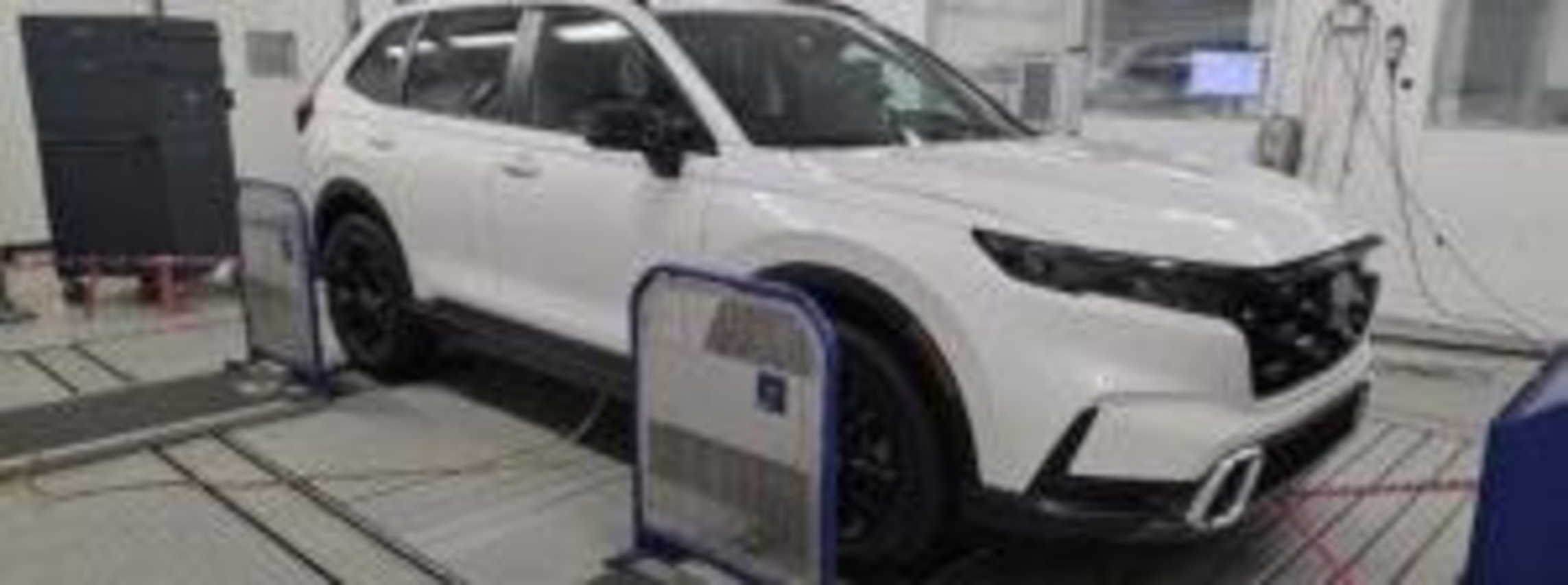
AAA compares extreme temperature effects on EVs and hybrids

AAA’s latest study shows extreme temperatures reduce efficiency, range, and increase operating costs for electric vehicles (EVs) and hybrids.
Researchers tested six vehicles at cold, moderate, and hot temperatures to examine how electrified powertrains perform under non-ideal conditions.
AAA says the information is intended to help consumers better understand how temperature can affect vehicle performance, inform purchasing decisions, and set realistic expectations for driving and ownership throughout the year.
Building on a 2019 study, the AAA automotive engineering team, in partnership with the Automobile Club of Southern California’s Automotive Research Center, evaluated the powertrains of three EVs and three hybrids.
Testing was conducted on a chassis dynamometer — a device like a treadmill for cars — with the HVAC set at 72 degrees in the vehicles and the temperatures in the laboratory test cell at 20°F, 75°F, and 95°F.
Research leveraged AAA Gas Price Data to determine national average fuel and electricity prices as of March 27, 2026.

Impact of hot temperatures (95°F):
-
- Hybrid vehicles experienced a 12% decrease in fuel efficiency (MPG).
- EVs showed a 10.4% reduction in efficiency (MPGe, miles per gallon of gasoline equivalent) and an 8.5% loss of driving range compared to moderate temperature (75°F).
Impact of cold temperatures (20°F):
-
- Hybrids lost 22.8% in fuel economy.
- EVs demonstrated a 35.6% drop in MPGe and a 39.0% decrease in calculated driving range.
Impacts of cold temperatures (20°F) on operating costs:
-
- Hybrids showed an increase in fuel cost of $28.44 per 1,000 miles.
- EVs experienced an increase in operating costs of $32.11 per 1,000 miles when charged at home electricity rates and $76.93 per 1,000 miles when using public charging
Impacts of hot temperatures (95°F) on operating costs:
-
- Hybrid operating costs increased by $13.02 per 1,000 miles.
- For EVs using home charging, operating costs rose by $6.78 per 1,000 mi, while public charging costs climbed by $16.25 per 1,000 miles.
Powertrain cost comparison:
-
- Cold operation (20°F) showed the largest cost gap: EVs cost $36.19 less per 1,000 miles at home electricity rates and $86.26 more using public chargers than hybrids.
- At high temperatures (95°F), EVs were $46.11 cheaper per 1,000 miles at home electricity rates, but compared with hybrids, public charging rates were $41 more expensive.

“EVs are efficient in moderate temperatures but lose significant range in the cold,” said Greg Brannon, AAA director of automotive engineering and research, in a press release. “We expected this from our previous research, but were surprised by the 23% reduction in fuel economy for the hybrids in cold temperatures. Drivers should consider climate, energy costs, and driving patterns when choosing a vehicle that best fits their lifestyle.”
To provide a holistic understanding of the electrified vehicle landscape, AAA conducted its annual nationwide consumer sentiment survey on EV and Hybrid interests to better link the data to the perspectives and priorities of American drivers, the release states.
“American drivers continue to show greater interest in hybrid vehicles than in fully electric models,” the release states. “This year, 35% of U.S. adults say they are ‘very likely’ or ‘likely’ to purchase a hybrid for their next vehicle, whether new or used. Those who favor hybrids most often point to reduced concerns about driving range and access to charging.”

While the number of public charging stations nationwide has increased from about 55,000 in 2022 to roughly 80,000, hesitation remains, according to AAA’s survey results.
AAA found that consumers who are interested in fully electric vehicles cite benefits such as lower fuel costs, reduced environmental impact, and lower maintenance expenses. Still, hybrids continue to appeal to drivers seeking greater convenience and flexibility.

AAA recommends consumers:
-
- “Factor climate into vehicle choice: Cold conditions increase energy demand for both powertrains, but EVs are more affected due to battery performance limitations and the need for cabin heating. Drivers in cold-climate regions should plan for reduced range and more frequent charging stops.
- “Budget for seasonal cost changes: Winter raises energy use across all powertrains. EV cost increases are most pronounced when relying on higher-priced public charging; hybrids will consume more fuel due to engine warm-up and heating demands.
- “Manage efficiency in hot weather: At high temperatures, air conditioning and thermal management can reduce efficiency for both EVs and hybrids; impacts are often smaller than in cold weather.
- “Adopt real-world efficiency strategies: Precondition the cabin while plugged in, use targeted comfort features (seat and steering-wheel heat), keep tires properly inflated. For EVs, avoid sustained high speeds in extreme temperatures, and plan charging sessions to minimize unnecessary fast charging in cold weather.
- “Evaluate charging access and energy pricing: EV operating costs depend heavily on electricity rates and where charging occurs. Home charging can help manage seasonal cost swings compared to frequent public charging.”
AAA also offers the Your Driving Costs calculator, which estimates ownership and operating costs, factoring in local climate, driving habits, and EV public charging prices from AAA gas price data.
Images
All images and charts provided by AAA