
PPG/PPG Foundation, Hyundai invest in and support skilled trades, STEM education

PPG and the PPG Foundation have committed to investing $10 million globally through 2030 to support skilled trades initiatives, with a focus on advanced manufacturing and coatings applications.
Hyundai is also deepening its investment in science, technology, engineering, and mathematics (STEM) education through Hyundai Hope, the company’s corporate social responsibility initiative focused on preparing the next generation of innovators.
The funding will support programs that equip students with hands-on training and technical expertise for modern manufacturing and coatings application roles, according to a press release.
Through partnerships with technical and vocational schools, community colleges, and other workforce training providers, the investment aims to support education and training that help individuals build practical, job-ready, and technology-enabled skills.
“Industries across the globe are facing a growing demand for skilled workers both in essential coatings trades and advanced manufacturing roles that are shaping the future of production,” said Malesia Dunn, PPG Foundation executive director and corporate global social responsibility, in the release. “Our goal is to help people build the skills they need to succeed in those industries today and to adapt as those workplaces continue to evolve.”
PPG previously announced a $2 million commitment to workforce training initiatives for 2023-2025 that was exceeded and completed early, the release states.
The new commitment spans skilled trades closely connected to the industries PPG serves, including coatings application, collision repair, and advanced manufacturing through partnerships, including:
-
- OSAO Vocational College: One of Finland’s largest vocational colleges received a donation of the PPG LINQ digital ecosystem for students in the automotive painting program, giving them access to advanced tools and helping them build the technical skills needed for today’s automotive refinish industry.
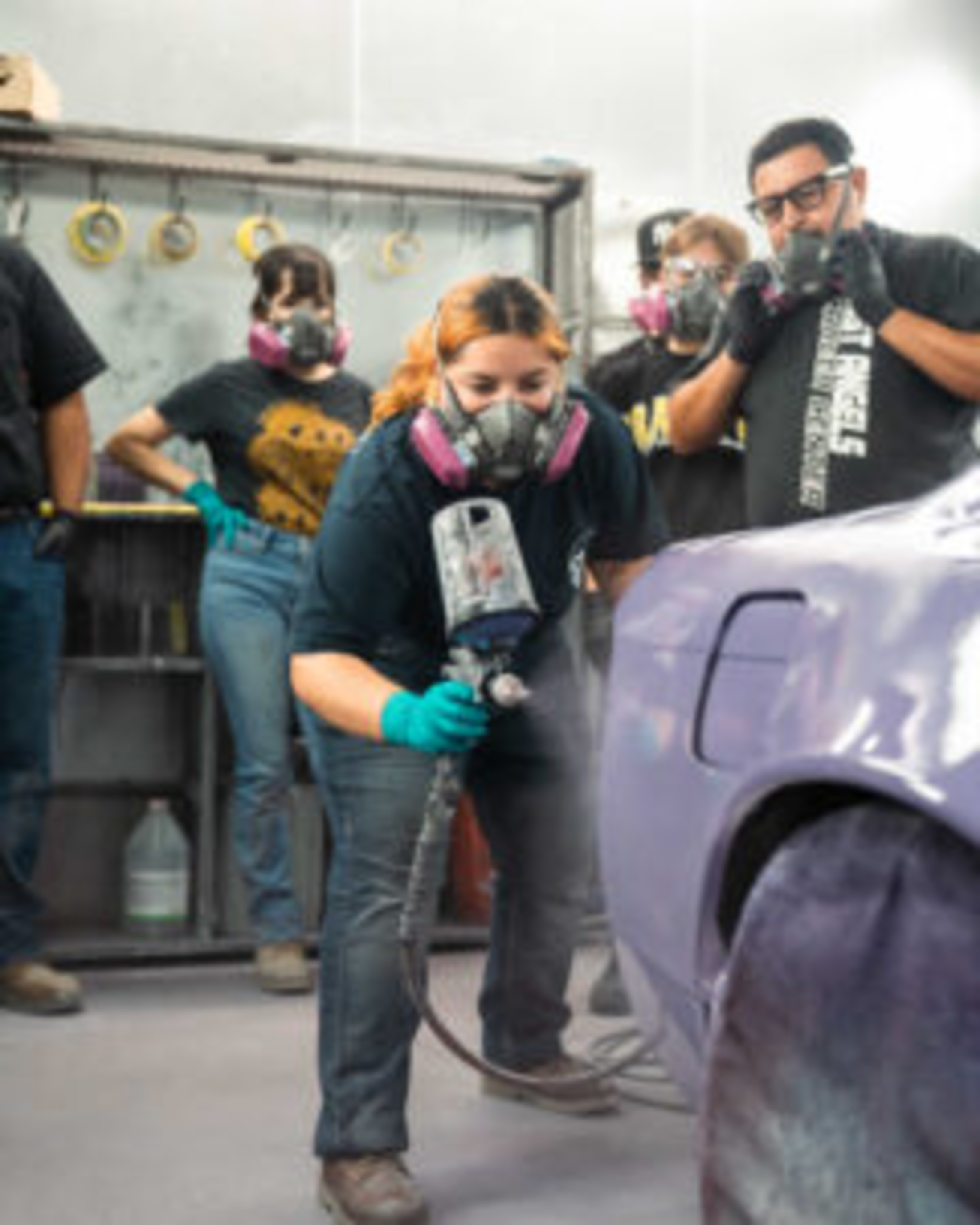
- Lost Angels Career Center: The PPG Foundation funds a 12-week vocational training program in Lancaster, California, called the Work Program, for disadvantaged 18- to 24-year-olds that includes an eight-week apprenticeship followed by four weeks of on-the-job training.
- Bidwell Training Center Chemical Laboratory Technician program: Located in Pittsburgh, Pennsylvania, PPG helps fund training and provides coating testing equipment for a materials science laboratory.
- Cidade dos Meninos (City Boys): Located in Campinas, Brazil, PPG funding provides paints, coatings, and materials for a free professional training course in automotive painting and refinishing, helping students develop essential technical skills.
In the U.S., the commitment is part of the PPG Foundation’s 75th anniversary celebration, marking decades of community impact and educational investments in future innovators and problem-solvers.
“Celebrating 75 years of impact in the U.S., we are proud to continue investing in initiatives that empower individuals and build stronger communities,” said Dunn in the release. “By supporting skilled trades education, we are helping create sustainable career pathways while addressing critical workforce needs across the coatings and manufacturing industries.”
Building on years of successful pilot programming, Hyundai is expanding its partnerships with the STEP Foundation and the SAE Foundation in Alabama, California, Georgia, and Michigan, which are vital to Hyundai’s U.S. operations, a press release states.
By bringing high‑quality STEM programming to regions anchored by Hyundai Motor Manufacturing Alabama (HMMA) in Alabama, Hyundai Motor North America’s headquarters in California, Hyundai Motor Group Metaplant America (HMGMA) in Georgia, and Hyundai America Technical Center, Inc. (HATCI) in Michigan, Hyundai says it aims to strengthen local educational opportunities and provide students with the skills needed for future careers, including those within the automotive and mobility industries.
“At Hyundai, we believe education is one of the most powerful drivers of opportunity and long‑term success for every child,” said Brandon Ramirez, Hyundai Motor North America corporate social responsibility director, in the release. “That belief is central to our Progress for Humanity vision and guides our commitment to working alongside trusted partners to expand access to high‑quality STEM education. By supporting hands‑on, engaging learning experiences for students across the country, we aim to spark curiosity, build critical skills, and help prepare the next generation for the careers and challenges of tomorrow.”
Hyundai and the STEP Foundation, formerly the H2GP Foundation, hosted the second annual Georgia Hydrogen Grand Prix featuring the Hyundai RC Program. Through this initiative, middle and high school students learn engineering principles, renewable energy concepts, and automotive technologies by designing and racing hydrogen‑powered RC cars.
This year, 19 teams from four Bryan County, Georgia, schools competed in stock, modified, and hybrid categories.
Winning teams advanced to the June 2026 World Championships in Bulle, Switzerland. The program reinforces career and technical education (CTE) readiness by teaching practical skills in project management, design, teamwork, and industry collaboration, the release states.
The Hyundai RC Program is also active in Alabama, California, and Michigan, with state finals races taking place later this spring.
Hyundai has expanded its partnership through the SAE Foundation to bring the A World In Motion (AWIM) PreK-12 STEM curriculum to Alabama, California, and Michigan, complementing its ongoing work in Georgia.
AWIM offers hands‑on, inquiry‑based learning that nurtures problem‑solving abilities, teamwork, and real‑world engineering skills. AWIM has been proven to increase student performance and attitudes toward STEM, as well as teacher preparedness to deliver quality STEM education in a traditional setting, the release states.
The curriculum also plays a key role in developing the future workforce, with students exhibiting an 80% increase in awareness of and interest in engineering careers after participation.
Across Montgomery Public Schools in Alabama, Hyundai and SAE are implementing the AWIM Gravity Cruiser Challenge for around 1,000 sixth-grade students, which involves designing and constructing a vehicle powered by gravity and explores concepts such as energy, inertia, and momentum.
In Bryan County, Georgia, the Skimmer Challenge continues to reach more than 800 fourth-grade students who build fan‑powered paper sailboats while learning concepts such as surface area and design.
In Michigan, around 75 third-grade students will participate this spring in the Straw Rockets Challenge, where they make and test rockets made from drinking straws. About 40 first-grade students participated in the AWIM Rolling Things Challenge, where they explored ramp height and the weight of toy cars.

In Southern California, the AWIM JetToy Challenge was introduced at several Boys & Girls Clubs and the TGR Learning Lab in Anaheim.
Students were taught key engineering concepts, including friction, measurement, and performance criteria, before applying them to build and refine balloon‑powered cars designed to meet specific performance goals. Participants got to see the all‑new IONIQ 9 up close.
Images
Featured image: Student Kylie Richards paints a vehicle. (Credit: PPG)
Students participate in the JetToy Challenge at the Boys & Girls Clubs of Huntington Valley in Huntington Beach, California, on Jan. 29, 2026. (Credit: Hyundai)