
BMW unveils new i3 design and specs

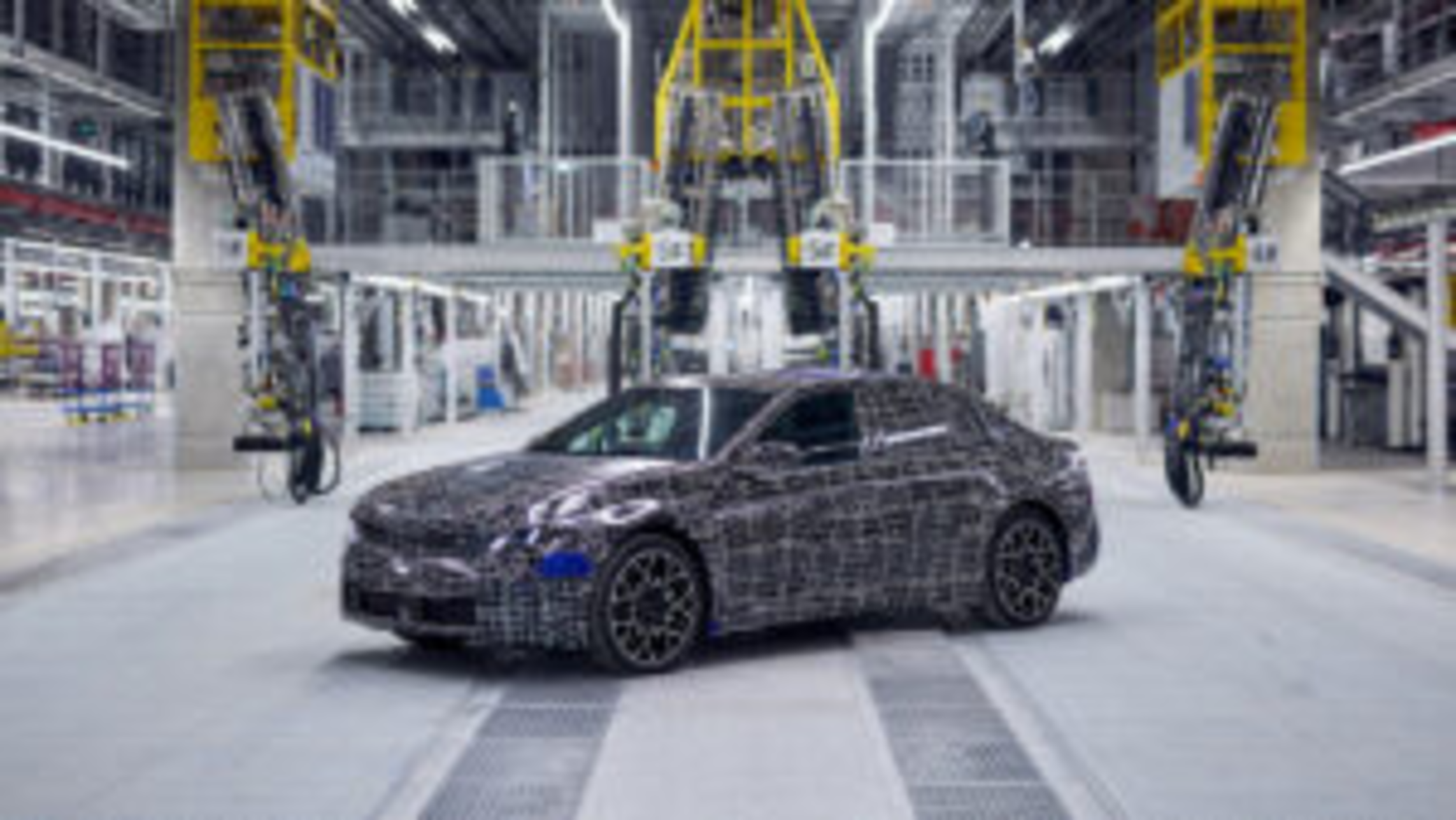
BMW has premiered its newly designed fully electric i3 Sedan following endurance tests in Sweden.
Available in the U.S. next year, the new i3 will have a new front and rear, new proportions, and a completely reinterpreted light signature, according to BMW. It will also offer an estimated range of up to 440 miles.
Inside, the sedan will have BMW Panoramic Vision, a new operating system, and an optional 3D Head-up Display.
New Gen6 eDrive technology will power the i3 using two electric motors at an estimated 463 horsepower. A new generation of high-voltage batteries with 800-volt technology will enable ultra-fast DC charging capacities of up to 400 kW, according to BMW.
During the 2026 BMW Group Annual Conference, the OEM announced that two major electrification milestones were reached last year since the debut of the i3 and i8 in 2013.

In June 2025, BMW sold its 1.5-millionth fully-electric vehicle, and in August, its 3-millionth electrified vehicle. BMW anticipates the next milestone will be reached this year, with the 2-millionth fully electric vehicle.
“With our wide range of electrified vehicles, we have secured ourselves a strong competitive position. We remain true to our role as pioneers and continue to expand our BEV line-up: By the end of this year, we will offer our customers 20 fully-electric cars,” said Oliver Zipse, chairman of the group’s Board of Management, in an overview of the conference highlights.
During the current financial year, BMW plans to continue ramping up the Neue Klasse, beginning with the fully-electric iX3, followed by the i3.
BMW says the iX3 has seen extremely strong demand. Among pre-ordered fully-electric BMW vehicles in Europe, 1 in 3 is for an iX3.
“With the successful launch of the Neue Klasse, we demonstrated in 2025 that we are leading the BMW brand into the future, with new technology clusters and a fresh design language,” said Zipse. “The extraordinarily high demand for the first model, the BMW iX3, proves that pioneering spirit, innovation, and courage deliver results.
“We will maintain the high pace of our innovation rollout as we introduce the technologies of the Neue Klasse across our entire portfolio: Between now and 2027, we will present more than 40 new or updated models. These will also include the BMW 3 Series and BMW X5: two all-new models in two of our key segments, offered with all drive train variants. In this way, we are ushering in a new era of technology neutrality at the BMW Group.”
BMW also says that the i3’s product development, supply chain plans, and production are being carried out with a holistic sustainability perspective.
The focus throughout is on reducing CO2e emissions, using secondary materials in selected components, and consistently applying the principle of “Design for Circularity” — a larger share of secondary materials, an intentionally reduced range of materials, and optimized dismantling capabilities, a BMW press release states.

“The front bumper trim, for example, consists of 30% recycled plastic,” the release says. “The range of different materials used to make it has been reduced from 15 in the previous, seventh-generation BMW 3 Series to seven in the forthcoming one (mounted parts excluded).
“Moreover, by incorporating a particularly recycling-friendly type of plastic, the BMW Group has successfully increased the share of recyclable plastic from approximately 46% in the previous generation to about 85% in the upcoming version. This lays the foundation for high-quality plastic recyclates to be recovered after the vehicle reaches the end of its life.”
The new model’s seat covers will also be made of a recyclable textile composite.
In total, the new i3 will consist of nearly 30% secondary materials. Its cast aluminum components, including the front and rear knuckles and wheel carriers, will be made of 80% secondary materials. The alloy wheel rims will be 70% secondary aluminum. And the housing for the rear electric motor will be up to two-thirds secondary aluminum, with a proportion of the energy used to make it sourced from renewables.
BMW says, depending on the drivetrain variant, annual mileage, and the electricity source used to charge it, the new i3 50xDrive will achieve a CO2e advantage over a comparable combustion-engine model after one to two years of use.
An “Efficient Dynamics” technology package, including aerodynamics, lightweight construction, rolling resistance, and overall energy management, will also optimize efficiency across all subsystems, according to the release.
BMW found that, through specific measures during i3 product development, supply chain CO2e emissions were lowered by about a third.
Images
All photos of the BMW i3 exterior and interior provided by BMW