
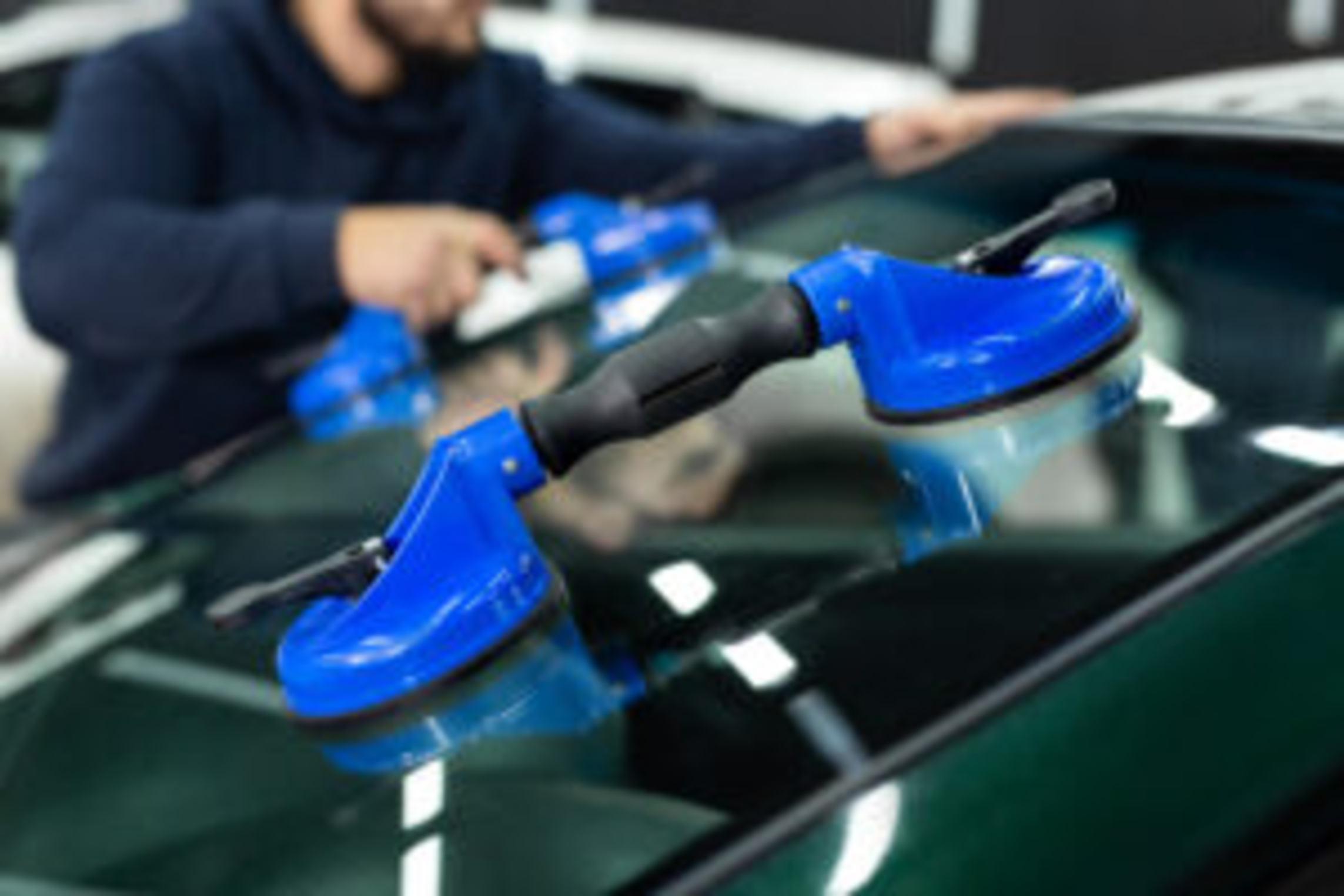
GM releases windshield position statement

The windshield is a critical safety feature in GM vehicles, especially with the increasing role of advanced driver assistance systems (ADAS) technologies, and the use of aftermarket or non-GM original glass is not approved by the company for replacement, a new GM position statement says.
“At General Motors (GM), safety is our top priority,” the statement says. “Our vehicles, safety systems, and components are designed, engineered, tested, and validated to help ensure protection for vehicle occupants. This includes careful selection of every part, including windshields.”
Aftermarket glass may have material, dimensional, and optical clarity specifications that differ from the exact standards designed, engineered, tested, and validated for use with GM vehicles and their ADAS, the statement says. It adds that the structural integrity and overall performance of a GM vehicle safety system are highly dependent on maintaining the exact specifications of each component, including the windshield.
Many GM vehicles are equipped with ADAS, such as Super Cruise, Adaptive Cruise Control, Automatic Emergency Braking, and Lane Keep Assist, the statement says.
“These systems rely on precise calibration and integration with sensors and cameras embedded in or mounted near the windshield,” the statement says. “Replacing the windshield with inferior or non-approved glass can compromise the performance of these systems, potentially leading to safety risks.”
The statement adds it is “critical” that a service point calibration/learn procedure is performed whenever a front-view windshield camera or sensor is removed, reinstalled, or replaced, or when the windshield itself is removed and replaced.
“This helps ensure that ADAS features continue to function as designed,” the statement says.
GM original equipment (OE) windshields are also designed with specific features that contribute to both safety and occupant comfort.
“Many GM windshields include enhanced acoustic dampening technologies to reduce wind, road, and engine noise,” the statement says. “Aftermarket windshields may not incorporate these features, which can increase noise levels within the cabin.”
GM adds that its windshields are engineered to filter UV and infrared rays, helping to protect vehicle occupants and sensitive interior components from damaging sun exposure.
“The materials and construction of GM glass also play an important role in maintaining cabin temperature and occupant comfort,” the statement says. “Inferior glass may result in increased cabin temperatures, which can degrade the interior environment and increase the load on the vehicle’s climate control system.”
GM structural and safety testing, which includes roof strength, airbag deployment, and vulnerable road user impacts, such as pedestrian protection, is performed using GM genuine parts, including OEM glass, the statement says.
“GM does not conduct structural or safety testing using aftermarket glass and cannot confirm whether any such non-GM parts have been validated to the same performance and safety standards,” the statement says.
The optical quality of GM windshields is tested to meet “stringent” internal standards that go beyond the Federal Motor Vehicle Safety Standard (FMVSS) 205.
“Using inferior glass may result in increased distortion, impairing the driver’s vision, and potentially leading to safety concerns,” the statement says.
Any damage, failure, or nonperformance arising from the installation or presence of non-GM (aftermarket, salvage, recycled, reconditioned, or other) parts, accessories, or modifications is not covered under the GM New Vehicle Limited Warranty or any GM service plans, the statement says.
“To ensure continued warranty coverage, GM requires that collision, structural, and system-dependent repairs utilize GM OE parts and GM-approved procedures,” the statement says.
GM says it “strongly recommends” the use of GM Genuine parts (OEM glass) for all windshield replacements.
“For the continued safety, comfort, and performance of GM vehicles, we urge all service providers to use only GM Genuine Parts and ensure that proper calibration procedures are followed after windshield replacement,” the statement says.
Organizations that represent the glass replacement industry have been debating the possible implications of the federal bill H.R. 6688, “ADAS Functionality and Integrity Act,” in recent weeks.
A U.S. House Subcommittee passed the bill, which would give the National Highway Traffic Safety Administration (NHTSA) the authority to develop ADAS calibration guidelines.
The Independent Glass Association voices concerns that, if passed, federally published ADAS performance validation metrics could become a benchmark for attorneys to use to judge whether a repair was performed properly.
“For example: If a shop performs a calibration exactly according to OEM procedures but does not perform an additional federal validation protocol that later becomes widely recognized, a plaintiff’s attorney may argue the shop failed to meet the accepted standard,” the release says. “Without explicit safe-harbor protections for repair facilities that follow OEM procedures, the legal exposure for independent shops could increase significantly.”
However, the Auto Glass Safety Council (AGSC) feels differently about the bill. The organization cites, within a release, opinions from AGSC’s general counsel, Kim Mann, who says the bill wouldn’t allow NHTSA to require the guidelines.
“It just provides a metric if they choose to do so,” the release says. “Mann says the bill does not address, nor even purport to address, any shift in liability for any entity, regardless of function. Mann also claims in the release that the bill is focused on vehicles that have been ‘modified or customized.’”
The bill mentions in Sec. 2(a)(4) that the guidelines must address maintaining functionality of ADAS following “repair, modification, or component replacement,” the release says.
“However, it must be noted that the section in which this provision appears deals exclusively with vehicles that have been modified or customized,” the release says. “While it is possible to argue that the repair and replacement mentioned in Sec. 2(a)(4) applies to all motor vehicles, not just to those that have been modified or customized, that reading does not appear consistent with the stated intent of the bill, Mann states.”
IGA argues that while AGSC’s release correctly notes that the bill directs NHTSA to develop guidelines and validation metrics, rather than direct regulatory mandates for repair shops, focusing solely on the technical distinction overlooks the far more important question.
IGA asks, “How will these guidelines actually be used once they exist?”
The release says that automotive repair and insurance claims administration federal guidelines rarely remain optional.
“They quickly become de facto standards used by state lawmakers, insurers, third-party administrators (TPAs), network operators, and litigators to determine how repairs must be performed and whether shops get paid,” The release says.
Insurers and TPAs can quickly adopt federal test protocols and performance validation metrics as conditions for network participation, requirements for claim reimbursement, criteria for denying repair invoices, and benchmarks for litigation.
“In other words, what begins as a federal guideline can easily become a mandatory requirement imposed through state legislation and insurance claims administration,” the IGA release says. “Independent shops have seen this pattern repeatedly across many areas of vehicle repair.”
IGA also disagrees with AGSC’s interpretation that the bill primarily targets vehicles that have been heavily modified or customized. It notes that the legislation directs NHTSA’s guidelines to address ADAS functionality for repair, modification, and component replacement.
“Replacing a windshield is, by definition, component replacement,” IGA writes. “Windshield replacement also involves temporarily removing and reinstalling forward-facing cameras and other ADAS sensors. That process directly involves the physical displacement and repositioning of sensor systems, which the bill explicitly instructs NHTSA to examine when establishing calibration tolerances and performance validation metrics.”
IGA goes on to express concerns about reimbursement.
“Perhaps the most important issue missing from many interpretations of H.R. 6688 is who pays for the additional procedures that may arise from these guidelines,” the release says.
Whether they are validation protocols, confirmatory tests, or operational integrity metrics, each of the steps requires time, equipment, and trained technicians, the release says.
“The legislation does not address reimbursement obligations for insurers or third-party administrators,” the release says. “History shows that when new repair procedures emerge without clear reimbursement protections, independent shops are often expected to absorb the cost while insurers resist payment. The IGA believes federal policy related to vehicle repair safety should never create unfunded mandates for small businesses.”
IGA says that its ongoing position supports initiatives that improve vehicle safety and ensure proper functionality of ADAS. However, federal guidance related to post-repair ADAS performance must also ensure that independent repair facilities remain able to compete fairly.
This includes consumers retaining the freedom to choose their repair provider and keeping insurers from imposing unfunded operational mandates. It adds that repair facilities that follow OEM procedures should receive clear liability protections.
“H.R. 6688, as currently written, does not yet provide these safeguards,” the release says. “For that reason, the IGA continues to engage with policymakers to pursue targeted amendments that clarify the bill’s scope, protect independent repair businesses, and ensure fair reimbursement for any additional procedures created by federal guidance.”
Image
Photo courtesy of Artem Zakharov/iStock