
Ohio legislator: OEM parts bill would curb ‘deceptive practices,’ foster claim and repair transparency

Ohio House Bill 636, called the “Auto Insurance Transparency Act,” would ensure consumer choice of vehicle replacement parts post-collision and repair process transparency, according to sponsor Rep. Mark Johnson (R-District 92).
Johnson presented his bill to the House Insurance Committee on Wednesday.
“Insurance policies must allow a policyholder to choose between original equipment manufacturer, OEM, parts for vehicle repairs, even if the standard policy limits payment to aftermarket parts, as long as the policyholder agrees to pay the difference in cost,” he said.
He added that the bill’s transparency requirements would apply to repair facilities and insurance companies in the state.
“It’s just an option,” he said, adding that clear disclosures on insurer estimates would be required.
“Repair shops or installers would have to include a written breakdown of any non-OEM parts, whether OEM parts are available and explain the policyholder’s right to choose OEM parts,” Johnson said. “Estimates would also need to clearly state that aftermarket part warranties are provided by the part manufacturer or distributor, not the vehicle manufacturer. Aftermarket exterior body parts manufactured after 1990 would have the manufacturer’s name or logo permanently affixed before installation.”
Vice Chair Meredith Craig (R-District 77) asked whether anything currently prevents a consumer from paying the difference between an OEM part and a non-OEM part. Johnson answered that he isn’t aware of anything.
“It’s just transparency [to] let the consumer know,” he said. “Between collision repair centers, you can get an estimate that one guy says, ‘I’ve got a brand new car,’ he’s going to bolt on OEM parts. The next guy is going to put aftermarket parts that’s a copy, and they don’t tell each other. I’ve got a $300 difference between the two, and nobody knows… It’s not only the insurance companies, but the collision repair centers; put everybody on a level playing field.”
Johnson added that many of the mainline insurance companies in the U.S. already include OEM parts in their policies.
“This bill provides much more transparency among the collision repair shops themselves,” he said. “That’s where a lot of deceptive practices are. I have nothing against aftermarket parts… I would want them on my car at times — depends on the vehicle, and how old that vehicle is, and how much you value that vehicle.”
Ranking Member Derrick Hall (D-District 34) asked how many policyholders would be impacted annually. Johnson didn’t have an answer and deferred to a collision repair association without providing the name.
Chair Brian Lampton (R-District 70) asked whether aftermarket parts manufacturers are OK with the labeling requirements of HB 636. Johnson answered that the collision repair business voiced concerns about labeling, adding that it wouldn’t be a “dealbreaker” to amend that portion of the bill.
“The better collision repair shops — they want to turn out a quality product, and there are differences between the aftermarket parts, so that’s where that came from,” Johnson said.
If passed, the act would require the insurer, repair facility, or installer providing the estimate to include in the written estimate:
-
- “Clear identification of each non-OEM aftermarket replacement part;
- “An indication of whether OEM aftermarket replacement parts are readily available and, if so, whether using OEM aftermarket replacement parts would require the repair to be completed by another repair facility or installer;
- “A notice that the person requesting the repair has the right to choose OEM replacement parts, even if those parts are not fully covered by the person’s automobile insurance policy, as long as the person agrees to pay the difference between the cost of the OEM replacement parts and the maximum policy coverage for the same part sourced from a non-OEM aftermarket replacement parts manufacturer; and
- “A notice with the following language in 10-point or larger type: ‘This estimate has been prepared based upon the use of one or more aftermarket replacement parts supplied by a source other than the manufacturer of your motor vehicle. Warranties applicable to these aftermarket replacement parts are provided by the parts manufacturer or distributor rather than by your own motor vehicle manufacturer.’”
Last week, the Utah House passed an OEM crash parts bill following a favorable recommendation from its Transportation Committee.
As amended, HB 119 would require auto insurance policies at the time of purchase to include “ a clear and conspicuous disclosure of whether the insurer intends to use non-OEM aftermarket crash parts or OEM aftermarket crash parts for repairs.”
It would also require insurers to use crash parts that are “substantially equivalent to original equipment manufacturer aftermarket repair parts.”
Bill sponsor Rep. Colin Jack (R-District 73) said during the Feb. 24 hearing that “auto body shops are instructed by the insurance companies that they need to buy a lesser part.”
Jack clarified that the bill wouldn’t require the use of OEM parts, but rather ensure that if they aren’t used, they would meet the same level of quality as OEM parts.
Images
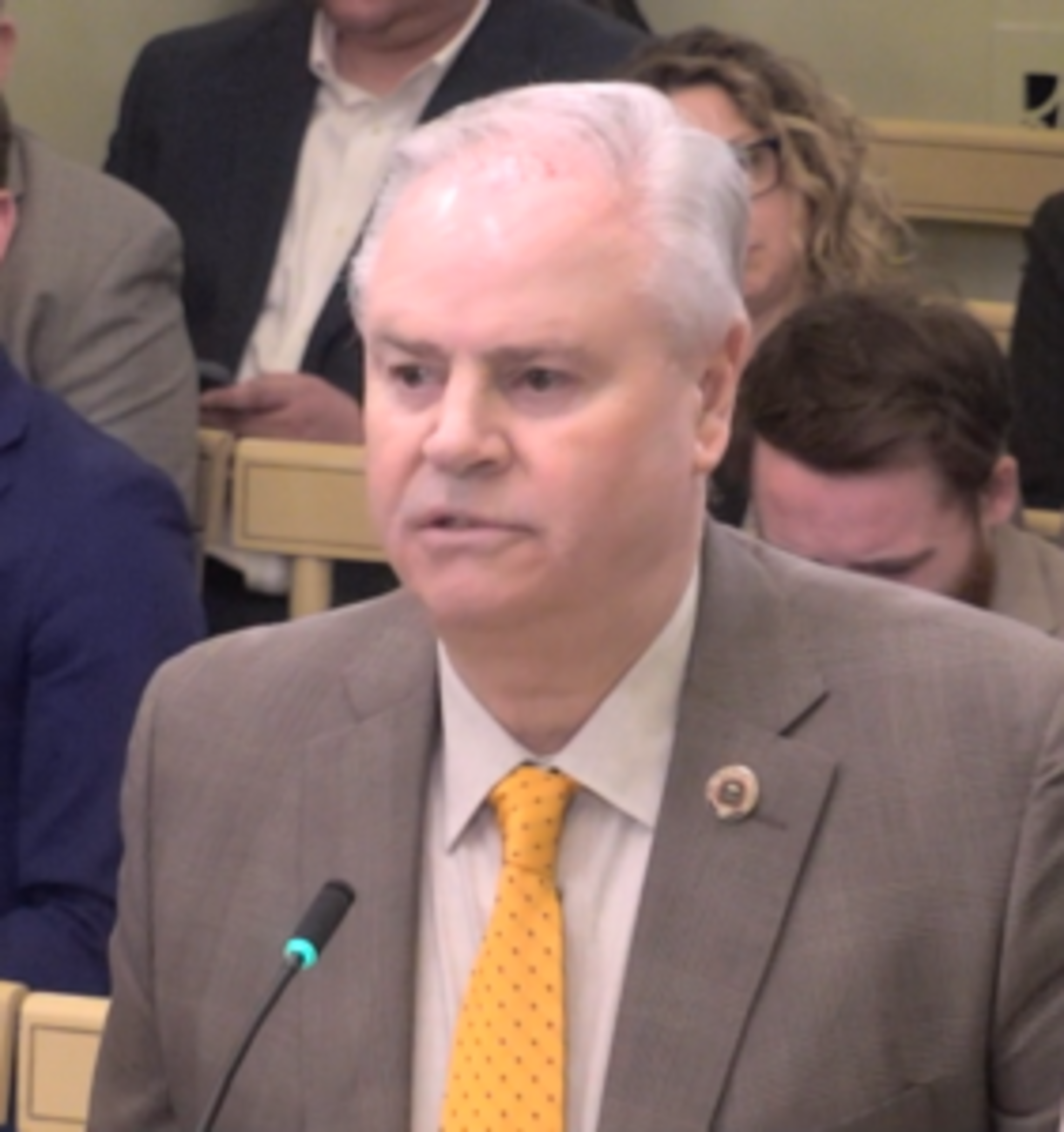
Featured image: Ohio Rep. Mark Johnson (R-District 92) during a House Insurance Committee hearing on March 4, 2026. (Video screenshot)