
Virginia bill requires insurers to explain lowering of adjusters’ initial report

A Virginia bill would require insurance companies to offer a detailed explanation anytime it lowers an adjuster’s initial estimate or report.
The bill also prohibits a public adjuster from modifying the initial estimate without explanation.
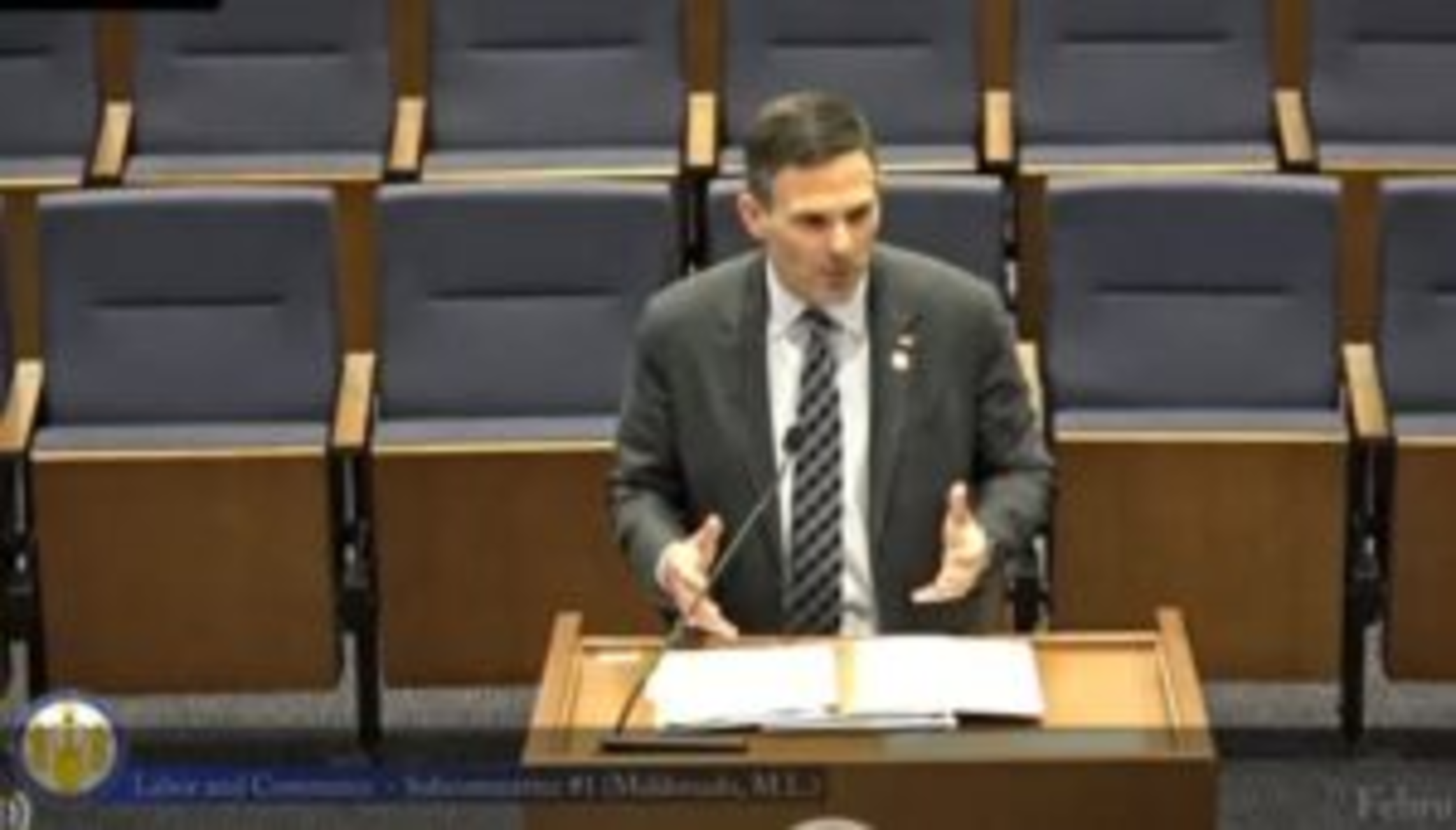
HB 808 was introduced Jan. 13 by Rep. Dan Helmer (D-10) and sent to the House Labor and Commerce Committee. The committee voted to recommend the bill with minor amendments on Monday.
Helmer said the bill is a result of complaints he’s received from constituents. He gave a scenario of adjusters giving an estimate of $20,000 to repair a home after a disaster or $8,000 to replace a vehicle.
“And then you get a note from the insurance company that says, ‘Oh, actually, we are only going to cover $6,000 of the $20,000, or $4,000 of the $8,000, and there’s no explanation because it is not required,” Helmer said. “We are simply trying to address that. Other states from Florida to Maryland have taken cracks at this, so it is not a Red State or Blue State problem; it is an all-of-us problem. This bill requires a detailed explanation and a record of changes.”
Jay Spear, Virginia Poverty Law Center staff attorney, testified that the issue impacts those of lower income more.
“Keep in mind it is very intimidating for folks to go through an insurance claim; they don’t do it that often,” Spear said. “I think these protections are needed.”
Jordan Hendler, Washington Metropolitan Auto Body Association (WMABA) executive director, also spoke in favor of the bill. She said this is an issue that the collision repair industry sees thousands of cases of daily.
Repairers, by helping consumers, witness the difficulties in reaching claim centers, which have transitioned from regional to centralized hubs, she said.
“Instead of somebody [insurance representative] that you can look to and talk to in person, it is now done remote using AI, rule strategies, and other things that when explanations come back, it is using quotes like, ‘The manager said,’ and there is no name associated and no explanation,” Hendler said.
Hendler also wrote an official letter of support for the bill that outlines a systemic lack of transparency in the claims process, which allows companies to modify adjusters’ reports behind the scenes and often reduce the payout without the consumer knowing why.
“Many times, and especially with vehicle repair, there is disregard for carmaker requirements and safety standards for repair,” the letter says. “While insurance companies have recently reported record-breaking profits, they have done so by undercutting claims at the expense of Virginia consumers. HB 808 restores fairness by ensuring payouts are based on safety and facts, not hidden bottom-line tactics.”
The letter says that HB 808 is a common-sense consumer protection measure.
“Since 2020, insurers have increasingly used remote ‘desk adjusters’ or AI to slash payouts without ever seeing the damage,” the letter says. “It is now common for a field estimate to be cut by 20% to 50% by someone — or something — miles away. This practice, prevalent among the largest market-share providers, forces Virginians to pay out of pocket for basic safety procedures and quality parts. HB 808 ensures that the experts who actually inspect the loss define the repair, holding insurers to their promise of making the policyholder whole.”
Sen. Josh Hawley (R-Missouri) grilled Allstate and State Farm executives durng a Senate hearing last year, saying testimony from adjusters and policyholders, along with previous lawsuits, appears to show the companies are “running a racket” and a “pattern of fraud” while making “outrageous profits.” During the hearing, adjusters testified about insurance companies pressuring them to reduce estimates.
Last month, Andrew Batenhorst, Pacific Collision Center repair manager, took to the mic at CIC and said he’s seen a 40% to 50% increase in out-of-pocket expenses for parts, labor, and materials not approved by an adjuster since October. He said nothing has significantly changed at his shop during that time period, including the mix of work, repair planning, damage assessment style, or a large increase in operational costs.
The rise in out-of-pocket expenses in claims handling was also discussed during a panel at the Automotive Insights Symposium held by the Federal Reserve Bank of Chicago last week.
Hendler’s letter goes on to reiterate that consumers are often left in the dark about how their settlement was calculated and are rarely shown the original estimate versus the final one or given substantiation for the removed items.
“The bill requires adjusters to retain all versions of the estimate of loss and mandates that any modifications include a detailed explanation of why the change was made,” the letter says. “This empowers consumers with the evidence they need to dispute unfair settlements or seek a second opinion.”
Vague settlement answers leave consumers with a “sue or submit” ultimatum, Hendler says.
“Those who can’t afford an attorney are forced to accept unsafe, low-quality repairs or leave their vehicles damaged,” the letter says. “Even worse, insurers often use ‘delay tactics’ that leave cars sitting for months, racking up rental costs and emotional stress. HB 808 forces insurers to ‘show their work’ through detailed explanations, allowing disputes to be resolved through simple communication rather than expensive, month-long lawsuits.”
The letter notes that the bill does not force insurance companies to pay more than what is fair and correct.
“It simply forces them to be honest about how they arrived at their numbers,” the letter says. “For a consumer who has paid premiums for years, the right to see an unaltered report from the person who actually inspected their damage is a matter of basic fairness.”
Image
Photo of Rep. Dan Helmer (D-10) speaking before the House Labor and Commerce Committee/screenshot