
REPAIR Act advances to Energy and Commerce, markup process airs language amendments

The House Subcommittee on Commerce, Manufacturing, and Trade voted to move the new Right to Equitable and Professional Auto Industry Repair (REPAIR) Act to the Committee on Commerce and Energy, marking the bill’s first move during this year’s legislative session.
On Tuesday, Rep. Erin Houchin (R-IN-09) also brought forth an amendment to the bill and asked that it not be read for the record.
“I certainly support the principle of right to repair and the work that Dr. Dunn has done on the legislation,” she said. “The goal should be to empower consumers to make informed decisions that are right for them. This amendment is narrowly focused on clarifying how consumer choice operates in a post-collision context. It ensures that repair decisions are driven by safety, transparency, and informed consent, not by default insurance practices or financial pressure that might not always align with the vehicle owner’s best interest.
“Specifically, the language makes clear that the vehicle owner should not be penalized for choosing their repair facility following documented manufacturer repair procedures, selecting replacement equipment, or obtaining an independent appraisal. The amendment also establishes basic guardrails around consumer consent. If a requested repair procedure or replacement part is not reasonably available, the vehicle owner must receive written notice and provide affirmative consent before an alternative is used. This preserves flexibility while ensuring transparency about the safety implications of those decisions. Importantly, this amendment does not mandate parts, prices, labor rates, or insurance practices. It is an information and transparency fix designed to get repairs right the first time, reduce repeat repairs and downstream liability, and ensure that a right to repair bill ultimately protects both consumer choice and vehicle safety.”
Following Dunn’s agreement with Houchin to continue talking about her concerns, she withdrew the amendment.
Dunn responded to Houchin’s amendment with criticism despite not having fully read it.
“I’m not sure that if taking the automakers’ bill text that that combats the REPAIR Act is the best place to start, which it seems like this amendment does,” he said. “I understand that the continued conversations around intellectual property, barriers to repair, consumer choice, among other provisions in the amendment, is important to other members of this committee, and I’m happy to work with you on that. And we’ll have candid conversations with each of you after this hearing.”
Committee member Rep. Debbie Dingell (D-MI-06) added that the REPAIR Act, as currently written, could impose “so-called repair mandates that limit consumer choice, undermine manufacturer documentary repair procedures, and create confusion for vehicle owners navigating the claims and repair process after collision.”
As a result of those concerns, Dingell said she strongly supports Houchin’s amendment to establish clear prohibitions on certain repair mandates.
“This amendment would prevent penalizing vehicle owners for choosing a repair facility, authorizing repairs that follow manufacturer documented procedures, selecting appropriate replacement equipment, or seeking an independent appraisal to determine the true cost of repairs,” she said. “It promotes transparency and informed consent by requiring repair facilities to notify vehicle owners when requested replacement equipment or repair procedures do not exist. It also clarifies that vehicle owners should not be forced to accept a total loss determination when a vehicle can be safely and legally repaired for less than its actual cash value, and the owner authorizes those repairs.
I think that these are very common-sense guardrails that protect consumers without imposing mandates.”
Following the hearing, Society of Collision Repair Specialists (SCRS) Executive Director Aaron Schulenburg posted on LinkedIn, commending Houchin’s amendment that focuses on collision repair.
“These amendments proposed during the House CMT subcommittee markup signify an understanding of what independent repair businesses are challenged with and serve to protect the vehicle owner’s right to choose where and how their vehicle is repaired,” he wrote. “Rep. Houchin’s amendment ensures that information to deliver safe, proper repairs remains accessible, AND that consumers remain in the driver seat and are not steered away from the decisions that best serve the interests and the safety of their family, and their investments.”
Automotive industry organizations and associations have expressed opposition to the bill, saying it would disrupt the vehicle sector, increase consumer risk, weaken safety protections, and expand commercial access to sensitive driver data. They have proposed an alternative framework to ensure repair parity for the independent market with the Safety as First Emphasis (SAFE) Repair Act.
At the hearing, Dunn addressed a concern he said he’s heard often from automakers and dealers — consumers choosing to have vehicle repairs performed at an independent shop “are choosing a risky or less safe option than dealership repairs.”
“To be blunt, this unwarranted, unfounded claim makes my blood boil,” he said. “I’m offended that automakers would claim I’m making an uninformed or unsafe decision for me, my children, my grandchildren, who ride in my vehicle.
“The simple fact is the local repair shops have less expensive repairs because they offer safe, fast, accessible, and a very competitive environment in the automotive aftermarket industry that drives innovations and also drives costs down. The attempt to obfuscate this fact by belittling these workers or business owners does not sit well with me.”
Written testimony from the Alliance for Automotive Innovation (Auto Innovators) to the subcommittee in January regarding “right to repair” states that 75% of post-warranty repairs are performed by independent repair shops, “reflecting a competitive and accessible repair market.” Auto Innovators also testified before the subcommittee during a Jan. 13 hearing.
“Automakers have no incentive to restrict where consumers repair their vehicles,” it states. “If consumers cannot have their vehicles repaired safely and conveniently where they live, brand loyalty suffers in a highly competitive marketplace.
“Beyond this market reality, automotive manufacturers have for more than a decade upheld a national Memorandum of Understanding tied to a 2013 Massachusetts law that ensures independent repair shops have access to the same diagnostic and repair information available to franchised dealers. That commitment remains firmly in place, and manufacturers continue to make the information necessary to repair vehicles available across the repair ecosystem.”
Dingell also filed an amendment Tuesday stating that while she supports the right to repair, the bill is “overly broad and risks unintended consequences for consumers and vehicle safety.”
“Independent repair shops already have access to the same diagnostic and repair information as franchise dealers through a national memorandum of understanding between automakers and the aftermarket repair community,” she said.
“This MOU, in place for more than 10 years, ensures that the independent shops receive the tools, technical data, and repair instructions they need to diagnose, maintain, and repair vehicles just as dealers do. Roughly 70% of out-of-warranty repairs already happen at these independent facilities, showing that the system works. However, this is where my colleague and I want to work with them. The REPAIR Act goes far beyond ensuring access to repair information. It could force disclosure of proprietary data, raising serious risks to cybersecurity, vehicle safety, and consumer privacy.”
Dingell also voiced concerns about the REPAIR Act’s lack of intellectual property, cybersecurity, and safety protections. She didn’t request a vote on her amendment. Instead, she asked Rep. Dr. Neal Dunn (R-FL-02), REPAIR Act co-sponsor and House Committee on Energy and Commerce vice chair, to work with her on her intellectual property concerns.
Dunn agreed to work with Dingell on her concerns but opposed her amendment.
“With the advancements in technology, vehicle manufacturers now have the ability to limit parts availability by using technology that creates barriers which are not otherwise protected by intellectual property,” he said. “One of the many examples of vehicle manufacturers can configure the network to send out authenticating pings to all parts with chips and block all parts of the vehicle that don’t respond with the correct response.
“With the proposed changes, the vehicle manufacturers are free to implement such artificial monopolies today, and in some cases, they already have. Consumers benefit from an even playing field between vehicle manufacturers and the aftermarket ecosystem, and I want to make sure any changes we make to the bill do not strip the original intent.”
Vice Chairman Russ Fulcher (R-ID-01) voiced concerns about risks to personal data access, ownership, exposure, and sale caused by the REPAIR Act.
Committee member Tom Kean (R-NJ-07) wasn’t present at the hearing but asked Chairman Bilirakis (R-FL-12) to enter his written statement for the record about his concerns with the REPAIR Act. He began reading the statement and was told he didn’t need to, entering it into the record without objection.
While the hearing was underway, Kean posted on X that he is “committed to finding solutions that support small businesses in the automotive industry.”
I recently met with the owner of J&E Auto Body, a local auto repair shop that’s been serving Clark since 1974. We had a productive discussion about the challenges facing independent repair businesses and legislative pathways to ensure they can continue serving their customers… pic.twitter.com/u1peXnUUO5
— Congressman Tom Kean (@CongressmanKean) February 10, 2026
Several other vehicle safety and affordability bills were also moved out of the subcommittee on Tuesday to the House Committee on Energy and Commerce, including the Safely Ensuring Lives Future Deployment and Research In Vehicle Evolution (SELF DRIVE) Act, Motor Vehicle Modernization Act, ADAS Functionality and Integrity Act, and Driver Technology and Pedestrian Safety Act.
Images
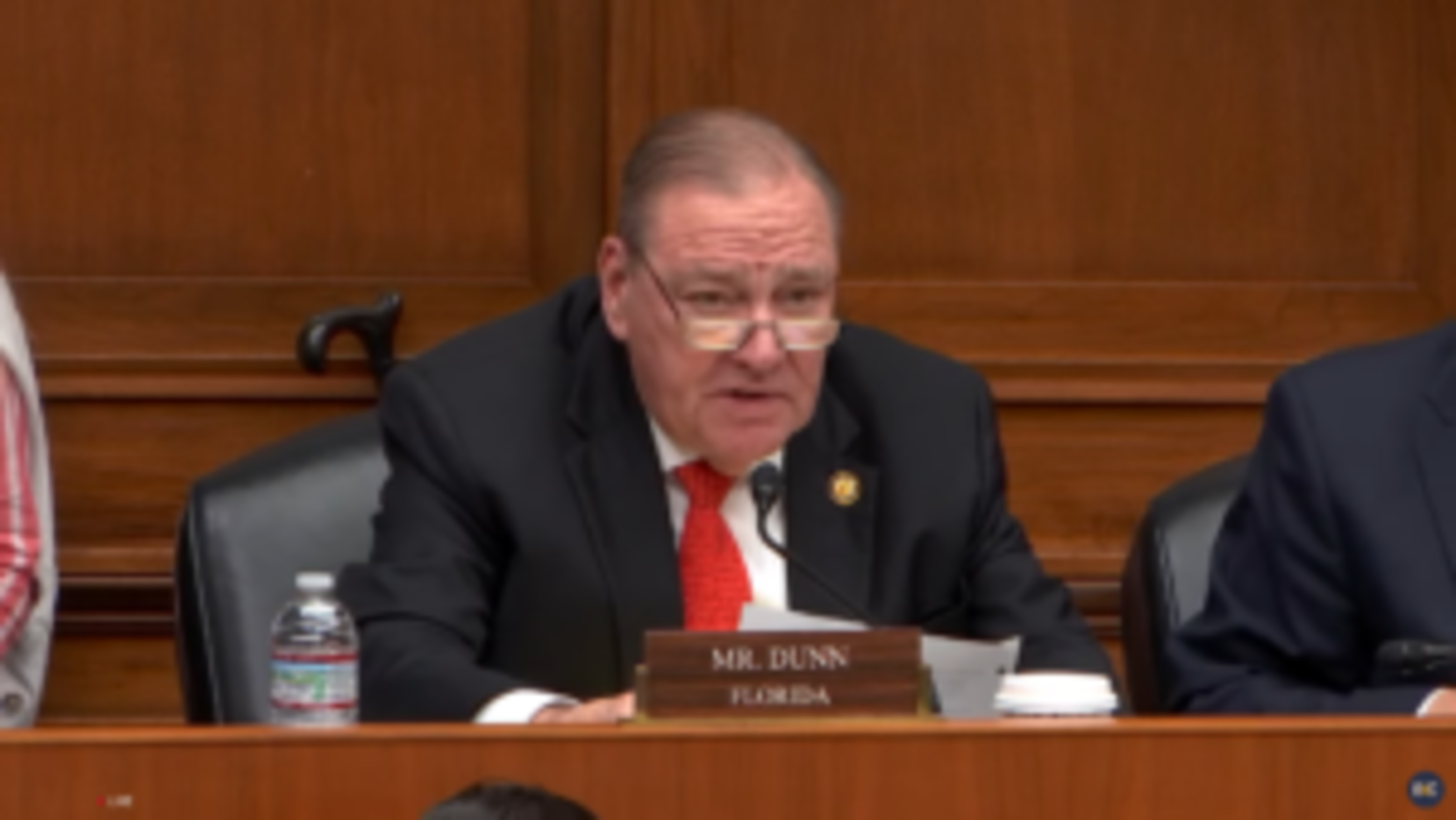
Featured image: Rep. Dr. Neal Dunn (R-FL-02), REPAIR Act co-sponsor and House Committee on Energy and Commerce Vice Chair, speaks during the subcommittee’s markup hearing on Dec. 10, 2026. (YouTube screenshot)