
Rivian CEO tells Automotive News tariff policy has stabilized for the EV company

Rivian CEO RJ Scaringe tells Automotive News that as tariff policy has evolved, the impact is smaller on his company’s bottom line.
“The thing to keep in mind is that the tariff environment has been evolving a lot, and it is evolving sometimes on a daily basis but there are a few fundamental truths that exist regardless of political party, meaning they are going to be very stable,” Scaringe said on Automotive News’s “Shift” podcast.
One point of alignment between both political parties is a desire to bring manufacturing to the United States and to have more control over critical supply chains, not just for the auto industry, but for national security, he said.
This includes supply chains needed for batteries, electric vehicles, and industrial operations, Scaringe said.
“That overall view informs how we make decisions, to the extent that when we can, we’re sourcing content from the United States,” he said.
It isn’t possible to source all material, such as heavier rare earth metals, he added. He said those metals are mostly controlled through Chinese-owned entities.
“Us and a number of manufacturers are working very hard in partnership with the administration to create new upswing sources of supply for the processing of these heavier rare earth metals, which are critical for lots of things, including electric vehicles,” Scaringe said.
He said this includes magnets and a number of components that go into batteries, such as natural and synthetic graphite.
“This is an example of where these new supply chains need to be created, but they take time to create,” he said.
Some of these supply chains exist in Canada and Mexico, he said. He said the chains are large and have been developed over decades.
“There was the first immediate tariffs, then there was exemptions around automotive components, and then that exception was broadened because for companies that were highly vertically integrated, like ourselves, we don’t buy automotive components. Often, we buy raw materials to make them into automotive components in the United States. We were getting punished in a sense because we were buying raw materials that were produced in the United States.”
Scaringe said that the industry is complex with many layers to the supply chain, and it took time for the policy to match the intent, which was meant to give companies time to move supply chains to the United States.
“As it stands today, tariff impact to us is in the low hundreds of dollars, at [one] time it was in the thousands of dollars, and we felt that, but it has stabilized,” he said.
Rivian announced in October that it planned to lay off 600 employees, or about 4.5% of its workforce.
The company lost $1.1 billion in Q2, and “because of some of the recent changes associated with regulatory credits and its second quarter performance,” the company increased its guidance for adjusted EBITDA losses for the full year to $2–2.25 billion, according to an Aug. 5 press release.
The release states that during the quarter, the OEM produced 5,979 vehicles at its manufacturing facility in Normal, Illinois, and delivered 10,661.
“Production during the second quarter for both R1 products and commercial vans was limited primarily due to a variety of supply chain complexities, partially driven by shifts in trade policy,” the release says.
Nissan appears to be looking for ways to make more components in the U.S. as a way to cut its tariff exposure, according to an article by Automotive News.
The company planned to use its Decherd, Tennessee, factory for EV production, but now is looking to shape it into a hybrid factory with powertrains eventually built on the site, the article says.
Currently, hybrid powertrains are shipped from Japan to a plant in Smyrna, Tennessee, the article says. Nissan Americas Chairman Christian Meunier told the publication that shifting to domestic production would reduce Nissan’s tariff costs.
“We [must] localize as much as possible on Rogue, which is the No. 1 segment in the country,” Meunier told Automotive News. “It eliminates risk and gets scale, so that suppliers make money.”
However, the article emphasizes that moving production to Decherd would be a costly investment. This includes new tooling, reengineered lines, and building a U.S. supply base in addition to maintaining production in Japan.
Image
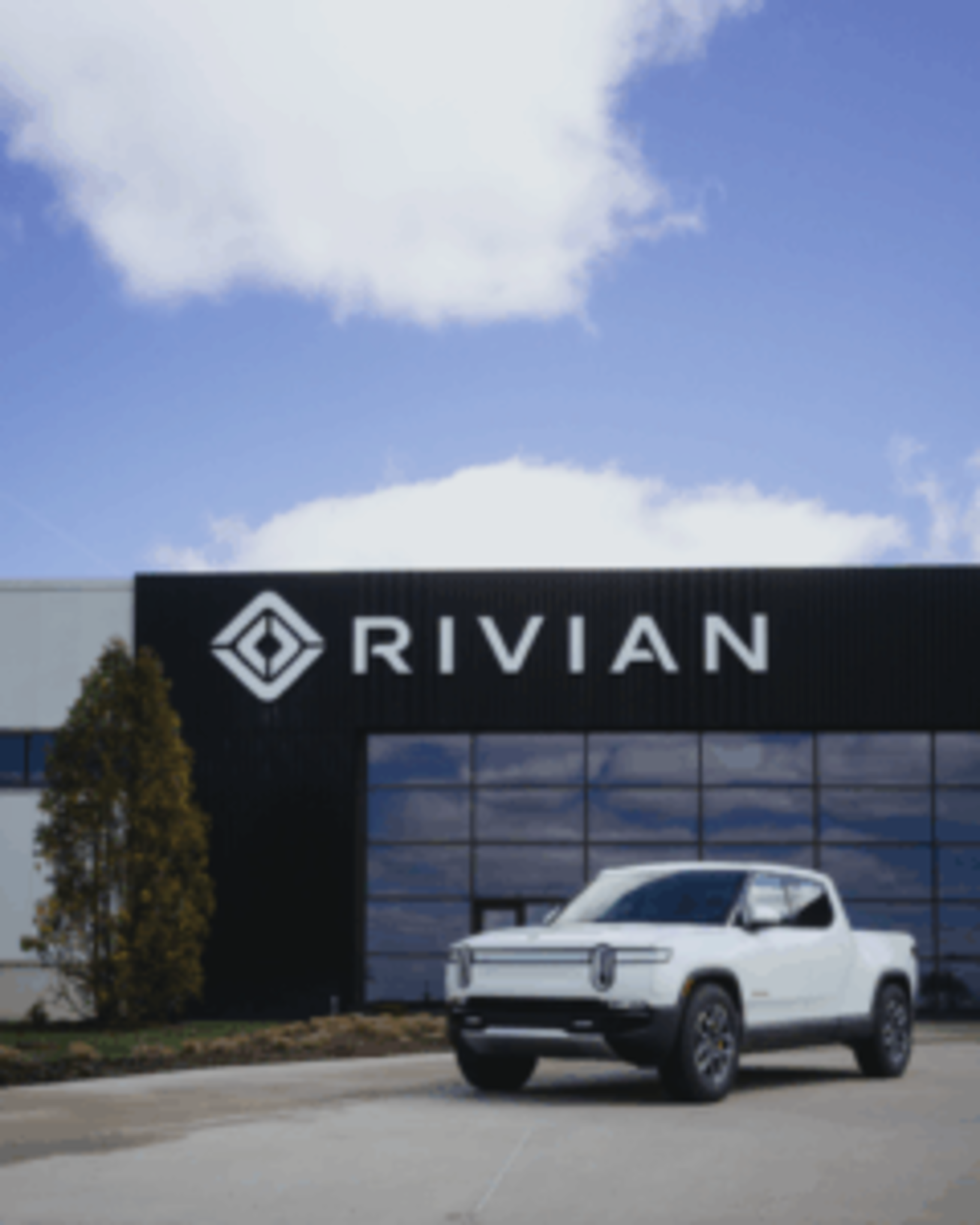
Photo courtesy of Rivian