
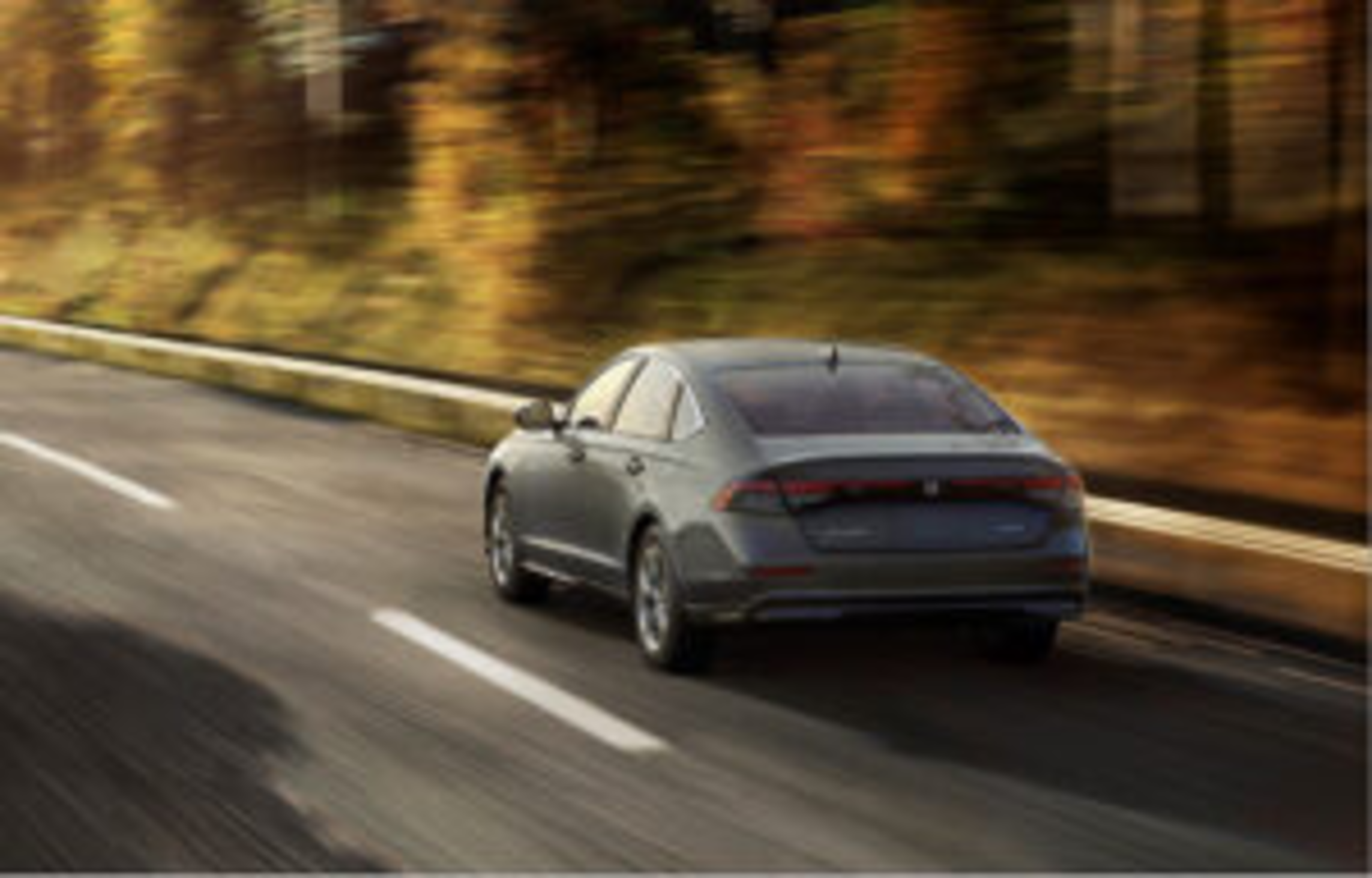
IIHS: Honda earned ‘rare’ good rating in updated crash test
The Honda Accord was the only midsize car tested to receive a good rating in the Insurance Institute for Highway Safety’s (IIHS) new rear-seat protection evaluation.
The updated moderate overlap front test was launched last year after research indicated that in newer vehicles, the risk of death is higher for restrained rear seat passengers than it is for those traveling in the front seat.
This doesn’t mean backseats have become more dangerous, IIHS said, but rather indicates that front seats have become safer due to improved air bags and seat belts that aren’t normally available in the back.
The new test is meant to “encourage manufacturers to improve rear-seat protection,” by placing a dummy in the rear driver’s side seat, IIHS said. While the driver dummy is the size of an average adult man, the rear dummy is the size of a 12-year-old child, it said.
“For a vehicle to earn a good rating, there can’t be an excessive risk of injury to the head, neck, chest or thigh, as recorded by the second-row dummy,” IIHS said. “The dummy should remain correctly positioned during the crash without submarining. The head should also remain a safe distance from the front seatback and the rest of the vehicle interior, and the shoulder belt should remain on the shoulder, where it is most effective. A pressure sensor on the rear dummy’s torso is used to check the shoulder belt position during the crash.”
Of the seven vehicles IIHS included in the crash simulation, the Accord 2023 outperformed them all while earning its “rare” good rating, it said. Also tested were:
-
- The 2023 Subaru Outback, the only vehicle to receive an acceptable rating;
- The 2023 Nissan Altima, rated marginal;
- The 2023 Toyota Camry, rated marginal;
- The 2023 Hyundai Sonata, rated poor;
- The 2023 Kia K5, rated poor; and
- The 2023 Volkswagen Jetta, rated poor.
While all seven cars provided “good protection” in the front seat, IIHS said its measurements indicated a slightly higher risk of right leg or foot injuries in the Accord which provided “stellar protection” in the back seat.
Testing indicated the rear dummy showed no heightened risk of injuries and that the Accord’s seatbelts adequately controlled its motion, IIHS said.
That wasn’t the case for the other vehicles put to the test.
“In most of the midsize cars we tested, the rear dummy slid forward, or ‘submarined,’ beneath the lap belt, causing it to ride up from the pelvis onto the abdomen and increasing the risk of internal injuries,” said David Harkey, IIHS president. “In the three poor-rated vehicles, measurements taken from the rear dummy also indicated likely injuries to the head or neck as well as to the chest.”
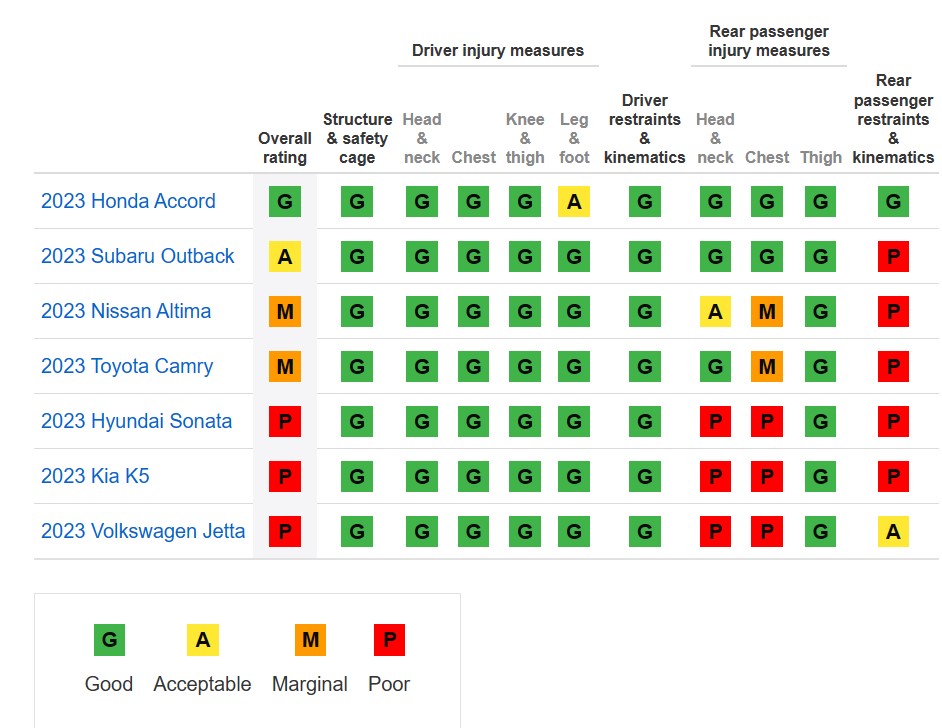
IIHS said submarining was a problem for both the K5 and Sonata, while in the Jetta the backseat passenger’s head came too close to the front seatback. In all three of the cars, testing indicated that backseat passengers were likely to sustain injuries to their head or neck, and chest.
For the Altima and Camry, the problem was that the rear dummy slid beneath the lap belt moved off the shoulder and toward the dummy’s neck. In the case of the Altima, it indicated a moderate risk of head or neck injuries for the rear passenger, IIHS said.
Although testing didn’t indicate any elevated injury risks for the rear passengers in the Outback, it did find the dummy slid beneath the lap belt and that its head came close to the seat back during the crash. Those findings indicated that there’s a likelihood of abdominal and head injuries following impact, IIHS said.
“As in the original test, the structure of the occupant compartment must maintain adequate survival space for the driver, and measurements taken from the driver dummy shouldn’t show an excessive risk of injuries,” it said.
When asked to comment on how Honda’s design helped it gain the best rankings, a spokesman pointed Repairer Driven News to a press kit detailing how the Accord’s Advanced Compatibility Engineering (ACE) body structure has improved.