
Toyota commits $10 billion investment in U.S.; begins battery plant production

Toyota announced the start of production at its new battery plant in North Carolina Wednesday, along with a commitment to an additional $10 billion U.S. investment, according to a company press release.
The $14 billion plant, located in Liberty, is the first and only Toyota battery plant outside of Japan.

“Building on its unwavering commitment to the U.S., Toyota announced an additional investment of up to $10 billion over the next five years to support future mobility efforts,” the release says. “This will bring the company’s total U.S. investment to nearly $60 billion since beginning operations here nearly 70 years ago.
According to Automotive News, a Toyota spokesperson declined to specify which projects the funds would go toward. The trade publication noted that President Donald Trump announced last month that Toyota was preparing to invest $10 billion in auto plants in the United States.
“Today’s launch of Toyota’s first U.S. battery plant and additional U.S. investment up to $10 billion marks a pivotal moment in our company’s history,” said Ted Ogawa, Toyota Motor North America (TMNA) president and chief executive officer, said in the release. “Toyota is a pioneer in electrified vehicles, and the company’s significant manufacturing investment in the U.S. and North Carolina further solidifies our commitment to team members, customers, dealers, communities, and suppliers.”
U.S. Secretary of Transportation Sean Duffy is mentioned in the Toyota release as expressing support for the investments, stating that the battery plant marks a turning point for the Piedmont Triad region.
“Under President Donald Trump’s leadership, America is open for business,” said Duffy in the release. “Toyota’s move to expand production in North Carolina is the latest show of confidence in this administration’s efforts to reshore manufacturing, generate new, great paying jobs, and inject billions of dollars into the economy. We’re just getting started!”
Automotive News also reports that Duffy said regulatory relief will be coming to automakers who wrestle with their powertrain strategies, he said.
“I haven’t been able to announce it yet because of the [federal government] shutdown, but on the horizon, we’re going to have an announcement where we’re going to have a very reasonable fuel efficiency standard,” Automotive News said he told an audience at the plant event. “And when we do that, what’s going to happen is you’re going to be able to make more cars, because your cars are going to be more cost-effective for the American consumer. We’re going to bring down the price of vehicles because we don’t have standards that, frankly, you can’t [meet].”
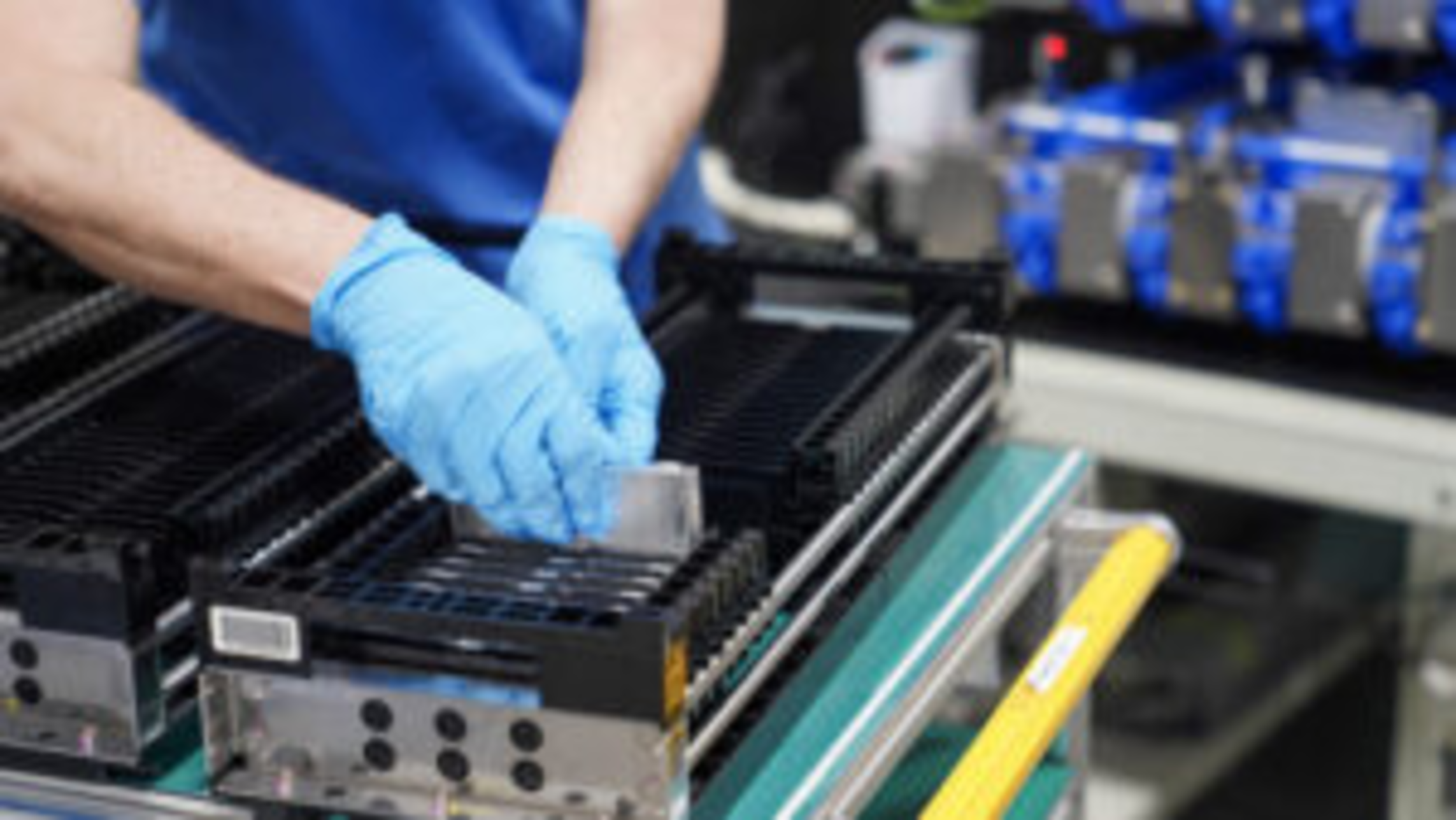
The 1,850-acre site can produce 30 GWh annually at full capacity, the release says. It will serve as the company’s hub for developing and producing lithium-ion batteries needed for its portfolio of electric vehicles.

It will house 14 battery production lines supporting HEVs, BEVs and PHEVs. The batteries will power the Camry HEV, Corolla Cross HEV, RAV4 HEV, and a yet-to-be-announced all-electric three-row BEV. Currently, the plant ships HEV modules to Toyota Kentucky and Mazda Toyota Manufacturing in Alabama, the release says.
Additional production lines at Toyota North Carolina are set to launch by 2030.
Toyota also announced the second phase of its “Driving Possibilities” initiative in Guilford County Schools and the Asheboro City School District with a Toyota USA Foundation grant of an additional $2.7 million.
“This incredible gift will provide our students and their families with life-changing opportunities,” said Wendy Poteat, president and CEO of shift_ed, a nonprofit regional leader connecting education to workforce development, and coordinating partner for the NC Driving Possibilities program. “Toyota has become a generous supporter and dedicated stakeholder in enriching our school districts by inspiring innovation and nurturing curiosity and creativity in our learners from classroom to career. Programs like these are essential in closing opportunity and exposure gaps, empowering students to reach their full potential.”
Images
Photos courtesy of Toyota.