
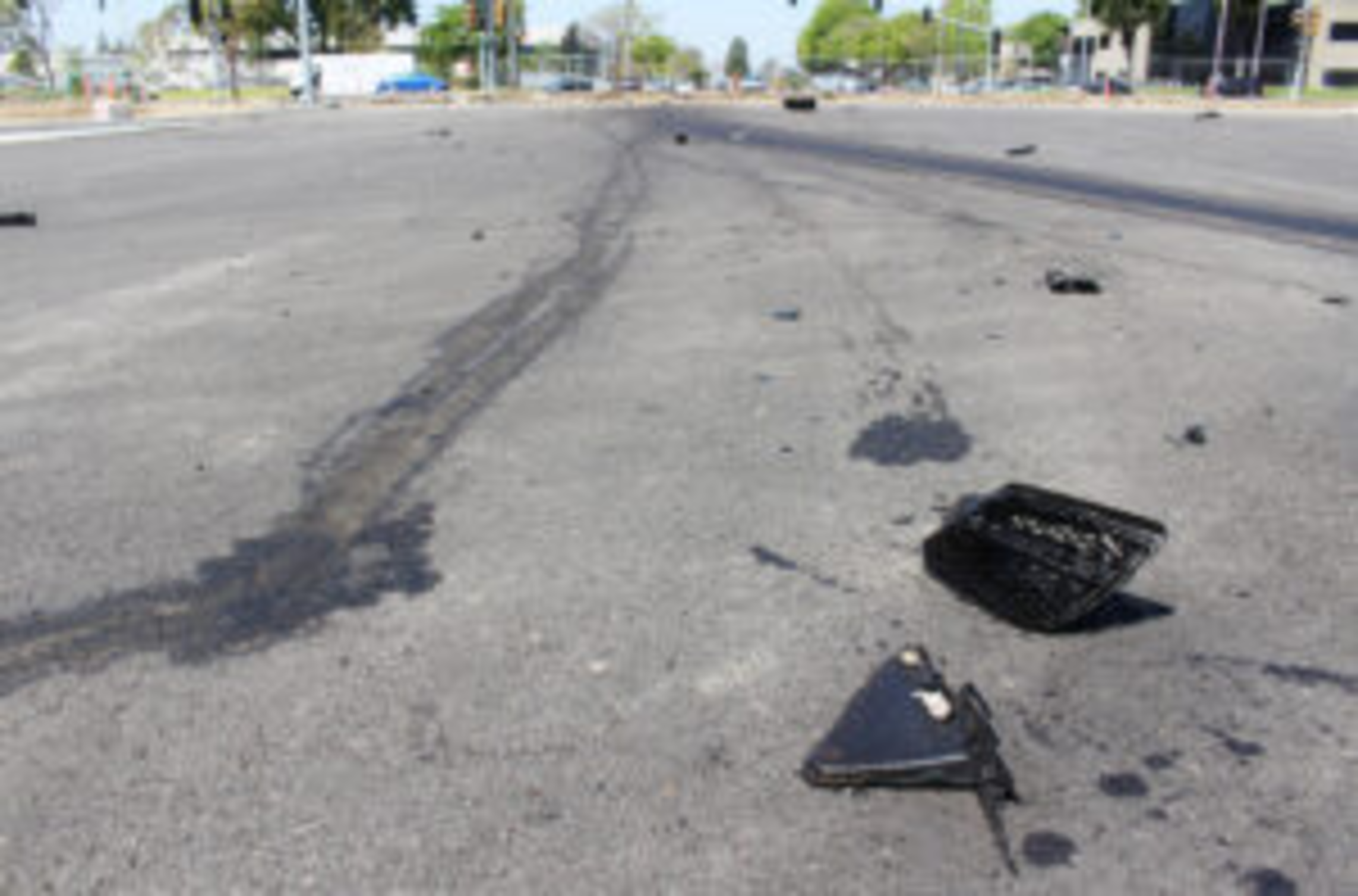
AAA Foundation calls on state, national agencies to coordinate road debris countermeasures

The AAA Foundation for Traffic Safety (AAA FTS) estimates that 319,724 crashes, 32,802 injuries, and 433 deaths between 2018 and 2023 were caused by road debris, according to new research.
On average, the findings indicate that road debris was a factor in 53,000 crashes, 5,500 injuries, and 72 deaths annually. AAA FTS notes that road debris can contribute to crashes when falling objects strike vehicles or vehicles hit debris lying on the road, and indirectly when drivers attempt sudden evasive maneuvers to avoid debris.
“All 50 states and the District of Columbia have laws regarding unsecured loads that may lead to road debris crashes; however, efforts are needed to educate drivers about these laws and about the potential risks of unsecured loads,” the study’s research brief states.
The study found that when a driver crashed after attempting to avoid road debris, the crashes were often more severe than when the vehicle struck or was struck by debris.
“While nearly 90% of all debris-related crashes featured a vehicle striking or being struck by a non-fixed object (falling or already at rest in the road), 25% of injuries and 49% of deaths involved a vehicle that crashed after avoiding an object in the road,” the brief states.
The most common sources of debris were parts that had detached from other vehicles; miscellaneous cargo, tools, and building materials; and natural debris, such as tree branches and roadkill.
The study was done because research on the dangers of road debris is limited, according to AAA FTS. Debris was more likely to be confirmed as a factor in lower-severity crashes than in fatal or serious injury crashes.
“A coordinated effort is needed to address road debris as a safety issue,” AAA FTS says. “National and state agencies should implement countermeasures, such as standardized crash documentation, prioritized debris removal, and consistent enforcement of laws regarding load securement. Drivers can also help reduce debris-related crash risks by securing their cargo, maintaining their vehicles, and adopting defensive driving techniques.”
More than 900 police reports, including officer narratives and scene diagrams, from Michigan vehicle crashes were reviewed to determine the frequency of actual debris involvement in crashes with general characteristics suggestive of possible debris involvement, the brief states. Next, national crash databases compiled by the U.S. Department of Transportation were used to determine the total number of crashes with characteristics suggestive of possible debris involvement.
Results from the Michigan police crash data were used in conjunction with national statistics to estimate how many crashes nationwide likely involved road debris.
“Recent studies and reports have highlighted both technological advances and policy gaps in addressing roadway debris hazards,” the brief states. “Ramaiah and Kundu (2022) developed a stereo vision-based detection system for vehicles that accurately identified small static road debris with 90% accuracy. Such work could potentially help future generations of advanced driver assistance systems to avoid becoming involved in debris-related crashes.
“Concas and Kamrani (2019) examined kinematic information shared between connected vehicles and found that swerving behavior could be detected with very high accuracy, which [could] potentially be used to alert road authorities and/or upstream drivers of possible debris in the road. Debris clearance strategies and mitigation of risks to workers performing debris removal operations have been examined as well (Gong et al., 2024; Strong & Vasques, 2014).
Images
Featured image credit: RyanOverman/iStock