
Open mic at CIC reveals systemic lowering of labor rates by insurer

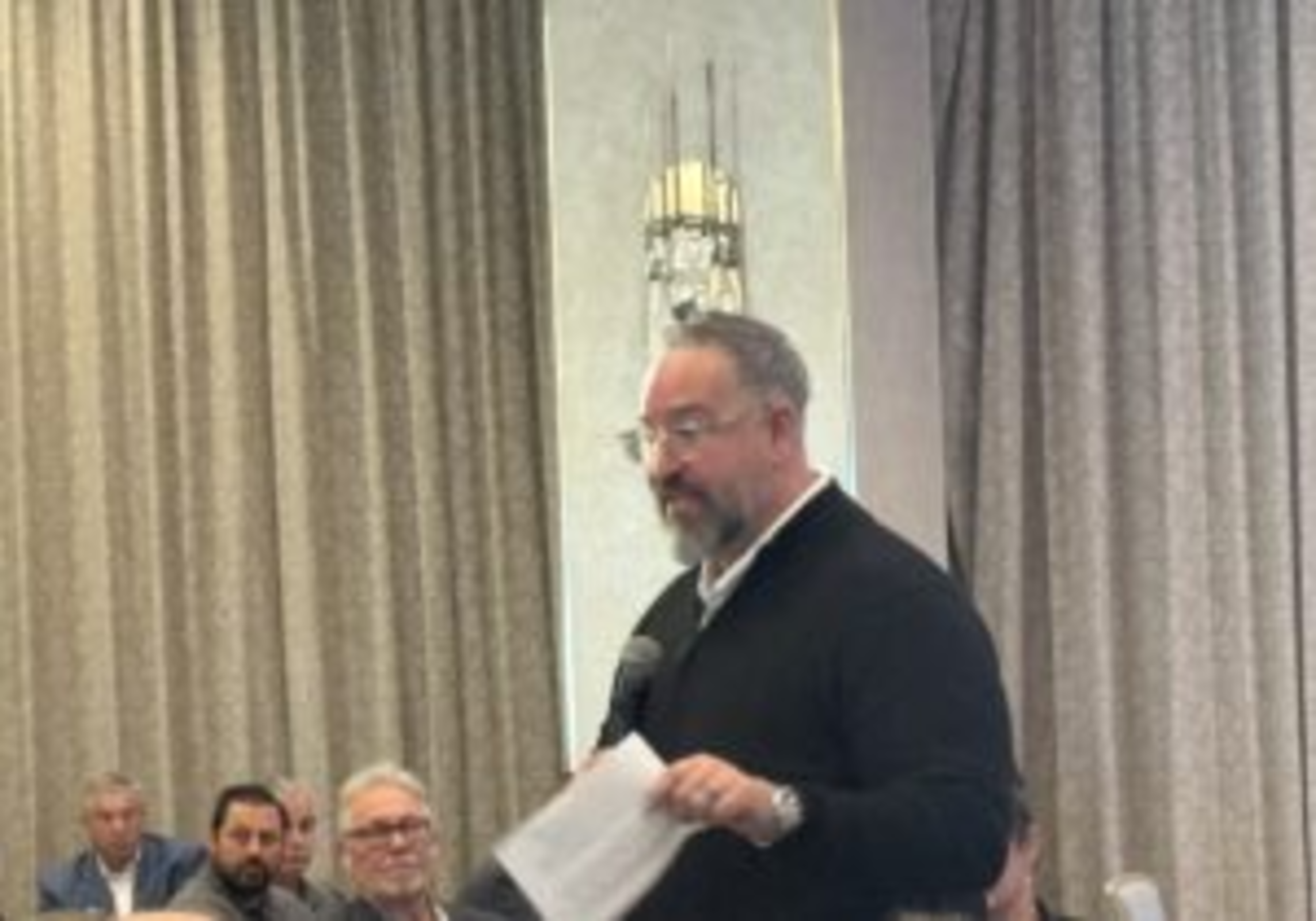
Aaron Schulenburg, executive director of the Society of Collision Repair Specialists (SCRS), and Michael Bradshaw, chairman of SCRS, both addressed concerns about a large insurance company lowering reimbursement rates for essential repair operations during an open mic portion of the Collision Industry Conference (CIC) meeting on Tuesday, held during the SEMA Show in Las Vegas.
“I’m going to be very careful in the way in which I address it, but we’ve got concerns that have come to us from our members that I think are important for this room to at least acknowledge, understand, and think about how we talk about them in the future,” Schulenburg said as he started the conversation.
Neither Schulenburg nor Bradshaw named the insurance provider; however, both mentioned stories by Jay Sicht, Fender Bender and ABRN editor-in-chief, and John Yoswick, editor of the CRASH Network subscription newsletter.
In July, Sicht reported that 57% of 230 respondents to a survey said State Farm had reduced its labor rates offered to their shop without explanation.
He told Repairer Driven News on Wednesday that the month-long poll was opened at the end of June.
CRASH Network’s latest quarterly “Collision Industry Business Perspectives” survey found that 1 in 4 of 300 shop respondents said one insurance company is currently paying a lower labor rate than it was back in January.
“State Farm was the most common insurer cited by survey respondents, and the labor rate decreases weren’t insignificant,” Yoswick said in sharing some of the survey findings with RDN on Wednesday.
State Farm went from $60 per hour to $55 per hour, and we are not a DRP for them,” one shop wrote of the 8.3% drop.
“Not a DRP, but State Farm has lowered their rates in my market two separate times, once from $74 to $70, and then to $65,” another respondent said (a 12.1% decrease).
While the bulk of labor rate decreases reported through the survey involved State Farm, about a dozen shops pointed to other insurers that had dropped rates this year.
USAA went from $72 to $68,” another shop said, according to CRASH Network.
“We are using this as an opportunity to show our customers how out of touch [insurers] are from reality, with the cost of everything going up right now, including their premiums,” one shop wrote.
Complete findings from the survey are available to CRASH Network subscribers. Subscribe here.
“We’re hearing from a growing number of collision repairers from all over the country about lowering reimbursement rates for essential repair operations,” Schulenburg added during the CIC meeting. “It’s in a time where nearly every cost that we have in our business is going up. Inflation is going up. Wages are going up. The cost of running a collision repair business — the cost of performing repairs — is going up, and there is this sudden and concerning restriction on rates.”
Schulenburg said the collision industry is making the necessary investments to ensure vehicles are repaired safely to manufacturer specifications for the protection of consumers.
“When the reimbursement levels contract, or when they never kept pace with the investments that we had to make to perform those repairs properly, it threatens the sustainability of our businesses and the availability of the skilled professionals that we need to perform these tasks — the skilled professionals that we need to keep the motoring public safe,” Schulenburg said. “We’re seeing this concern voiced by shops in nearly every region across the country, nearly every state across the United States. It’s not isolated.”
Shops are seeing a shift from prevailing competitive rates to a rate the insurance company has defined as “reasonable,” he said. He said the insurance company is not defining “reasonable,” providing documentation justifying the reduction, or giving any indication of a valid statistical survey.
“Simply, ‘We’ve determined it’s enough, even though we’ve lowered it significantly from what we recognized before,’ it’s concerning,” Schulenburg said. “I think in some cases, the claim is that the data is coming from information providers who also claim not to be conducting labor rate surveys or even reporting on prevailing rates. But there’s no way to argue it, and there’s no way to document it because there’s no documentation provided to the industry.”
Schulenburg said it is important that all stakeholders, from insurers and repairers to automakers, suppliers, policymakers, and regulators, work transparently and collaboratively to ensure that reimbursement practices reflect the true cost of modern vehicle repair. He said this is needed for the long-term viability of the industry and the small businesses within it. It is also important for the sake of restoring vehicle safety and the motoring public, he said.
“In this industry, consumers expect to be made whole, and they expect that every repair upholds the standards that we just talked about on that panel [Repair Process and Procedures] to ensure that their vehicle and their trust and their safety are restored,” Schulenburg said. “I think it’s important that we talk about it and address it and figure it out.”
Bradshaw, also vice president of K&M Collision in North Carolina, said the reduction is not just labor rates but also required procedures.
He said procedures and rates he’s been charging for six to nine years, and have been paid by this carrier the entire time, are no longer considered reasonable.
“And it’s getting worse with each month that passes,” Bradshaw said. “There are new procedures that are no longer needed to repair the same vehicle that was repaired three months ago and six months ago, and 12 months ago; procedures that have been recognized by the manufacturer, by I-CAR, anybody in the industry. These are getting worse. They’re not getting better, and my fear is that if we as an industry don’t address it, the overreach is going to continue.”
Bradshaw said that while he’s been at the SEMA Show, he has received email after email stating that rates and procedures aren’t reasonable.
“The customer that is put in the middle of this gets an email from the carrier that says, ‘This shop is charging for things that aren’t needed for the repair of your vehicle; that aren’t reasonable to repair your vehicle,’” Bradshaw said. “But as a shop, when you have historical data, six, seven, eight years’ worth, that shows that this is fake. How do you combat that? What do you do? Thank God that in North Carolina we have an appraisal clause.”
He added that the carrier has also written the appraisal clause out of its policy language in most of the states where it conducts business.
“I think this is an extremely important issue, and I would encourage anybody in the room to go read some of the articles that Fender Bender or CRASH Network has put out, because it’s extremely insightful, and it is going to continue to progress and get worse, I believe, based on my experience and some of my colleagues in the room’s experience.”
Images
SCRS Executive Director Aaron Schulenburg speaks during open mic at CIC, Nov. 4, 2025, in Las Vegas/Repairer Driven News