
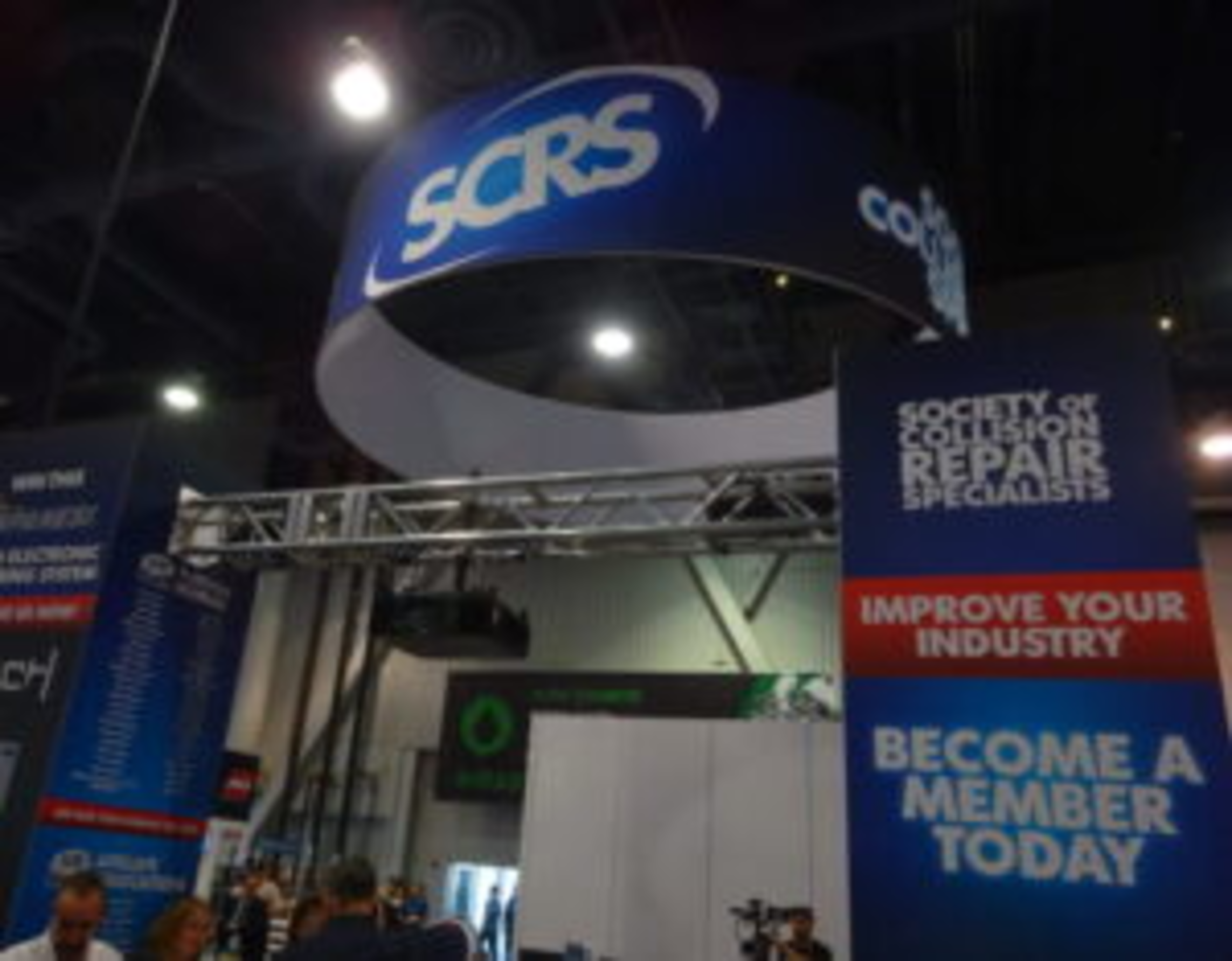
Benefit deadlines, IRS updates: Advisors to guide collision shops at SEMA

Those in the collision repair industry will be able to connect directly with benefit advisors offering tailored health and retirement plan solutions at the Society of Collision Repair Specialists (SCRS) SEMA Show booth in Las Vegas.
Attendees can meet with the experts behind SCRS’s developed programs designed to address competitive employee healthcare and retirement planning at booth #31157 in the Upper South Hall of the Las Vegas Convention Center.
SCRS says the programs include:
-
- A competitive 401(k) Multiple Employer Plan, supported by Irongate Capital Advisors and Virginia Asset Management, which helps employers reduce costs, simplify plan management, and strengthen retirement outcomes for their teams.
- A modern health benefits marketplace, powered by Decisely, with innovative solutions from Gravie, Sun Life, Angle, and Guardian — bringing affordable, flexible coverage options backed by integrated technology and personalized guidance.
“Healthcare benefits are a significant challenge and expense for small businesses,” said Aaron Schulenburg, SCRS executive director. “Our goal remains focused on producing solutions for the small businesses in our community that allow them to receive better options through the association than they could achieve on their own. Over the past several years, we’ve helped hundreds of members reduce costs while increasing the quality of plans being offered to their team members. The impact on shop culture has been profound, and it’s proof of how taking care of your people strengthens your business and your culture.”
Scott Broaddus, CFP, AIF, CEPA, Irongate Capital Advisors partner and primary advisor on the SCRS 401(k) program, will be available Nov. 4 and Nov. 5 to discuss strategies that have helped collision businesses save up to $15,000 annually while improving employee retirement options.
Decisely representatives, CEO Kevin Dunn, and Vice President of Enterprise Sales Riche Seaberry, will be in the booth Nov. 4–7 to provide personalized guidance on how to deploy a cost-effective health benefit solution for shops.
“This is an ideal opportunity to sit down with experts who understand our industry,” said Schulenburg. “These advisors can help attendees explore tangible steps to make employee benefits a competitive advantage in attracting and retaining talent.”
Seaberry will also present “Modernizing HR and Employee Benefits” during the 2025 IDEAS Collide Showcase. It is a forward-thinking look at how collision repair leaders can simplify HR, reduce administrative staring, and build stronger teams through smarter benefits strategies, according to an SCRS press release. For a full IDEAS Collide lineup, visit scrs.com/rde.
For more information about SCRS programs or to become a member, visit scrs.com, call 1-877-841-0660, or email [email protected]
Simple IRA Deadline
Businesses with a SIMPLE IRA have until Nov. 1 to decide if they will continue their plan for 2026 or consider making a switch to a 401(k), according to an email from Irongate Capital Advisors.
A 401(k) plan offers several enhancements to a SIMPLE IRA, including:
-
- The ability for employees to make both pre-tax and Roth deferrals;
- Higher savings limits, up to $23,500 in 2025 and $31,000 for employees age 50 or older;
- Customization of your employer match with the ability to add a vesting schedule not available in SIMPLE IRAs; and
- A profit-sharing component for owners to benefit from a $70,000 tax deduction in 2025
“If you are considering a 401(k) plan, SCRS has created a program which allows SCRS members to gain access to preferred pricing that saves over 30% annually,” the email says.
To learn more, visit scrs.com/401k or contact Broaddus at [email protected]
IRS Inflation Brackets
Last week, the Internal Revenue Service (IRS) released tax year adjustments that will apply to returns filed in 2027.
According to the IRS, the tax change that will be of greatest interest to most taxpayers is the standard deduction.
“For tax year 2026, the standard deduction increases to $32,200 for married couples filing jointly. For single taxpayers and married individuals filing separately, the standard deduction rises to $16,100 for tax year 2026, and for heads of households, the standard deduction will be $24,150,” the IRS website says.
The One Big Beautiful Bill (OBBB) also raises the standard deduction for 2025 to $31,000 for married couples filing jointly. For single taxpayers and married individuals filing separately, the standard deduction for 2025 is $15,750, and for heads of households, the standard deduction is $23,625.
Marginal rates for tax year 2026 are:
-
- 37% for incomes over $640,600 ($768,700 for married couples filing jointly);
- 35% for incomes over $256,225 ($512,450 for married couples filing jointly);
- 32% for incomes over $201,775 ($403,550 for married couples filing jointly);
- 24% for incomes over $105,700 ($211,400 for married couples filing jointly);
- 22% for incomes over $50,400 ($100,800 for married couples filing jointly);
- 12% for incomes over $12,400 ($24,800 for married couples filing jointly); and
- 10% for incomes of $12,400 or below ($24,800 for married couples filing jointly).
The alternative minimum tax exemption for unmarried individuals is $90,100 and begins to phase out at $500,000 ($140,200 for married couples filing jointly for whom the exemption begins to phase out at $1 million).
Estates of decedents who die during 2026 have a basic exclusion amount of $15 million, up from a total of $13.99 million for estates of decedents who died in 2025.
For tax years beginning in 2026, the dollar limitation for voluntary employee salary reductions for contributions to health flexible spending arrangements increases to $3,400, up $100 from the prior year. For cafeteria plans that permit the carryover of unused amounts, the maximum carryover amount is $680, an increase of $20 from tax years beginning with this year.
For tax year 2026, participants with self-only coverage in a Medical Savings Account must have an annual deductible that is not less than $2,900, up $50 from tax year 2025; however, it must not exceed $4,400, an increase of $100 from tax year 2025. For self-only coverage, the maximum out-of-pocket expense amount is $5,850, up $150 from 2025.
For tax year 2026, the annual deductible for family coverage is not less than $5,850, up from $5,700 for 2025; however, the deductible cannot exceed $8,750, up $200 from the limit for tax year 2025. For family coverage, the out-of-pocket expense limit is $10,700 for tax year 2026, an increase of $200 from tax year 2025.
Images
Featured image: SCRS’s booth (SCRS)