
AAA: Pedestrian automatic emergency braking improves by 60% on four models

AAA has found that vehicles equipped with pedestrian automatic emergency braking (PAEB) systems have improved collision avoidance from 0% in 2019 to 60% in 2025.
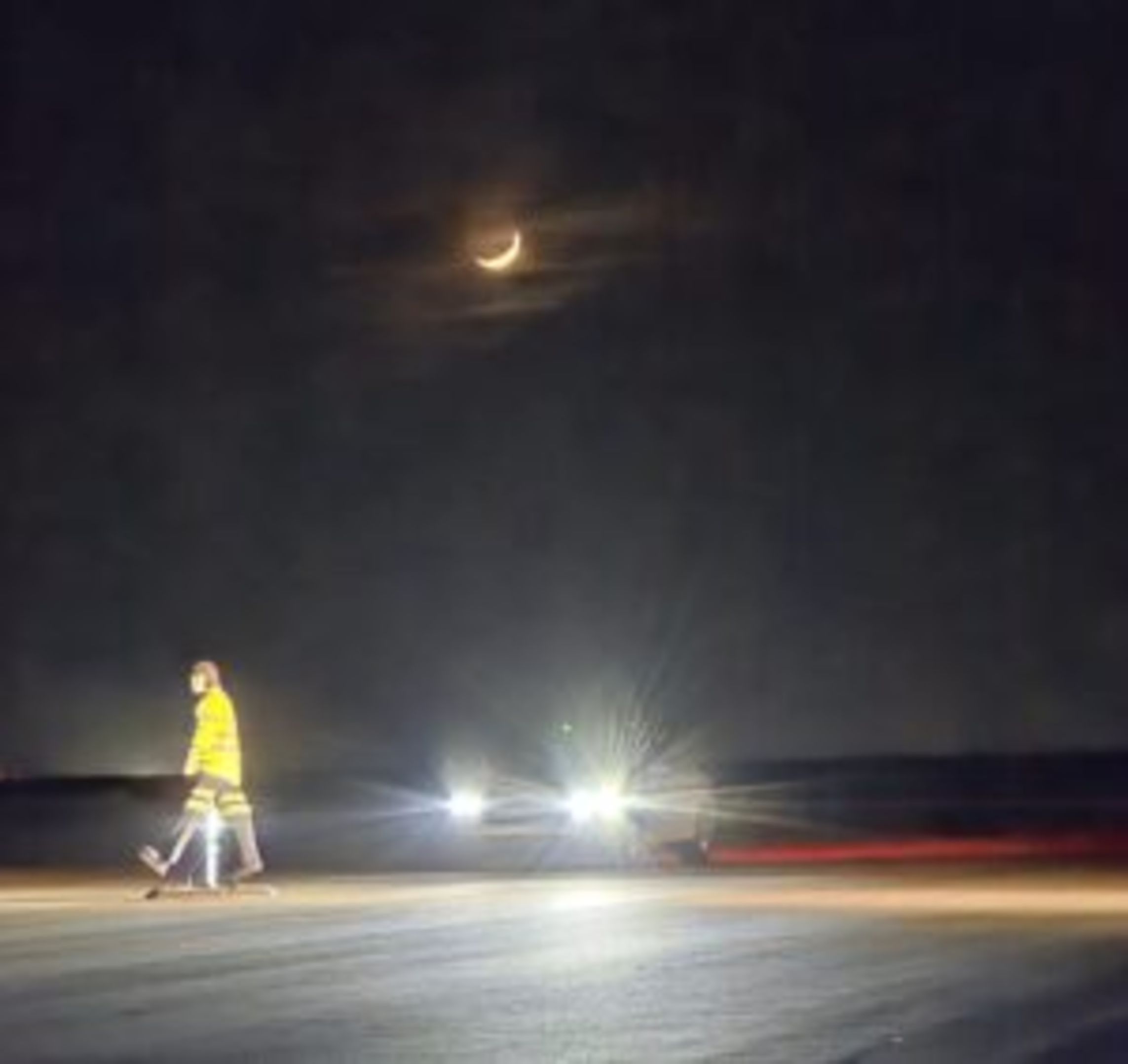
The researchers also tested whether pedestrians wearing high-visibility clothing, such as that worn by roadside assistance providers, would change the effectiveness of PAEB systems under nighttime conditions. Results ranged from improved avoidance to complete loss of detection, AAA said.
“Recent improvements in pedestrian automatic emergency braking systems are promising; however, there is still more work to be done,” said Greg Brannon, AAA’s automotive engineering research director, in a press release.
“Most pedestrian fatalities occur at night, and these systems can make a significant difference during those hours. However, mixed performances with high-visibility clothing indicate that further refinement and testing are necessary to save more lives, including those of our roadside assistance providers.”
In partnership with the Automobile Club of Southern California’s Automotive Research Center, AAA evaluated four vehicles equipped with PAEB — the 2024 Honda Accord, 2025 Toyota Camry, 2025 Chevrolet Malibu, and 2025 Tesla Model 3.
Testing was conducted on a closed course using a robotic adult pedestrian. It crossed in front of the test vehicles, which were traveling at 25 mph.
Separate tests were conducted during the day and night, both with the adult pedestrian dressed in standard, non-reflective clothing and ANSI Class 3 high-visibility apparel, such as that worn by road assistance providers. All test scenarios were conducted on a vehicle dynamics pad comprised of straight, flat, dry asphalt free of visible moisture, potholes, or irregularities that could affect the trajectory of the test vehicles or target.

The tests found that ANSI Class 3 high-visibility clothing had no negative effect on PAEB performance during the day and avoided a collision 95% of the time.
“Detection and response inconsistency poses ongoing risks to pedestrian safety, given that over 75% of pedestrian fatalities occur after dark,” the release states. “Recent findings from the AAA Foundation for Traffic Safety (FTS) revealed pedestrian fatalities in the U.S. rose by over 80% in the past 15 years, with this increase occurring on urban arterial roads and after dark.”
AAA notes that, according to the National Highway Traffic Safety Administration (NHTSA), an estimated 7,314 pedestrians were killed, and more than 68,000 pedestrians were injured nationwide in 2023. The AAA Foundation for Traffic Safety analysis of data from the Emergency Responder Safety Institute found an average of 23 roadside assistance providers a year, including tow providers, were struck and killed by vehicles while working at the roadside from 2020 to 2024.
AAA recommends drivers always remember that PAEB systems are never a substitute for an engaged driver. Drivers are responsible for yielding to pedestrians, but those traveling on foot should also be vigilant, according to AAA.
Researchers concluded that manufacturers should enhance the reliability of PAEB systems during nighttime conditions.
“Evaluations should also consider the system’s effectiveness when pedestrians wear different types of apparel, particularly high-visibility clothing,” AAA said. “Regulators and standards organizations are encouraged to improve pedestrian safety protocols by including more nighttime scenarios involving high-visibility apparel. Expanding evaluation practices will provide a better assessment of PAEB performance and help reduce pedestrian injuries and fatalities.”
In February, AAA’s Foundation for Traffic Safety reported that pedestrian fatalities had increased by 80% over the last 15 years on urban arterial roads at night.
“The continued rise in pedestrian fatalities in the U.S. since 2010 is a traffic safety challenge we need to address,” said David Yang, president and executive director of the AAA Foundation for Traffic Safety, in a press release. “This study not only identified common underlying factors related to pedestrian deaths but opportunities where stakeholders can collaborate to make improvements in their communities. We need to work together to create safer transportation systems for pedestrians and other road users.”
Researchers found that a disproportionate number of pedestrian deaths occurred in socially and economically disadvantaged neighborhoods because many residents depend heavily on walking, especially to reach public transportation, the release says.
Earlier this year, a study by the Partnership for Analytics Research in Traffic Safety (PARTS) found that single-vehicle frontal crashes involving PAEB-equipped vehicles with non-motorists (pedestrians, cyclists, and those operating scooters and wheelchairs) were reduced by 9%.
The study also found that automatic emergency braking (AEB) continues to improve, cutting rear-end crashes in half. It showed an increase in AEB effectiveness, from 46% across model years 2015–2017 to 52% across model years 2021–2023.
The paper notes that, according to NHTSA, mandating AEB in all light-duty vehicles starting with model year 2029 would “save at least 362 lives and mitigate 24,321 non-fatal injuries a year.”
According to NHTSA’s amended FMVSS No. 127, vehicles produced by small-volume manufacturers, final-stage manufacturers, and alterers must be equipped with a compliant AEB system by Sept. 1, 2030. AEB must stop and avoid rear-end crashes at up to 62 miles per hour, detect pedestrians day and night, engage at speeds of up to 90 mph when a collision with a lead vehicle is imminent, and engage at speeds of up to 45 mph when a pedestrian is detected.
Images
Images of a robotic adult pedestrian passing in front of a 2024 Honda Accord during recent AAA pedestrian automatic emergency braking (PAEB) testing in California. (Provided by AAA)