
Study on Tesla Model Y finds mega casting can lower repair costs

A new study from Thatcham Research has found that vehicles incorporating aluminum mega cast technology can substantially reduce repair costs compared to traditional multi-piece steel constructions.
During the two-year study at Thatcham Research’s headquarters in Berkshire, United Kingdom, Tesla Model Y vehicles, which have a single-piece, aluminum rear floor section, were crash tested. Researchers then conducted damage assessments and repair technique tests.
The Model Y’s mega cast rear chassis section consolidates around 70 components into a single aluminum casting, according to Thatcham.
The colors in the image below serve as a visual guide to indicate the type of repair, if any, that is permitted in each area of the mega cast. According to Thatcham, blue and green areas are the most repairable, with welding and cold straightening allowed. Yellow and orange areas have stricter limits and may require reinforcement or Tesla approval for larger damage. The red areas are strictly non-repairable by anyone except Tesla.

“Thatcham Research’s work shows that this technique, which several other vehicle manufacturers are planning to introduce, can also reduce repair costs in both partial and full replacement scenarios when compared to conventional steel, multi-piece vehicle structures,” a Thatcham press release states.
Thatcham noted that Toyota, Volkswagen, Volvo, and Hyundai have announced mega cast implementation plans. Toyota’s plans will replace 177 front and rear components, and Volvo’s single-floor pan cast will consolidate 100 components, the release says.
Ben Townsend, Thatcham Research head of automotive, added, “Our research demonstrates that mega cast technology, when properly implemented with comprehensive repair guidelines, can deliver significant benefits for insurers, consumers, and the environment. The Tesla Model Y’s repair costs were consistently lower than comparable vehicles with traditional construction while maintaining structural integrity and repairability standards, which reduces the chances of a vehicle being written off in common accidents, improving its lifecycle CO2 benefits.”
The investigation was designed to simulate damage noted in real-world claims from UK insurers.
In low-severity testing at 15 km/h, the mega cast exceeded expectations by sustaining no structural damage, which allowed for complete vehicle repair without any repair to the mega cast.
“This finding challenges initial industry concerns about the vulnerability of large single-piece castings to minor impacts,” the release states.
Medium-severity testing at 25 km/h necessitated full mega cast replacement due to cracking and structural misalignment.
“However, at £716 [$978] for the replacement component, the total repair cost remained competitive with, and often below, traditional repair methods for equivalent damage,” Thatcham said.
The Model Y’s mega cast construction delivered consistent cost advantages across multiple scenarios, the release adds.
Partial replacements cost £2,167 (about $2,961) less than the Model 3’s traditional multi-part steel rear sub-assembly construction, while full replacements saved £519 ($709).
However, Thatcham noted repairs that require welding of the aluminum mega cast structure have to be done at Tesla-approved facilities.
“This requirement could necessitate vehicle transportation between repair centers if the initial facility lacks appropriate certification, potentially adding time and expense to the repair process,” Thatcham said. “Additionally, the scale and irregular shape of these mega cast components present handling challenges for smaller body shops.”

Similar patterns emerged when comparing against other manufacturers’ vehicles, with the Model Y demonstrating lower repair costs than other models, including the Mercedes EQE, Hyundai IONIQ 5, and several internal combustion engine vehicles.
“The key insight from our testing is that vehicle manufacturers must integrate repairability into the design of a mega cast component,” said Darren Bright, Thatcham automotive repair principal engineer, in the release.
“In Tesla’s case, the inclusion of replaceable cast rear rail assemblies at just £31 each provides a cost-effective solution for minor impacts, while the relatively low cost of full replacement mitigates concerns about more severe damage scenarios. Without this provision of reasonably priced partial and full replacement parts and the associated repair procedures, our findings would have been very different.”
Fewer write-offs translate to more vehicles remaining in service after collisions, “preserving the energy and materials already invested in their manufacture and delaying the environmental cost of early replacement,” Thatcham said.
“Tesla has established important precedents for mega cast repairability, but our research highlights areas requiring industry-wide standardization,” Townsend said. “As this technology proliferates, establishing comprehensive repair protocols, non-destructive test procedures, and technician training programs will be essential for maintaining vehicle safety, insurance, and lifecycle sustainability.”
Thatcham says its findings will inform the development of repair guidelines, training programs, and industry standards in the UK automotive sector.
“The organization is developing comprehensive documentation to enhance the industry’s existing understanding of mega cast implications and will continue to monitor and evaluate new mega cast implementations as they emerge in the UK market.”
Thatcham says the study underscored the importance of implementing clearer non-destructive testing procedures to effectively identify potential damage in the mega cast structure that may not be visible to the naked eye.
“This enhancement would ensure a more thorough assessment and safeguard the integrity of the structure,” the release says.
The full research report is available to Thatcham Research members.
NHTSA investigates Tesla
The National Highway Traffic Safety Administration (NHTSA) opened an investigation on Tuesday into possible defects in Tesla doors that have reportedly left parents with children trapped in the back seat.
According to the Associated Press, NHTSA says the preliminary probe is focused on 2021 Tesla Model Ys following receipt of nine reports about inoperative electronic door handles, possibly due to low battery voltage.
NHTSA states in its investigation documents that available repair invoices report the replacement of the vehicle’s low-voltage battery.
“However, no VOQs [vehicle owner questionnaires] reported seeing a low voltage battery warning prior to the exterior door handles becoming inoperative,” NHTSA wrote.
“The most commonly reported scenarios involved parents exiting the vehicle after a drive cycle in order to remove a child from the back seat or placing a child in the back seat before starting a drive cycle. In those events, the parents were unable to reopen a door to regain access to the vehicle. Four of these VOQs reported resorting to breaking a window to regain entry into the vehicle. Although Tesla vehicles have manual door releases inside of the cabin, in these situations, a child may not be able to access or operate the releases even if the vehicle’s driver is aware of them.”
Images
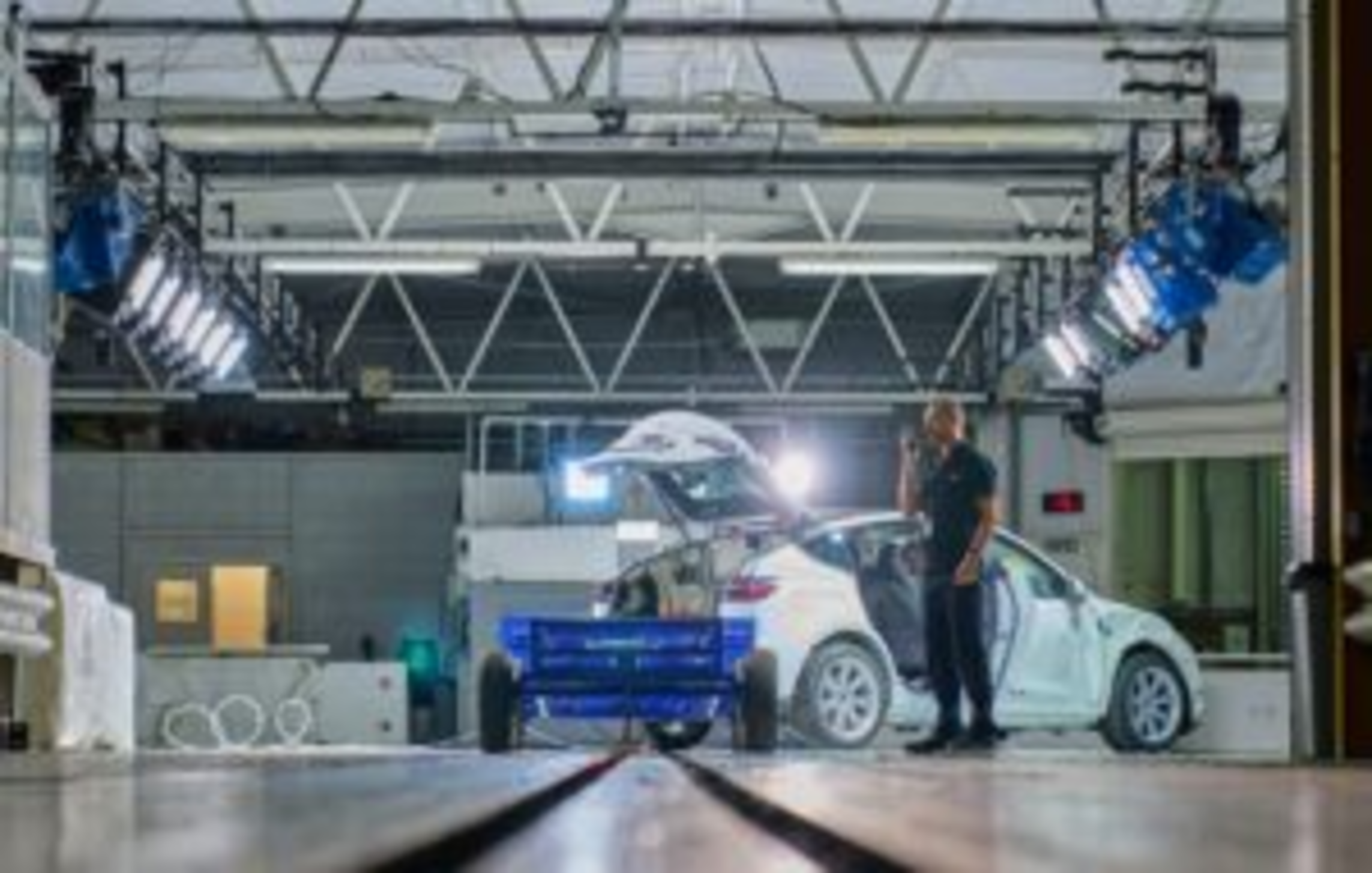
Featured image: Tesla Model Y during passive crash test setup with sled in the Thatcham Research crash lab. (Provided by Thatcham)
Secondary photos: Tesla Model Y’s rear chassis mega casting. (Provided by Thatcham)