
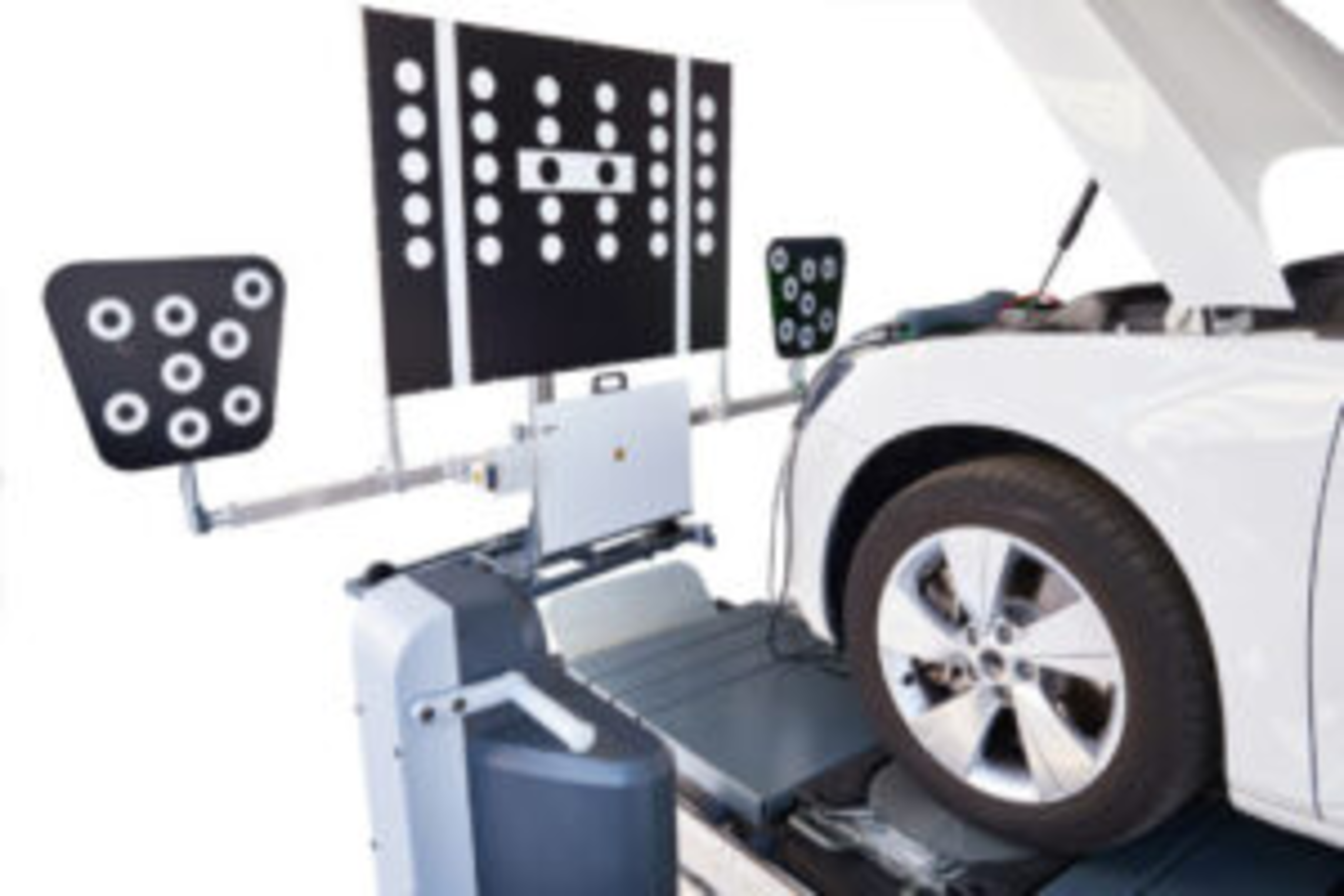
Litigation from missed or improper calibrations rising nationwide

Lawsuits involving missed or improper calibrations of ADAS systems are upticking across the country, according to Rebekah Cooper, product liability attorney at The Cooper Firm, who spoke recently with BodyShop Business’s Jason Stahl during an Under the Radar video segment.
Cooper said the first ADAS case she litigated involved a Nissan vehicle that had been in a minor collision. The vehicle was taken to an OEM-approved authorized dealership. She said a forward collision warning system needed to be recalibrated.
However, the warning didn’t work in a secondary crash, and it resulted in a woman becoming quadriplegic, Cooper said.
During the discovery process of the lawsuit, Cooper said her firm learned that Nissan required a calibration process in its OEM documentation.
“The place where the vehicle was repaired didn’t have a single tool related to the calibration process,” Cooper said. “Their training manager did not know what the calibration process was.”
Cooper said there have been more cases that followed as her firm realized that ADAS systems are not being maintained.
“We are a part of a network of lawyers who does work like this across the country, and we meet two or three times a year at conferences to talk through what kind of claims are out there,” she said. “These claims are on the rise because I think the statistic now is about half the vehicles on the road have ADAS technology in them, whether it’s automatic emergency braking, forward collision warning, or lane departure assistance.”
Cooper said it wouldn’t be an exaggeration to say there are about a dozen pending cases across the country at any given time. She explained during the interview that cases have involved forward collision warning, lane departure warning, automatic emergency braking, and occupant sensors. It could also include backup cameras, she said.
She said technology is evolving, and so is litigation, which she believes will continue as more autonomous features are introduced to the market.
Collision repair shops are still liable even if they sublet the calibration work, Cooper said.
“If there’s an injury caused by an employee of Home Depot, as their employer, Home Depot is liable under an agency theory, meaning you take responsibility for what this person or sublet entity does,” Cooper said. “There are ways where you could attempt to get out of liability as the sublet or the body shop delegating the work. It’s not advisable without giving you attorney advice. I wouldn’t count on that. That’s not likely to be compelling to a judge. And frankly, it’s not likely to be compelling to a jury because if you think about this, at the end of the day, this claim is going in front of 12 people who probably drive cars and are going to say, ‘Wait a second, if I take my car to Joe’s Body Shop and Joe decides to use Smith, I don’t want Joe to get out of his responsibility because I went to him.’”
Cooper said it is important for shops to vet the businesses they sublet calibration work to.
State Farm rolled out calibration requirements to Select Service repair facilities nationwide during the spring. At the time, multiple repair professionals, in and out of State Farm’s network, shared concerns about pressure to meet the insurer’s prices for calibrations.
Shops said they were told to either meet the prices laid out by State Farm or use calibration providers that had agreed to do the job at that price.
Stahl said there also appear to be some shops in the industry that are using calibrations to make a profit.
“They know they’re going to get extra pay from the insurance company for doing a scan or a calibration, but they don’t really understand what they’re doing and they’re not verifying that it was done correctly,” he said. “But they know that [they] can do a pre-scan and ‘I’ll get this amount from the insurance and then that’ll be that.’”
However, Stahl said, in his experience, insurers argue in lawsuits that they aren’t the experts and therefore not liable for the decisions of a repair shop.
“That’s a rock and a hard place for a body shop,” Cooper said.
It can be difficult for a shop that faces pressure from an insurer that has decided that the calibration is not necessary, she said. Yet, if there’s OEM documentation stating the repair should be done a certain way, the shop remains liable.
Mike Reynolds, of MASS Automotive Technology, was included in the conversation. He added that most OEMs have their own tools, which can be expensive, and procedures for completing a calibration.
There are scrubbers on the market to assist shops in determining which calibrations are needed, but a lot can be missed, he said.
“The fact is, without being there to actually physically look at the vehicle, there’s a lot you can’t necessarily tell,” Reynolds said.
He said scrubbers can help some shops catch calibrations they were missing before. However, it is not something a shop should lean on.
“Even if a company comes in and says this tool is cheaper and it’s supposed to be one-size-fits-all, if there’s a document from the OEM saying what to use to repair that vehicle and that is not what the body shop used, whatever the reasons are, that’s a problem,” Cooper said. “And it’s a problem that folks are going to argue that the body shop, regardless of extenuating circumstances, needs to fix. Because if I’m just bringing my car in as a layperson, I don’t know what’s going on behind the scenes, but I expect that the body shop is going to do what they need to do so that I can drive my car safely out of their facility.”
Even if insurance companies refuse to pay for a certain operation, the target is going to be the shop, Cooper said.
“If someone drives off of a body shop lot with an improperly repaired or inadequately repaired system, the first person they’re going to look at is not the insurance company. It’s likely going to be the body shop or the calibration company,” Cooper said.
GEICO announced last summer an agreement for standardized pricing with asTech for its scans and calibrations.
In an email sent to the insurer’s Auto Repair Xpress (ARX) shops, GEICO noted that shops using the asTech Rules Engine would be eligible for an OEM or OEM-compatible scan if they correctly follow the Rules Engine process.
GEICO adds that shops utilizing asTech’s All-In-One will receive prioritized access and special pricing. It notes the pricing structure will not address every scanning and calibration operation, and “some negotiations may still need to be supported by good documentation.
“Shops not using the asTech® All-In-One device may need to supply additional documentation to justify procedures or pricing that deviates from those provided,” the email states.
Honda and Subaru have both made statements that the OEM-C scans are not authorized by their companies for repairs.
asTech has responded that repair shops have the option to customize the Rules Engine to the way they want their scans performed, including setting the tool to perform only OEM scans.
Andy Noyes, asTech senior vice president of sales and strategic accounts, previously told Repairer Driven News that its OEM-C option exists because not every OEM gives definitive language that says “require or must” and that creates an argument between them and the insurance companies.
Cooper said if a shop is feeling pressure from an insurance company, it should communicate with the company and consumer about its commitments and the tools necessary to complete the repair properly and safely.
Stahl asked what a shop’s liability is if a consumer acknowledges that the calibration wasn’t completed properly by signing a waiver, and what that could mean if the vehicle was in a collision with others on the roadway who didn’t sign the waiver.
“We do have cases like that where there are other people on the road who were not a part of the decision to calibrate a radar,” Cooper said. “They’re just driving on the road, and there’s an 18-wheeler behind them that may or may not have properly calibrated forward collision warning.”
Cooper said those cases can be devastating when they result in catastrophic injury.
“The people in the body shop who were doing what they did weren’t thinking about the consequences down the road,” Cooper said. “Their honestly probably trying to do their best job every day, but I think a lot of what that goes back to is training. Were they trained? Were they given the opportunity to do what they were supposed to do? And I think that’s a leadership question.”
Stahl asked Reynolds his thoughts on the State Farm calibration program.
“In some instances, that pricing is reasonable, but in a lot of instances, they’re not,” Reynolds said. “When a manufacturer says explicitly we need to use this tool like we talked about, Volkswagen and Nissan, and a few other manufacturers, you simply just can’t do it correctly under the pricing that they’ve allotted. So in some instances, we’ve seen shops that are starting to talk directly to the customers and say, ‘Look, this is what your insurance is willing to pay. This is the way that we want to do it, and this is why.’ And again, that’s all about being transparent, providing that documentation, and getting it in front of the insurer and letting the insurer make that denial.”
Cooper said documentation is critical for shops. Shops need to inform the insured when insurance companies deny paying for proper calibrations with the correct tools.
“The insured should be able to make a decision about if they even want to drive that car off the lot in that case,” Cooper said. “Do they want to get their vehicles serviced at your location if you have that relationship with the insurance company that requires a certain kind of work? Now again, that’s easy for me to say. That affects the bottom line for people who make a living running body shops and calibration companies.”
Shops must document to protect the consumer and the business, she said.
The documentation should state what the shop recommends and what the insurance company is willing to cover. The shop could give the insured a letter to send to their insurance company, she said.
As an attorney, Cooper said she’s had discussions about drafting these types of form letters for shops. She said the OEM procedures needed for a specific repair could be copied and pasted into the letter.
“You insert an insurance company is telling us we can’t do this,” Cooper said. “This is a safety issue. We are concerned about the customer’s safety. You should be concerned about your insured’s safety.”
She said an insurance company could ball it up and throw it in the trash, but if they are getting the letters consistently from body shops across the country, it’s not going to be letters they want in their file, she said.
Cooper said repair shops could have templates for both the customers and the insurance company and a template for the customer to send to the insurance company.
“Those are options to apply pressure,” Cooper said.
Images
Image courtesy of sergeyryzhov/iStock