
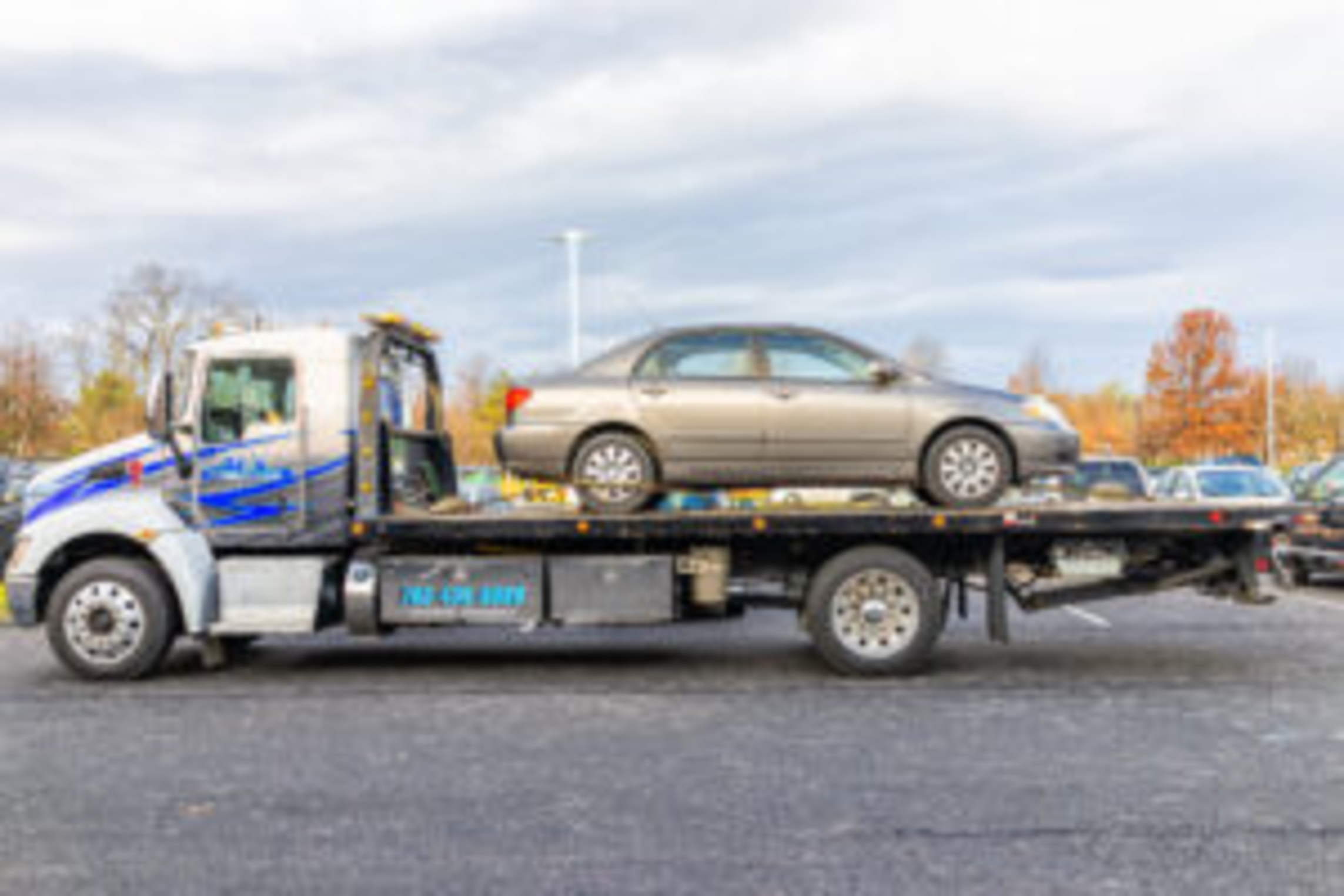
Shops and California Autobody Association question necessity of new BAR towing regulation

Confusion and frustration were expressed on Thursday with a new Bureau of Automotive Repair (BAR) regulation on towing, which is argued to create an excessive administrative burden on shops.
Effective July 1, teardown disclosure regulations include the following new estimate/authorization requirements, according to BAR:
-
- “A general description of the area(s) of the vehicle that is/are to be disassembled as part of a tear down;
- “An ARD to record additional information on their estimate when adopting a third-party payor estimate as the method of repair;
- “The customer to be informed of the amount approved to be paid by the third-party payor, when that amount is known; and
- “Towing services to be documented on a separate form from the repair estimate or invoice.
Slides within this presentation by BAR provide examples of an estimate written according to the new requirements.
Jack Molodanof, BAR Advisory Group member and California Autobody Association attorney/legislative advisor, said during the Advisory Group’s meeting Thursday that he’s received numerous calls about the towing portion of the regulations.
“Maybe part of the problem is that this is referred to as a teardown disclosure and requirements, so the towing is kind of tucked in there, but it’s significant,” he said. “Before July 1, if you had a subline tow, you would document it on the estimate, you’d have one set of documentation. Now, this regulation proposes to create a separate set or separate transaction. So you’re going to have two pieces of paper and maybe three pieces of paper.”
He added that doing so creates cumbersome work for shops and confuses consumers.
When Molodanof asked why BAR made the changes, BAR Field Operations and Enforcement Division Deputy Chief Bill Thomas told him the towing requirement was discovered during the review of vehicle code sections as part of creating the new storage regulations.
“Quite honestly, we hadn’t accounted for it in any regulations to date,” he said. “Since 2009, when that provision first appeared in the vehicle code, putting it on that document as a sublet was inconsistent with what the statute requires [Section] E in the towing notice. And because it is in statute, it is law, says quite specifically about halfway down, ‘Any estimate for towing shall be separate from any estimate for repairs.’ To enable our licensees to be in compliance with the vehicle code, we inserted it here, but I want to reiterate what Matt said. It doesn’t create a burden that estimate and then subsequently an invoice is not subject to the Automotive Repair Act.”
Thomas added that the change doesn’t create a paperwork burden since the estimate and subsequent invoice aren’t subject to the Automotive Repair Act because it isn’t automotive repair, so authorization from the customer to tow could be given by phone.
Following over two hours of discussion and hearing public comments, BAR acknowledged that the towing piece of the regulation needs to be revisited regarding sublet repairs that involve towing, and agreed that a public workshop will likely be necessary.
“We obviously thought it would be something that would be well received,” said Patrick Dorais, BAR Field Operations and Enforcement Division chief. “It was appearing in our proposed storage fee regulations package, and so it was out there in the public arena. We’ve never gotten any comments on it, and we were advised that it was not the appropriate package from legal counsel to be in that package. We said one of the most obvious ones that’s dealing with estimates and invoices is our teardown package.”
Mel, who didn’t provide her last name, from Craftsman Collision, laid out a scenario in which a vehicle had to be towed to the collision shop and out to a dealership for mechanical repair. She asked if that would constitute three documents — the initial tow bill, the repair estimate, and the tow to the dealer.
“There’s only one invoice, which is going to be the invoice that you generate for the repairs,” Gibson said. “What we’re actually talking about is how many documents do you have to give the customer related to the tows? …The expectation would be that you get authorization for the initial tow. Again, that authorization doesn’t have to meet the requirements of the Automotive Repair Act, so however you get a thumbs up from that customer to get the vehicle towed to your shop, it’s all good. There would be some sort of document, theoretically, you would provide related to that tow. What form that document would take, it’s not a requirement of the Automotive Repair Act.”
Erica Williams, CSAA Insurance Group in-house counsel, asked for clarification on whether the new towing regulation is “an absolute requirement” for collision shops and other ARDs to abide by, and if they don’t provide a separate invoice, what BAR’s enforcement plan is.
“Most often, towing companies will not charge the customer or the insurers for the tow,” she said. “Instead, the ARD will absorb the charge and basically bill it back by including it on a final invoice after the repairs are completed or when a total loss is determined.”
Gibson said he was unsure of a current enforcement component.
“As with all new regulations, we try to educate the facility if we find a deficiency in compliance, so we’ll just start there,” he said. “But quite frankly, with this one, we have some additional education internally to do so.”
Williams then asked if an ARD doesn’t include the invoice separately and doesn’t follow Section E appropriately, should they expect to get paid for the towing charge “without proof.”
“I would think that if they got authorization from their consumer to pay to get the vehicle towed to their shop, they should expect to get reimbursed,” Gibson said. “They [towing charges] shouldn’t show up on their final bill, as in their final invoice. And there is no initial written authorization requirements other than just getting it authorized from the customer, so if they don’t provide a document… should they expect to get [paid]? Great question. I guess we’ll find out. I don’t have an answer, really, at the moment.”
Dorais added that ARDs should expect to be paid, “given the newness of this regulation and the lack of understanding of it.”
“There is some things that we still need to work out on it,” he said.
BAR has updated its “Write It Right” guide to assist ARDs with the new teardown and disclosure requirements. The revised guide includes Q&As, updated definitions, and new sample estimates.
The Advisory Group’s next meeting is scheduled for Oct. 23.
Images
Featured image credit: krblokhin/iStock