
New research: Why proper post-collision ADAS calibrations and regular maintenance of systems are essential for safety

New research from Ascential Technologies stresses the importance of properly performed post-crash ADAS calibrations and the potential need for routine maintenance to ensure proper vehicle safety functionality.
In January, a 2024 Nissan Altima test vehicle with about 13,000 miles was evaluated by Ascential Technologies using National Highway Traffic Safety Administration (NHTSA) testing procedures for automatic emergency braking (AEB), pedestrian AEB (PAEB), lane departure warning/lane keep assist (LDW/LKA), and adaptive cruise control.
The Altima was equipped with forward-facing radar and camera-based ADAS features. Calibration scenarios ranged from replicating original equipment manufacturer (OEM) standards to deliberately poor conditions, including misaligned sensor mounting and suboptimal calibration environments.

Testing found that no calibration of LDW resulted in complete system failure, and poor calibration introduced asymmetry. Good calibration restored factory-level performance.
Good calibration of FCW and CIB resulted in the most consistent and timely alerts, with the longest average stopping margin and highest reliability. The non-calibration test didn’t engage the brakes, resulting in full impact to the target vehicle in all tests performed.
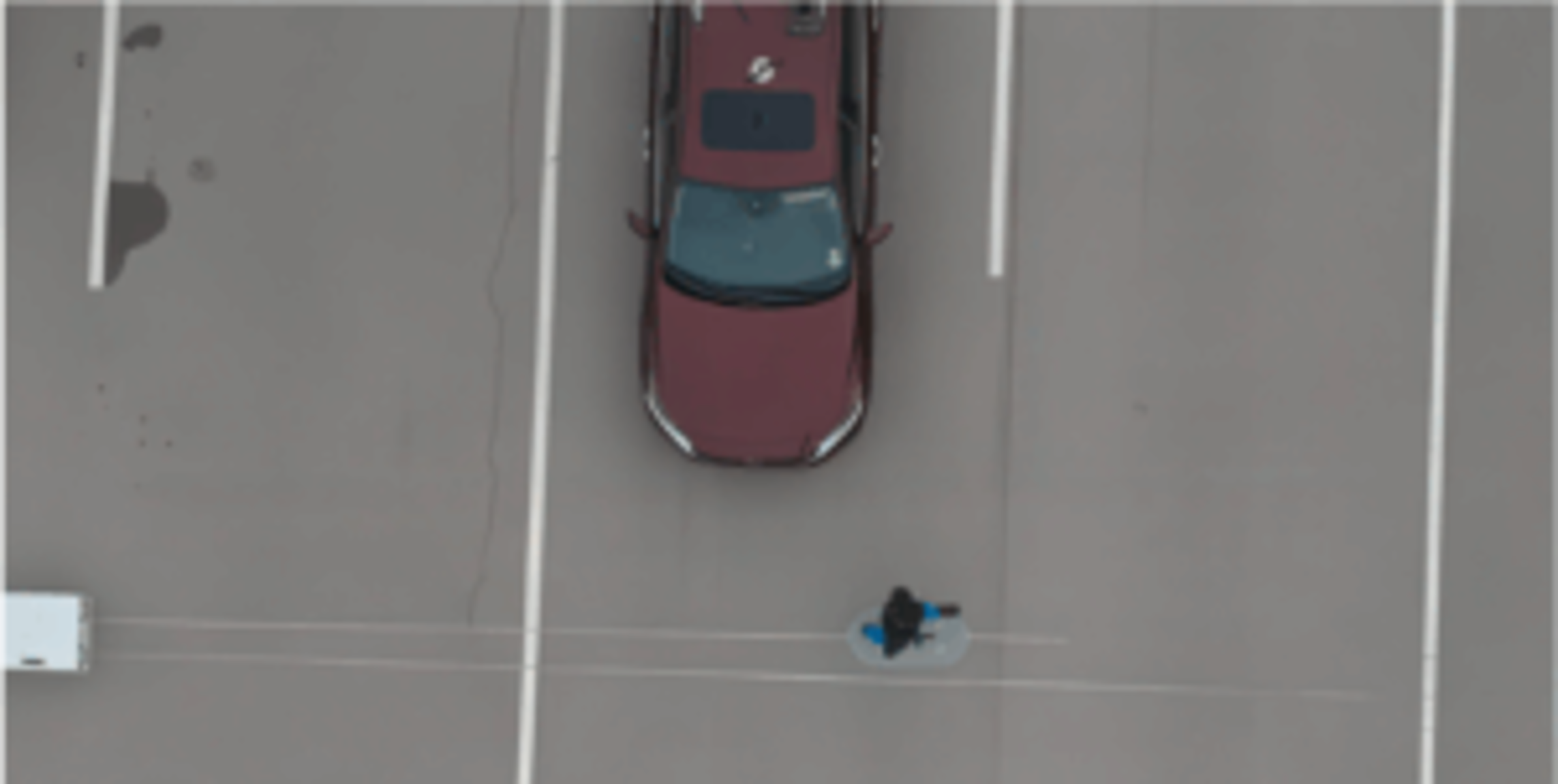
Good calibration of PAEB more than doubled the stopping margin versus the baseline and was the only configuration that provided early alerts and consistent avoidance.
According to data from the tests, Ascential Technologies concluded:
-
- “Good calibration restores and enhances ADAS performance;
- “Poor calibration introduces dangerous unpredictability, even when systems appear functional;
- “No calibration results in silent failure, with systems failing to activate at all; and
- “Baseline systems degrade over time, reinforcing the need for calibration as a maintenance item.”
Complete results from the tests are available in Ascential’s whitepaper, which was published on Thursday.

“The paper is the first step in understanding what could happen with bad calibrations, with no calibrations, and with good calibrations, but I recognize that there’s a lot more testing that needs to take place,” said Brunno Moretti, Ascential Technologies ADAS solutions president. “A poor calibration, for example, had lots of variability in their stopping distances, where a good calibration was high tolerances, and then even the baseline had some problems that we saw.”
He said the test vehicle had never been involved in a collision, so repairs were mimicked to show what would happen if a vehicle wasn’t calibrated post-repair. A poor calibration was mimicked by worst-case scenarios, such as performing calibrations outside, sloped floors, and not following OEM standards, he said. “Good calibration” tests were done using its calibration equipment available to the repair market.

When Moretti began at the company in October 2024, he immediately thought testing should be done to understand what a good calibration entails, having just entered the aftermarket industry after previously working in OEM ADAS design and development.
“A lot of people say, ‘Oh, we follow OE standards,'” he said. “And then there are a lot of companies that don’t follow OE procedures or standards, and so we wanted to understand what’s the impact on the actual ADAS?”
The whitepaper notes that ADAS performance is highly dependent on precise sensor calibration.
“As ADAS technology becomes increasingly standard in modern vehicles, maintaining system accuracy post-repair is no longer a best practice; it is a necessity for ensuring safety, functionality, and regulatory compliance,” the paper states.
It also notes that the upcoming enforcement of a new NHTSA Federal Motor Vehicle Safety Standard (FMVSS 127) makes proper ADAS functionality and calibration accuracy even more vital.
FMVSS 127 will require AEB and PAEB to come standard by September 2029 on all passenger cars and light trucks weighing up to 10,000 pounds. By then, AEB must stop and avoid rear-end crashes at up to 62 miles per hour and detect pedestrians in daylight and at night. The standard will require AEB to engage at up to 90 mph when a collision with a lead vehicle is imminent, and up to 45 mph when a pedestrian is detected.
“Improper calibration not only jeopardizes road safety but also exposes service providers and vehicle owners to legal and regulatory risks,” the paper states. “This study underscores the critical role of accurate ADAS calibration in protecting human lives and ensuring future compliance. As the industry evolves, calibration integrity will be essential to advancing vehicle safety technologies and maintaining
public trust.”
The paper also provides an overview of research from the Insurance Institute for Highway Safety (IIHS) on ADAS effectiveness in collision prevention, which found that vehicles with FCW and AEB are involved in about 50% fewer rear-end collisions compared to similar models without the systems. FCW alone reduces rear-end crashes by around 27%, according to IIHS.
In fact, ADAS has proven so effective that most automakers voluntarily made it standard on their vehicles by 2022, and the systems significantly cut insurance claims for vehicle damage and injuries, according to Ascential’s paper.
“The National Safety Council (NSC) and others estimate that current ADAS technologies have the potential to prevent around 62% of traffic deaths and about 60% of crash injuries annually if widely implemented and used,” the paper says. “In numbers, that equates to roughly 20,000 lives saved per year in the U.S. …Even when crashes aren’t avoided outright, ADAS often reduces impact speeds (by warning/braking), mitigating severity.”
For repair shops, improper ADAS calibrations also pose legal liability.
For example, Ascential’s research shows that the vehicle intentionally put in an “improperly calibrated” state, with the camera slightly misaimed and radar mismounted, completely failed to issue any lane departure warnings during tests, nor provided alerts when drifting out of its lane.
“Even more concerning, the automatic emergency braking did not activate at all, resulting in the car striking the obstacle in the test scenario,” the paper says. “Essentially, the ADAS might as well have been turned off. This is exactly what could happen in the real world if, for example, a windshield camera is off-center after replacement. In this case, the car might not ‘see’ the lane lines or a stopped car ahead, and the driver would get no help avoiding a crash.”
The paper goes on to mention the John Eagle Collision Center case as a “cautionary tale” for the ADAS industry.
A Texas jury found the shop’s incorrect repair liable for much of the severity of the crash of a 2010 Honda Fit, awarding the couple who were injured and trapped inside the burning vehicle $42 million in damages.
“[A] body shop deviated from OEM repair procedures, bonding a roof instead of welding it, which led to catastrophic structural failure in a crash,” Ascential wrote of the case. “The same principle applies to ADAS: when repairers skip or improperly perform calibrations, they compromise the vehicle’s safety systems, potentially exposing themselves to similar liability. This underscores the legal and ethical obligations to follow OEM calibration requirements precisely.”
The paper also highlights reasons why ADAS calibrations and components should be regularly maintained:
-
- “Sensors can drift or wear over time — ADAS components are subject to vibrations, thermal expansion, and aging just like any other part.
- “Tested impact of aging and misalignment — In the TÜV/TRL research, engineers artificially aged components, misaligned cameras, and even simulated slight windshield damage to see how a lane-keep assist (LKA) system would react. The results confirmed fears; the LKA’s function deteriorated under these conditions. In some trials, the car drove over lane markings without any warning or correction from the system.
- “Environmental factors — Extreme temperature swings, for instance, might affect camera housings. Dirt, snow, or ice can temporarily block sensors (vehicles usually warn you when sensors are obscured), but if debris or water consistently infiltrates a sensor mounting, it might shift its position. Many ADAS sensors are positioned behind bumpers or windshields, which are areas that are frequently flexed or stressed.”
Next week, during the Collision Industry Conference (CIC) meeting in Philadelphia, Moretti will participate in “The Industry Experiment,” CIC’s first podcast-style segment aimed at tackling pressing issues and challenging industry norms. He’ll share exclusive insights from internal research conducted by his team on the serious consequences of improper ADAS calibration, and will participate in an in-depth discussion exploring industry accountability based on a critical question: What does it really mean to keep safety technology safe?
Images
Featured image: A “good calibration” is shown in which the vehicle safely avoids a pedestrian-involved collision. (Provided by Ascential Technologies)
All images provided by Ascential Technologies