
Tennessee denies Scout Motors direct sales dealer license application

The Tennessee Motor Vehicle Commission denied Scout Motors a direct-to-customer dealer license last week, citing the company’s ownership structure as violating state law that prohibits competition with an OEM’s franchise dealers.
According to the commission, multiple Volkswagen dealers in Tennessee oppose Scout selling its vehicles in the state because they contend Volkswagen owns the company, which already sells its vehicles there.
The commission asked Scout representatives about ownership, who said Volkswagen AG is an investor, but Scout is its own manufacturer. Sara Ash, Scout’s litigation associate general counsel, said the automaker is “funded 100% by Volkswagen AG.”
Sym Singh, Scout’s state government affairs director, said Volkswagen AG is a publicly traded German company while Volkswagen Group of America is a U.S.-licensed manufacturer and distributor of Volkswagen vehicles. Singh said Scout doesn’t have ties to the latter.
“We have ties to the folks who are publicly traded in Germany who have invested in us,” he said. “We have designed, engineered, and we are building our vehicles separate from any other Volkswagen entity… We have designed these models. We have built them. We have the IP [intellectual property] for them. We have the technology for them. They are our vehicles, and Audi of America and Volkswagen of America, they do not have rights to those vehicles.”
Singh argued that Tennessee law prohibits a manufacturer from competing with an existing dealer of the same line make in the relevant market area; however, “there are no Scout dealers in Tennessee, not one,” he said.
“Scout is a distinct automotive brand,” he said. “Volkswagen dealerships don’t sell Scout vehicles. Audi dealerships don’t sell Scout vehicles. And corporate affiliation does not somehow transform those dealerships into Scout dealerships.”
Scout is building a $2 billion production center in South Carolina, which Singh said is almost complete. He told the commission the center is slated for full production by the end of 2027, with vehicle delivery to customers planned for 2028.
Before the commission voted, Singh said Scout applied for a Tennessee dealer license in March, ahead of when its vehicles would hit the road so it could connect with potential Tennessee customers.
“We are starting our build-out and our licensure in states around the country now so that consumers have that known place that they can take their vehicle once they purchase it,” Singh said.
He added that once licensed in a state, potential customers can get information from Scout about its vehicles, including cost.
“In states that we’re not licensed in, and we’re not allowed to sell in, we’re not sometimes allowed to talk about those things,” Singh said. “We have consumers in those states that really would like us to be able to engage with them… Consumers are demanding, and they should be. They should hold us accountable, and they should want more from us.”
Nick Bader, an attorney who spoke on behalf of Volkswagen dealers in Tennessee, told the commission, “By being asked to grant Scout Motor Sales a dealer license, you are faced with a key question: can a car manufacturer that already sells through Tennessee dealers open its own dealership just by putting the store in the name of a subsidiary? The answer is no. Nothing about this application changes that. Scout is Volkswagen. They’re not part of a new entrant to the automotive space.”
Singh argued that the commission previously approved dealer applications involving manufacturing-affiliated sales entities, including Tesla and Rivian, “both of whom have automotive investment from companies that many of you are dealers of.”
“We are asking for the same fair and consistent application of Tennessee’s licensing standards, the law that’s on the books,” he said.
Scout also faced opposition in Colorado over its direct sales model, and was ultimately granted a dealer license.
Images
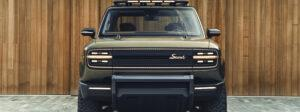
Featured image: The Scout Terra (Provided by Scout Motors)