
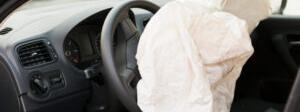
A proposed federal bill could put auto sellers in prison for not disclosing missing, disabled airbags

U.S. Rep. Mike Lawler (R-District 17) has filed a bill that would require auto dealerships and other resale channels selling used vehicles to sell them with functional airbag systems, or if an airbag is missing or disabled, to clearly disclose that.
If passed, the bill would mean up to life in prison for sellers if someone dies as a result of a vehicle sold at an auction or dealership without disclosing the vehicle is missing an airbag or is equipped with a disabled one.
Lawler filed the Anthony Amoros Law Right to Know Act this week, according to a press release from his office.
Anthony Amoros died in 2013 at the age of 18 after crashing his car on a windy stretch of road, according to a New York CBS News report. Amoros’s family purchased the vehicle without knowing it lacked an airbag.
New York Gov. Kathy Hochul signed a bill titled “Anthony Amoros Law” in 2021 that prohibits used car dealers from selling vehicles without a working airbag, according to Spectrum News. The law requires sellers to provide consumers with certification that the vehicle is equipped with an airbag.
“Every driver and passenger deserves to know that the vehicle they are getting into is safe, and this bill will help protect consumers by making sure they have the information they need to make informed decisions,” Lawler said in his press release. “This legislation will ensure dealerships and third-party sellers cannot sell these vehicles without clearly informing consumers of the safety risks.”
Lawler’s bill would require sellers to disclose that vehicles don’t have a working airbag on the front of the sales contract receipt and invoice.
The proposed law would give state officials or agencies authority to regulate and enforce compliance after Federal Trade Commission (FTC) notice.
The FTC will have the right to intervene in any action or file a petition of appeal.
Penalties outlined in the bill allow for a court to award an additional $25,000 for an action that involves death or paralysis.
The bill states that those who knowingly sell a vehicle without a working airbag and disclosure could be fined and face up to 10 years in prison.
It adds that a seller could face up to 20 years in prison if someone is seriously injured, including paralysis.
The bill also defines a “deficiency” as a vehicle without a functional airbag system and/or inflatable restraint system.
Counterfeit airbags are not specifically mentioned in the bill. However, it’s likely that vehicles without an airbag or a deficient airbag system travel through the same salvage routes as vehicles with counterfeit airbags.
The National Highway Traffic Safety Administration (NHTSA) recently identified an 11th death caused by a counterfeit airbag part that the agency banned earlier this year.
The death happened Aug. 27 in Dallas, Texas, and is described as an otherwise survivable crash by NHTSA.
Teena Bohi, an Automotive Anti-Counterfeiting Council (A2C2) board member, said during a Collision Industry Conference (CIC) meeting in July that NHTSA’s investigation has uncovered how dangerous counterfeit parts find their way into vehicles.
“The totaling of a vehicle isn’t a cut-and-dried process,” Bohi says. “The value is driven depending on whether it is self-insured, the state the vehicle was in, the insurer’s own practices, processes, and thresholds. There is a lot that goes into just determining if the vehicle is totaled.”
Next, the vehicle often goes to an auction. If it is a public auction, an airbag deployment will possibly be reported to the National Motor Vehicle Title Information System (NMVTIS). The system is a database meant to prevent the resale of stolen vehicles and track unsafe salvage cars. If the vehicle goes to a wholesale or private auction, the previous crash information is not always captured, she said.
According to an Automotive News opinion piece, about 2.5 million vehicles were totaled by insurers last year before eventually returning to U.S. roadways. It says that a shift in insurers totaling more vehicles, along with the higher cost of new and used vehicles, has forced more dealers to repair and sell salvaged-titled vehicles.
Copart CEO Jeff Liaw discussed how salvaging a car for auction competes with collision repairs during a 2025 earnings call.
“Even an insurance carrier can sell their cars through other intermediaries; they can have more of them repaired,” Liaw said in the September call. “In many respects, we compete with the repair shops. The higher the returns we generate, the more we can win the rights to resolve that claim versus the repair industry. The lower the returns we generate, the more we lose head-to-head against the repair shops as well. There are a number of competitive threats that we face on any given day.”
He went on to describe how delivering “excellent service,” such as expediting cycle times and interacting with policyholders, can drive auction returns.
Those vehicles eventually have to be rebuilt before returning to the road — a process Bohi said can create opportunities for counterfeit safety components to enter the supply chain.
After repairs, vehicles are retitled, and the process can vary state to state, including the inspection process, Bohi says. Many don’t require airbag inspections.
“There are a lot of gaps where attention could be focused that could help address these types of issues,” Bohi said.
The Automotive News piece suggests that state processes, including inspection requirements, may need reworking as the market shifts to more dealers selling salvaged titles.
Last month, a California judge suspended the license of a Los Angeles-based automotive dealer after a Bureau of Automotive Repair (BAR) investigation found the business performed fraudulent vehicle safety systems inspections.
Industry Smog also issued 15 certificates of compliance without performing the required inspections, according to a press release.
A Michigan police officer was also recently sentenced for falsifying salvage vehicle inspections, according to a Michigan Department of Attorney General press release.
BAR has proposed changes that would add more regulations on parts used in airbag replacement. The changes would also ban manufacturing, importing, or selling any airbags that don’t meet the regulation rules.
NHTSA Deputy Administrator Lee White will open the Society of Collision Repair Specialists’ (SCRS) 2026 OEM Collision Repair Technology Summit during the SEMA Show in Las Vegas.
White will present on the agency’s current vehicle and roadway safety priorities, emerging transportation technologies, data-driven research, and the federal government’s work with the industry to reduce fatalities and serious injuries, an SCRS release states.
The session “The National Safety Objective: Safer Vehicles, Safer Roads,” will be held Thursday, Nov. 5 from 12:30-1:30 p.m.
Register for the session here and all three OEM Summit sessions here.
Image
Photo courtesy of gokhanilgaz/iStock