
Bill banning Chinese connected vehicles moves out of U.S. Senate Commerce Committee
Published on July 24, 2026

The U.S. Senate Commerce Committee advanced a bill Wednesday that would ban any vehicle equipped with connected software or hardware from China.
The Connected Vehicle Security Act of 2026 is a bipartisan bill introduced by Sen. Bernie Moreno (R-Ohio) and Elissa Slotkin (D-Michigan) in May.
Chairman Ted Cruz said a section of the bill that bans connected vehicles manufactured by any entity with 15% Chinese ownership could keep Mercedes-Benz from selling in the country.
About 20% of Mercedes ownership is by Chinese groups, Car and Driver reports. This includes a 9.7% ownership from the founder and chairman of Geely and a 9.8% ownership from the BAIC Group.
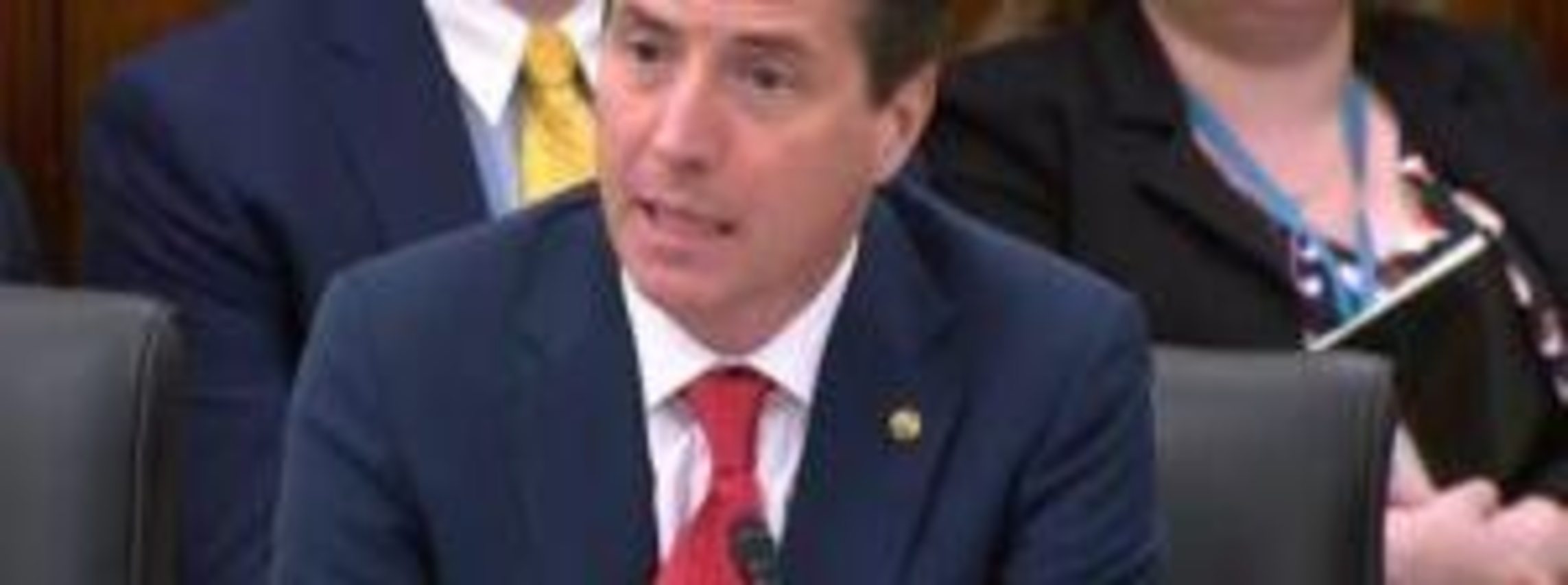
Moreno responded that the bill is not intended to ban the sale of Mercedes, as he formerly was a Mercedes dealer and his son currently is.
He added that the company has until 2030 to make changes or apply for a waiver.
Previously during the meeting and unrelated to Mercedes, Moreno said connected vehicles controlled by the Chinese Communist Party (CCP) are a massive national security threat.
“If we allow these cars to come in here, they could take over the steering, the acceleration and braking of your vehicles,” Moreno said. “That is obviously an intolerable security risk.”
Moreno said CCP has banned Teslas from driving near their military installations for the same reasons.
The U.S. The Department of War (DOW) added BYD to a list of “Chinese military companies” last month. The list states that BYD, the top-selling EV globally, is directly and indirectly affiliated with China’s State-owned Assets Supervision and Administration Commission (SASAC) and is indirectly affiliated with the Ministry of Industry and Information Technology (MIIT). It also notes that BYD resides or is affiliated with a military-civil fusion enterprise zone.
Connected vehicles from China also pose an economic threat, Moreno said.
“Any car company in America, whether that’s Ford, General Motors, Toyota or Honda, can compete with any company on earth,” Moreno said. “They can’t compete with an entire country that is set on destroying the Western auto industry.”
Automotive News reported in April that plug-in hybrid sales by Chinese brands quadrupled in March and now represent 32% of the total European market.
Volkswagen Group announced earlier this month that it is planning up to 100,000 job cuts globally as it navigates falling sales in key markets brought by increased competition from Chinese brands moving into Europe.
Moreno said there is also a consumer protection threat. He added that there are currently 92 Chinese brands. If the bill is not passed, those companies would eventually come to the U.S. and would go out of business, leaving millions of consumers with no warranties and no spare parts.
The bill has received support from GM, Ford, Honda, Stellantis, the Alliance for American Manufacturing and the Alliance for Automotive Innovation (Auto Innovators)
“China has a strategy to dominate global automotive and battery manufacturing that presents a challenge to American economic and national security,” said John Bozzella, Auto Innovators president and CEO, in a previous press release. “We need to make sure we’re all playing by the same rules, but Chinese automakers are flooding markets around the world with cut-rate vehicles. Sens. Moreno and Slotkin don’t want that to happen here. They’re right.”
The U.S. Department of Commerce’s Bureau of Industry and Security (BIS) published a rule banning Chinese and Russian-connected vehicle technology last year. The bill would codify the regulation into law and add some additional language.
Earlier this year, Ford CEO Jim Farley talked to Fox News about how Chinese vehicles could devastate the American economy. His comments followed an opinion piece by Bozzella published in Automotive News, regarding concerns about Chinese automakers.
House Democrats also signed a letter earlier this year expressing concern about Trump’s remarks on allowing Chinese automakers access to the U.S. Market.
Reuters reports that Trump said in January he was open to letting Chinese automakers build vehicles in the U.S.
“If they want to come in and build a plant and hire you and hire your friends and your neighbors, that’s great; I love that,” Reuters says he told the Detroit Economic Club.
The letter sent by Democrats echoes some concerns made by OEMs recently.
“The Chinese auto industry does not compete on a level playing field,” the letter says. “It is driven by a state-directed strategy to dominate global markets through government subsidies, below-market financing, and non-market behavior across the supply chain. These advantages are compounded by exploitative labor practices, including suppressed wages, lack of worker protections, and credible reports of forced labor, creating structural advantages that no American company operating under fair labor standards can match.”
Image
Photo of Sen. Bernie Moreno (R-Ohio) speaking during the U.S Senate Commerce Committee July 22, 2026/screenshot.