
Ford: BlueOval Battery Park Michigan hits lithium-iron phosphate (LFP) battery production, hiring milestones

Ford’s new BlueOval Battery Park in Michigan is on track to ship electric vehicle batteries in 2026, making the OEM the first to deliver lithium-iron phosphate (LFP) batteries in the U.S. for mainstream consumer automotive use, according to an article from Scott Davis, the park’s business and pack operations plant manager.
These LFP prismatic batteries will power Ford’s midsize electric truck, the first vehicle on its Universal EV platform.
“This project brings world-class battery technology to our state and positions us to bring even more auto and battery manufacturing back from overseas,” said Michigan Gov. Gretchen Whitmer in the article. “Michiganders will build the batteries that power a new generation of affordable electric vehicles, giving consumers more choices while supporting our workers.”
The release notes that BlueOval Battery Park Michigan has already created more than 500 jobs, which Whitmer called “high-tech” and “good-paying” jobs. Ford plans to add 300 jobs at the park by the end of the year, and eventually, up to 1,700.

“This project brings world-class battery technology to our state and positions us to bring even more auto and battery manufacturing back from overseas,” said Whitmer. “Michiganders will build the batteries that power a new generation of affordable electric vehicles, giving consumers more choices while supporting our workers. I’m grateful to Ford and everyone helping make Michigan the best place in the world to build and invent the future.”
Davis writes that BlueOval Battery Park Michigan reached a significant milestone this month on its path to production readiness. Team members now assemble Ford’s first full LFP prismatic cells from slurry to coating and formation, through to aging and final inspection, and are ready to ramp the process, according to the release.
“We are past the stage of assembling initial pre-production battery cells,” the article states. “Having met rigorous safety and quality standards at each stage of the process, we are now testing batteries to ensure quality, following CATL’s industry-leading practices for production verification. Our ambition is to achieve quality levels where anomalies are measured in parts per billion.
“We’re advancing American interests by onshoring critical technology, ensuring a secure supply of high-performance and affordable batteries for the United States.”
Walt Nichols, production operator at BlueOval Battery Park Michigan, added in the article, “We’re working on the technology of tomorrow, and tomorrow is here right now.”
Davis writes that it trains the employees at the park in a mix of technical knowledge and hands-on skills, ranging from electrochemistry to robotics and software, while focusing on quality control and proper cleanroom environment operations.

“[T]he goal is to prevent even small particles from entering the battery cell as it comes together,” the article states. “Team members learn the intricacies of how equipment and materials interact. They master the human-machine interfaces that help enable them to control every part of their machines. And they learn how to assemble high-quality batteries and maintain their machines, becoming experts in their area of the plant.”
Davis writes that the park employees gain the following certifications while working:
-
- Level 1: Classroom work required to access the production floor
- Level 2: Subject-matter experts guide hands-on learning as employees operate machines
- Level 3: Employees operate machines independently, accomplishing all parts of their job and identifying opportunities for continuous improvement
- Level 4: Employees are qualified to train others
“To date, 87% of production employees have reached the Level 2 certification goal, and that number is growing,” Davis writes. “We’ll keep moving forward together, getting one step closer to the goal of world-class battery tech for the United States. We’re making it more real every day.
Images
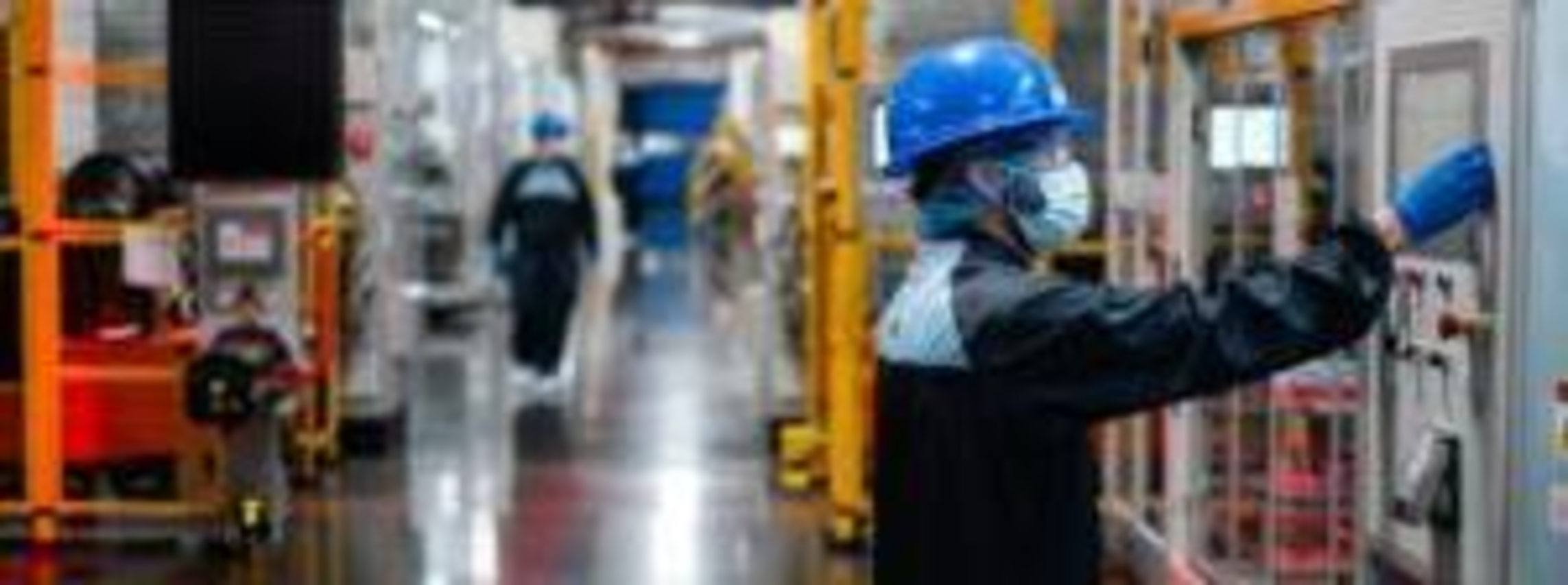
Featured image: BlueOval Battery Park Michigan team member Andrew Charameda operates a winding machine.
Ford electric vehicle LFP prismatic battery cells exit the wrapping machine at the end of the assembly process.
Jelly rolls, pictured with copper and aluminum tabs visible, are the final product from winding machines. Two jelly rolls are assembled into each battery cell.
All photos provided by Ford