
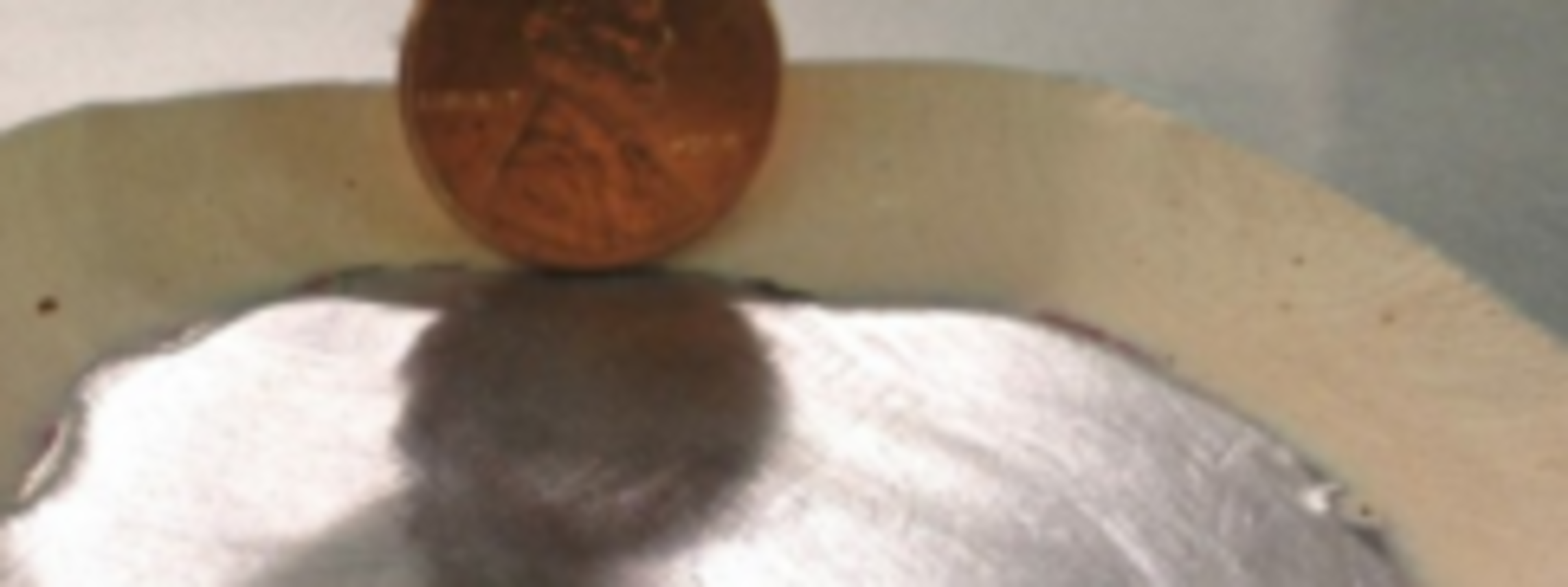
CIC committee discusses proper filler use in today’s collision repairs

The Collision Industry Conference (CIC) Repair Process and Procedures Committee most recently covered body filler “abuses” in the shop, and correct repair procedures using filler, including new processes on the market.
Kye Yeung, co-chair of the committee, briefly covered innovations in fillers over the past 75 years, moving into today’s more advanced formulas, such as lightweight fillers.

“That filler that was originally developed in the 50s, we still use today,” Yeung said. “It’s still out there, and a lot of people refer to it as ‘bondo.’ Bondo is kind of the overseeing term for polyester filler. Moving to the present, we have some non-fillers. PDRs became popular, and the glue pulling has become popular.”
Panelist Ricky Miller, with 3M, said body filler isn’t just a temporary repair if done correctly.
“A lot of the OEMs are actually recommending epoxy primer, like Honda and Toyota, so anything that goes on the bare metal, it should have epoxy on it,” he said. “Even though a lot of filler companies, the SOP, or the directions that you can put into bare metal, you still have to follow the OEM procedures.”
Panelist George Smith, with SoCur, noted that heat makes filler crack.
“Excessive heat on any sort, it doesn’t matter if it’s a urethane and epoxy or a polyester, it can make it brittle,” he said.
The panel also discussed how the quality of metal work is an important factor in how well filler works.

Committee co-chair Barry Dorn said many shops see vehicles for re-repair due to previous repairs that included overuse of body filler or wrong applications.
“That’s what we need to get out there because we should be way past this now,” Dorn said.
He added that newer technologies allow technicians to bring that metal back into an acceptable form for body filler application, such as KECO’s paintless dent repair.
“A lot of people think when they see me or when they see KECO, they think PDR, and really what we’re trying to do in the collision space is GPR, glue full repair,” said Emma White, with KECO. “What that is is pulling to paint using those GPR tools and tabs in order to get a flat enough finish to where you can just use a skim coat of filler.
“Some of the newer tools, like the lateral tension tools, have made that able to happen in a lot more timely manner. It enables the metal to flow out instead of just picking and pulling at these smaller dents that are a part of a larger complex dent… As far as adoption, that definitely is one of the things that we struggle with. It is hard to get people to change the way that they’ve done things before. It’s definitely a cultural shift. One of the things that we like to say is GPR is not difficult, but it is different. It absolutely requires training. …it is tough sometimes to get people to invest in that training. I think that that’s one of the biggest hurdles that I face.”
Poor practices

The panelists also discussed poor practices when using body filler. One of the “abuses” mentioned is increasing filler thickness to save repair time to get the job done.
Miller noted that the above photos are application shots. The third photo is an example of a true “cave to pave” application, he said.
The photo in the middle is similar in that when the filler is applied really thick, it results in a subpar repair.
“There’s so many things that can happen on the backside, just like we talked about with exothermic reaction, it can cause sweat, it’s going to cause rust, and then the filler’s going to crack,” Miller said. “Once it cracks, the moisture will get into the repair. And the one with the grind marks, basically, that was just a hail-damaged vehicle where this technician took a 60-degree rollout disc and just went over all the hail damage spots, skim-coated with filler, sanded… put another skim coat on, and shifted to paint.”
The result, he added, was that 30 days later, repair mapping occurred.
“All those grind marks, you can start seeing that through the repair,” Miller said.
Yeung added, “That’s a problem that we have today: it’s all about profit. It’s all about how fast we can get the job done. And honestly, with the parts issues, sometimes you don’t have a choice. Sometimes you do have to replace that panel, but to what degree? That’s really the fine line.”

The slide above discussed by the panelists provides some examples of the “body technician/painter divide,” in which certain procedures tend to cause disruptions in repair processes.
“If you don’t have a good SOP [standard of practice] in your shop on how to solve this divide, some of the comebacks that you have are not necessarily poor workmanship,” Yeung said. “It’s just a misunderstanding between the two departments of who’s responsible for what.”
Smith added, “It is about just educating everybody every step of the way and why we’re doing what we’re doing. Why do we need epoxy? Why can I not just put this over a grind tomorrow? Why do I need to clean a panel? It goes on and on and on. But it’s repair quality and precision.”
Dorn noted that the collision repair industry hasn’t been the best at training, and as a result, many technicians learn improper practices from other technicians.
“We’ve continued to pass the bad half of it down, and that’s the reason why we still have some of the issues that we have now is we feel like that, simplistic as this is, ‘We shouldn’t need to be trained,’ or ‘I’ll learn from someone who learned from someone who learned it from someone,'” he said.
Smith said that’s 100% accurate, and is why SoCur never sells any of its products to any repairers that aren’t properly trained.
“If we don’t put a couple of guys for a couple of days in your shop, fix their meal cars in real time, we’ve done nothing,” he said.
Miller said there needs to be a quality check checkpoint from the body shop to the paint shop.
“If that QC check is passed, then it goes to the paint shop, but if it’s not QC, it should go back to the body tech to be finished,” he said. “It doesn’t matter what filler you use; it’s all about the process. When we do the training, we show the process. You follow these steps exactly, and you’ll get a good repair in the end.”
Smith spoke about the use of alternative materials, such as UV fillers, adding that he once measured internal failures that occurred at collision centers. He found that 64.5% of failures within 30 days were due to improper use and mixing with unsaturated polyester fillers.
“There are some ultraviolet-tier urethane fillers out there that will solve a lot of those problems,” he said. “But it takes buy-in. It takes top-down leadership, and it takes a vision to get it done. But with that, you’ll solve a lot of rework and a lot of problems.”
He noted as well that millage increases cure time. For example, penny-thick filler is going to take 24 hours to cure, he said.
Instead, some repairers will “dump a bunch of 2K urethane primers on it, then they seal it, they base it, and then they clear it,” Smith said.
“You have this huge millage, but if you can use a UV filler and get that cured and then [use] the UV primer, in the booth, all you’re trying to do is get that sealer and that clear coat to dry,” he said. “Lots of things improve if you can minimize.”
Best practices
When discussing best practices, Miller emphasized starting with clean sheets and mixing boards.
“We don’t recommend using cardboard or a scrap piece of metal or a piece of glass, something of that nature,” he said. “The mixing boards, they’re clean, they’re easy. If you look at the cost of them, it’s pennies per sheet.
“When you’re doing the application, we teach how to do applications, do proper mixing. It’s not cake batter, you’re not flipping it, you’re not twisting it in a circle. You’re always folding, pressing it down, making sure you get any air out of it.”
Miller added that a tight coat should be put down and multiple thin layers built on back-to-back instead of resulting in the “cave and pave” scenario.
“We teach the smoother you spread it, the better you spread it, the easier it is going to be to sand,” he said. “If you sand it too early, you can actually break that filler loose from the surface because it’s not built adhesionly yet, and basically you just have to start all over.”

A couple of other points to keep in mind, according to White, with PDR is before starting the repair and after it’s finished, look at it with a magnifying glass to make sure that there isn’t any micro-cracking.
“I’m sure a lot of you have seen videos online of these PDR guys that do these big smashes, and it may seem to the naked eye that there’s not any cracks in the paint, but over time, if there is any micro-cracking, that then opens up the panel to corrosion,” he said. “What we teach is glue pull repair, using some of those PDR techniques, both glue pull and some push rods with tips on the end of them, so you’re not marring up the backside of the panel.”
He added that the repairer would then use a very minimal amount of filler glaze and then repaint.
“That is the best repair overall in a lot of those PDR cases where it’s a larger smash, where you think that you can probably do it paintless; you might not want to because of the possibility of micro-cracking,” he said.
Images
Featured image and slides provided by CIC.
Secondary image: Kye Yeung, Ricky Miller, George Smith, Emma White, and Barry Dorn, during the April 22, 2026, CIC meeting in Charlotte, North Carolina.