
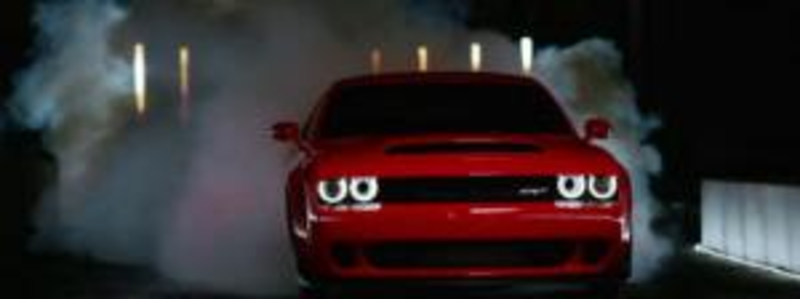
New IIHS study criticizes speeding and aggressive driving advertising

According to a new study from the Insurance Institute for Highway Safety (IIHS), from 2018 to 2022, advertisements emphasizing vehicle performance increased as deaths linked to speeding and aggressive driving continued to increase.
The study states that 43% of vehicle ads aired during 2018, 2020, and 2022 highlighted speed, maneuverability, traction, stopping, or power. The focus on performance grew over time, and speed was emphasized more than twice as often as safety, the researchers found.
“Showing a stunt driver zooming around a tight turn in the rain might seem harmless, but these ads reinforce our cultural obsession with speed,” said IIHS President David Harkey in a press release. “The fine print may caution that it’s a professional driver on a closed course, but the message they convey is that you can drive this way too.”
In 2024, 11,288 lives were lost in speed-related crashes, representing 29% of all road deaths in the U.S., according to the study.
“From 1950s hot-rod songs to action-film franchises like ‘The Fast and the Furious,’ speed has long been a celebrated part of U.S. car culture,” the release states. “Vehicle advertisements, unlike movies or music, are designed specifically to persuade. Many of them present high-performance driving as something consumers can purchase and experience.
“The phenomenon is not new. An ad for the Nissan 300ZX Turbo shown during the 1990 Super Bowl was criticized by IIHS and other safety groups as showing ‘a blatant disregard for public safety.’ The automaker agreed not to run it again. Still, an IIHS analysis of television advertising in 1998 found that performance was a theme in about half of all automobile ads.”
IIHS notes that, in other countries such as the United Kingdom, regulators control vehicle ads. UK standards restrict ads that encourage vehicle power, acceleration, or handling unless the context clearly relates to safety, such as swerving to avoid a crash, the release states.
IIHS calls U.S. standards “ambiguous and easily circumvented.”
“For example, during the years covered by the study, the advertising standards of ViacomCBS, which later became Paramount, prohibited ‘risky behavior portrayed positively,’ but they did not include a definition of risky behavior,” the release states. “ABC’s standards were more specific, stating that ‘safe and lawful driving practices should be depicted at all times,’ but there was no mention of sticking to reasonable speeds in their examples of safe driving.
“Similarly, NBC Universal required that advertisers ‘portray compliance with standard safety precautions,’ calling out the use of seatbelts but ignoring speed.”
The IIHS study found that the result of the ambiguity was a large number of ads showing drivers speeding, driving aggressively, or testing the limits of the vehicle.
“Advertising like this has helped normalize speeding, masking how dangerous it is,” said IIHS Research Scientist Amber Woods, lead author of the study, in the release. “Just think about how different attitudes are toward speeding versus impaired driving.”
To identify the most common messages in vehicle marketing, IIHS gathered more than 1,500 television ads that aired in 2018, 2020, and 2022, along with more than 1,000 internet and social media ads from 2020 and 2022.
The team developed a list of 23 themes, including speed or speeding, luxury or prestige, and heritage or nostalgia, and a set of visual cues associated with each theme.
Ten coders from the University of Virginia’s media studies department completed a three-hour training session and then reviewed 600 ads each, noting the primary theme and any secondary themes.
Ads that included speed or speeding, maneuverability, power, stopping, or traction were classified as performance ads. Because an ad that airs hundreds of times is likely to have more impact than one shown only a few times, the researchers weighted their results using ad-spending data from Nielsen Ad Intel.
Statistical analysis showed that, across the full study period, performance was the most common theme, appearing in 43% of ads. About 16% included speed or speeding, and 28% emphasized traction. By comparison, only 8% of ads highlighted safety, IIHS said.
“Some of the performance-related concepts — maneuverability, stopping, and traction, especially — seem innocuous or even like safety necessities,” the release states. “But that’s not how many ads portrayed them.”
IIHS found that any ad depicting the vehicle driving in adverse weather conditions or on slippery or uneven terrain was coded for traction; however, fewer than 1 out of 10 of those ads were also coded for safety, meaning there was no mention of using those capabilities to avoid crashes. Instead, IIHS says traction was most often evoked with footage of vehicles kicking up clouds of dust on remote dirt tracks, zooming down the beach, or rumbling over boulders in the mountains.
“The vast majority of viewers are never going to take their vehicle through a mountain stream or up a sand dune, but this kind of ad could influence the way they drive in risky on-road conditions — in rainy or snowy weather, for instance,” Woods said in the release.
IIHS also found that the emphasis on performance increased over time. From 2018 to 2022, the share of ads focused on speed rose from 14% to 19%, and the share centered on traction rose from 20% to 38%. In the same period, the share of ads highlighting safety fell from 11% to 3%.
“Performance themes were common in ads for all kinds of vehicles, but featured more heavily in ads for pickups than [in] ads for sedans and SUVs,” IIHS said. “That may reflect the SUV’s new status as America’s family vehicle and pickup buyers’ interest in payload and towing capacity. Nevertheless, the probability that an ad for an SUV would be themed around performance rose from 28% in 2018 to 45% in 2022.”
The research also shows that depictions of speed or speeding were much more common in sedan advertising than in pickup truck ads. In 2020, speed or speeding themes appeared in 47% of sedan ads, compared with 11% of SUV ads and 5% of pickup ads.
“The influence of an advertisement isn’t limited to the people who buy that kind of vehicle, so the depictions of speed in ads for luxury sedans could affect the behavior of other drivers, too,” IIHS states in the release.
“Other aspects of performance, though they were considered separately in the study, can also be code words for speed,” the release states. “Maneuverability or ‘performance handling,’ in marketing terms, means taking corners fast. Horsepower, while it is a necessary component of towing capacity, is also a key component of acceleration.”
Harkey added that the study highlights the cultural dimension of the U.S. road safety crisis.
“Automakers and broadcasters need to start treating unsafe speed the same way they would drunk driving or failure to use a seatbelt,” he said.
Images
Featured photo provided by IIHS