
Volvo starts production of first vehicle with megacasting

Volvo has started the production of the EX60, its first vehicle to use megacasting, a recent news release says.
The fully electric EX60 is planned for deliveries starting in early summer.
Volvo increased production volumes for the vehicle last month due to high demand.
The Torslanda, Sweden, plant received major upgrades in preparation for EX60 production, including the addition of megacasting capabilities, a new battery assembly plant, and a refurbished paint shop.
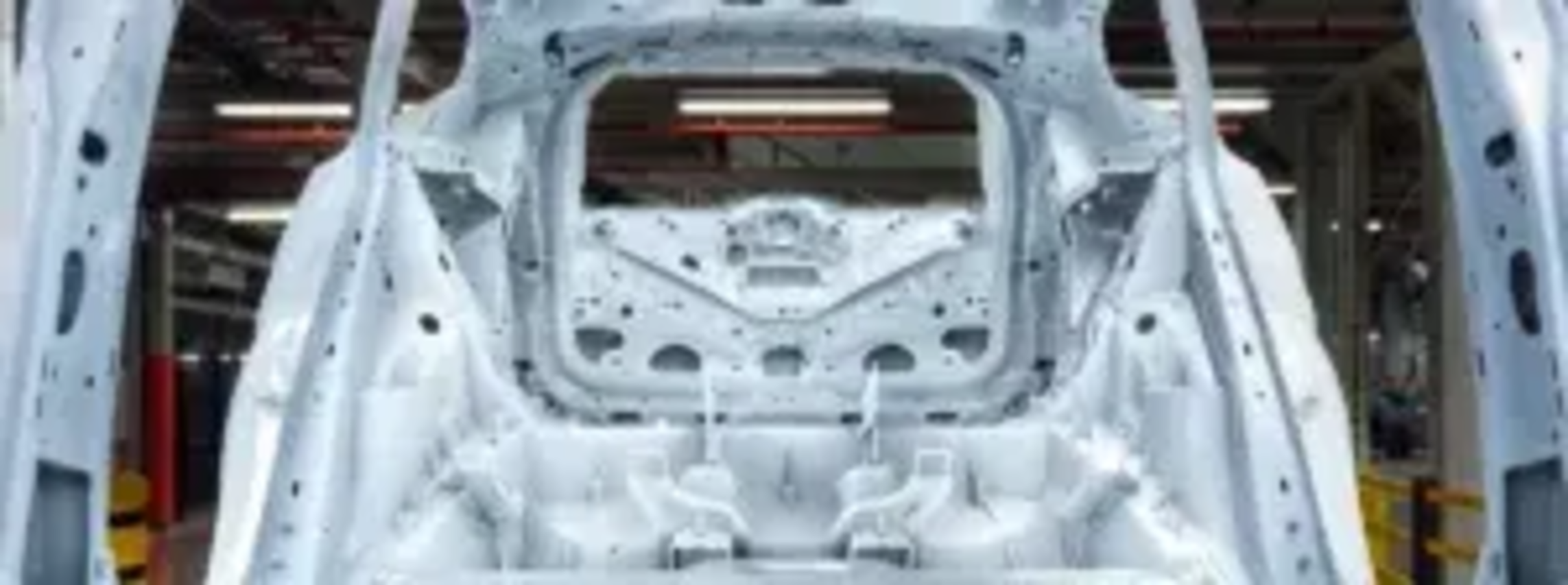
“The EX60 is the first Volvo car built with the help of mega casting, whereby hundreds of smaller parts are replaced with a single, high-precision casting in the production process,” a Volvo release says. “This reduces weight, which again improves range and lets you go further.”
Chalmers University of Technology describes the megacasting process in more detail, stating that 60-100 welded steel components in the rear structure will be replaced with a single large, high-pressure die-cast aluminium structure.
“Megacasting is not merely a production innovation; it can also give a strong push for sustainability,” a university press release says. “The technology places new demands on materials development, advanced simulation, and a deep understanding of thermal processes, structural performance, and repairability.”
The university says that within 2.5 years, research in the field has grown from zero to a project portfolio of SEK 50 million, or roughly $5 million.
Ford also recently announced plans to integrate megacasting into the manufacturing of a mid-sized electric pickup truck next year.
CEO Jim Farley called the manufacturing shift “the most radical change on how we design and how we build vehicles at Ford since the Model T,” during an August event covered by CBS.
The shift includes changing how the assembly line operates and a reduction in the total number of parts used in the vehicle. For example, a Ford press release says the wiring harness will be 4,000 feet shorter.
However, the focus on reducing parts will be achieved through a process Ford calls unicasting, which is essentially known as megacasting or gigacasting.
“Large single-piece aluminum unicastings replace dozens of smaller parts, enabling the front and rear of the vehicle to be assembled separately,” Ford says in its release. “The front and rear are then combined with the third sub-assembly, the structural battery, which is independently assembled with seats, consoles, and carpeting, to form the vehicle.”
Automotive News says the technique is meant to reduce manufacturing cost, but it raises questions about repairability.
The article asks, “Will customers’ bills skyrocket if collision centers have to replace one large component instead of smaller pieces? Would such parts be readily and widely available?”
Some research shows large castings can be less expensive to fix as long as they’re intentionally designed from the beginning, according to the article.
“What we quickly found is that actually, it’s easier to repair a vehicle that has unicastings,” Alan Clarke, Ford’s executive director of advanced electric vehicle development, told reporters, according to Automotive News. “When you make it a constraint — that it needs to be repairable at specific speeds, because we see customers actually having accidents at those speeds — it actually creates a bunch of creativity with engineers who figure out the easiest way to repair it, and it ultimately becomes an advantage.”
The article points to a study published by Thatcham Research in the fall of last year that found megacasting lowered repair costs on the Tesla Model Y.
Image
Body in white for the Volvo EX60/Volvo