
Rivian and Redwood Materials to recycle EV batteries for manufacturing

Rivian and critical materials and energy technology company, Redwood Materials, have announced a partnership in battery energy storage at Rivian’s Normal, Illinois, manufacturing facility.
Using more than 100 second-life Rivian battery packs, Redwood and Rivian’s solution will initially provide 10 megawatt-hours (MWh) of dispatchable energy to reduce cost and grid load during peak demand periods — saving on cost and supporting grid security and reliability, according to a Rivian press release.
Rivian will provide EV battery packs to Redwood, who will integrate them into a Redwood Energy system, supported by the company’s Redwood Pack Manager technology, allowing their stored energy to be used on-site by Rivian’s plant.
The system is rapidly scalable and offers significant cost benefits by enabling faster, more flexible deployment of energy capacity directly at high-demand sites like manufacturing facilities, the release states.
Rivian notes that to capture and balance the growth in peak electricity demand expected, the U.S. must deploy massive amounts of energy storage.
By 2030, estimates are that over 600GWh of storage is needed to meet growing demand, stabilize peaks, and power the technology innovation of the 21st century, the release states. This represents a virtual reservoir equivalent to the total energy output of the Hoover Dam running for two months straight.
“EVs represent a massive, distributed and highly competitive energy resource,” said Rivian Founder and CEO RJ Scaringe, in the release. “As energy needs grow, our grid needs to be flexible, secure, and affordable. Our partnership with Redwood enables us to utilize our vehicle’s batteries beyond the life of a vehicle and contribute to grid health and American competitiveness.”
JB Straubel, Redwood Materials founder and CEO, added, “Electricity demand is accelerating faster than the grid can expand, posing a constraint on industrial growth. At the same time, the massive amount of domestic battery assets already in the U.S. market represents a strategic energy resource.
“Our partnership with Rivian shows how EV battery packs can be turned into dispatchable energy resources, bringing new capacity online quickly, supporting critical manufacturing, and reducing strain on the grid without waiting years for new infrastructure. This is a scalable model for how we add meaningful energy capacity in the near term.”
Rivian and Redwood say that when an electric vehicle is retired, they are extremely valuable as stationary energy storage devices.
Stationary energy storage technologies play a key role in reducing cost and increasing stability both for the customer and the grid at large.
For example, during periods of peak demand like heat waves, Rivian can instantly deploy energy stored in its second-life batteries to offset increased strain on the grid, the release states.
It adds that Redwood’s deep expertise in battery systems and power integration positions the company to capture a massive domestic supply of energy storage that is already accumulating.
“By transitioning these packs into stationary assets before recycling them, we can extend their useful life, decrease reliance on imported energy storage, and defer billions of dollars in costly infrastructure upgrades.
Last year, Redwood partnered with General Motors to accelerate the deployment of energy storage systems utilizing new and second-life battery packs from GM’s electric vehicles.
Redwood Materials launched Redwood Energy in June 2025. The business deploys both used EV packs and new modules into fast, low-cost energy-storage systems. According to the release, the systems are built to meet surging power demand from AI data centers and other applications.
In 2024, BMW of North America and Redwood partnered to recycle lithium-ion batteries from all-electric, plug-in hybrid electric, and mild hybrid BMW, MINI, Rolls-Royce, and BMW Motorrad vehicles in the U.S.
At the time, the plan was for Redwood Materials to work directly with BMW’s network of nearly 700 dealerships, distribution centers, and other facilities across the country to recover end-of-life lithium-ion batteries and ensure critical minerals, like nickel, cobalt, lithium, and copper, are recycled and refined.
In 2022, Toyota and Redwood announced they would “explore a series of end-of-life battery solutions for Toyota’s proposed battery ecosystem,” according to a joint news release from the companies.
The first phase of the project was to focus on the collection, testing, and recycling of batteries, then the companies planned to conduct battery health screening and data management, remanufacturing, and battery material supply throughout North America.
Images
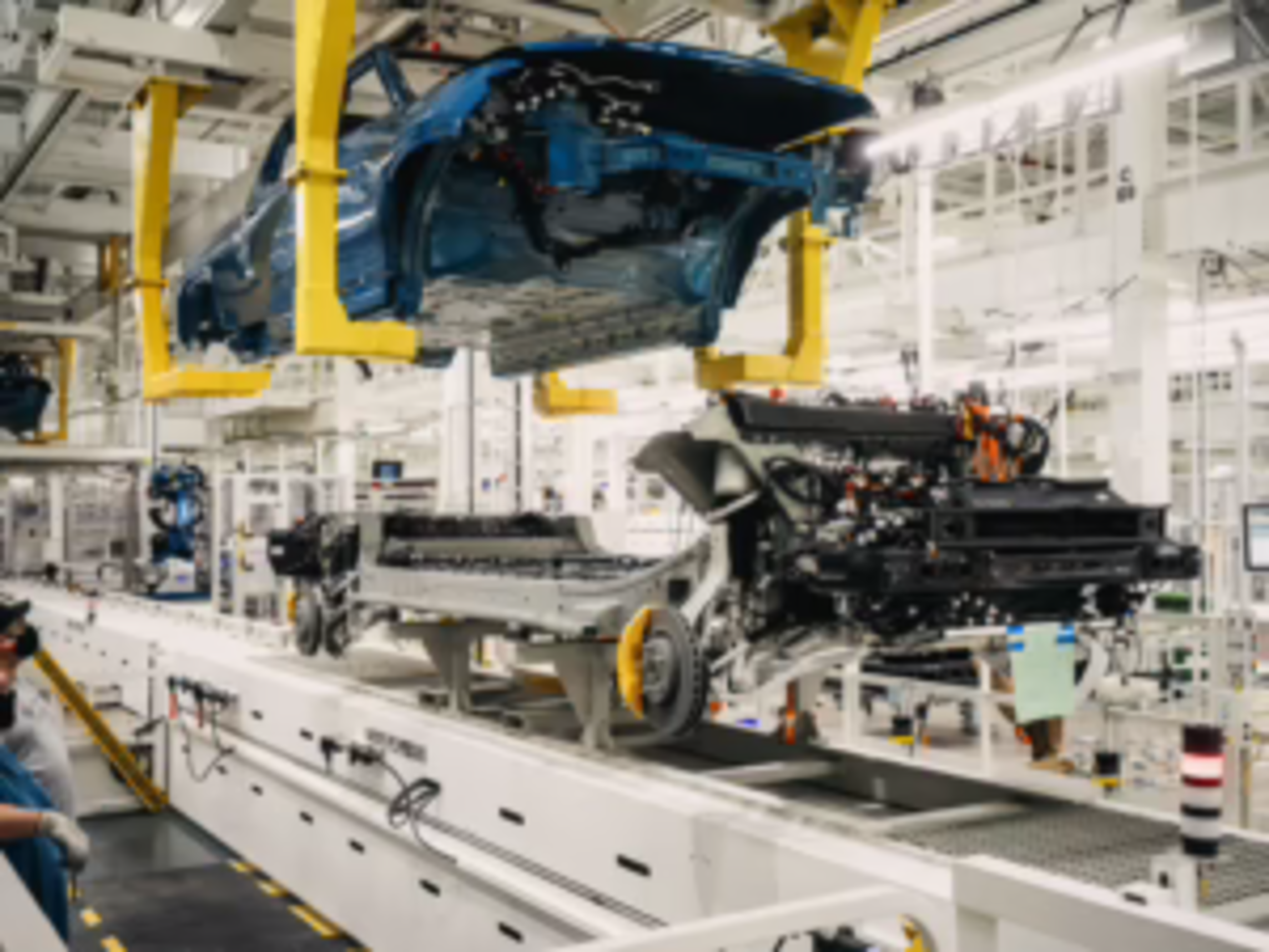
Featured image: Rivian’s Normal, Illinois, manufacturing facility. (Provided by Rivian)