
Highway Data Loss Institute: ADAS increase safety benefits, collision severity, and repair costs

The safety benefits from features like automatic emergency braking, lane departure prevention, and high-beam assist stack up as multiple systems are bundled together and updated versions deliver better results, according to a new study from the Insurance Institute for Highway Safety Highway Loss Data Institute (IIHS-HLDI).
Matt Moore, chief insurance operations officer at IIHS-HLDI, said in a press release that as the safety features improve and become more common, compounding crash reductions are occurring.
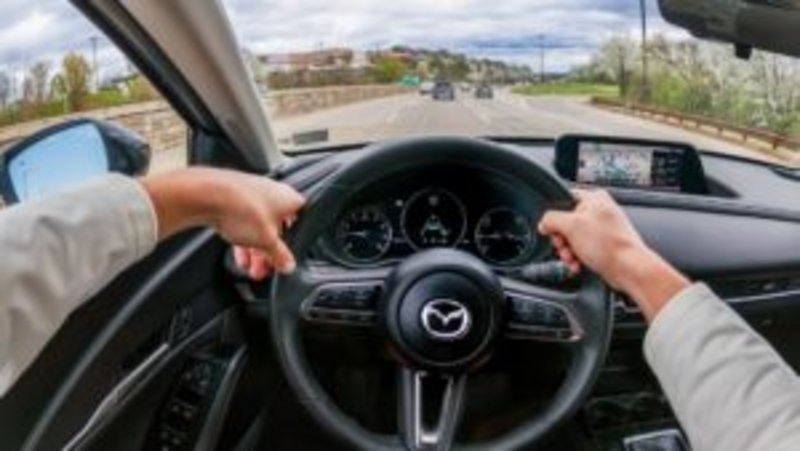
To better understand this evolution, HLDI’s latest study examined the impact of advanced driver assistance systems offered on 2015-2023 model year Mazda vehicles, comparing six feature bundles and four standalone systems.
HLDI says claim frequency reductions were substantial, especially under property damage liability (PDL) and bodily injury liability (BIL) coverages.
The most basic bundle was associated with a 13% reduction in PDL claim rates and a 9% reduction in BIL claim rates. In general, those benefits grew with the addition of each new technology, and the most comprehensive bundle was linked to a 39% drop in PDL claim rates and a 21% reduction in BIL claim rates, HLDI’s study shows. However, it notes that the latter figure was not statistically significant.

In contrast, HLDI found that most bundles and individual systems were associated with increases in claim severity, representing the cost paid to settle the claim.
“In part, those increases represent the higher cost of replacing sensors and other components that the crash avoidance systems rely on, which are often damaged in the crashes that do occur,” the release states. “However, another important factor is that crash avoidance systems primarily eliminate crashes that occur at slower speeds. That takes low-dollar claims out of the equation and skews the average cost upward.”
A better indicator of the features’ economic impact is in the overall losses, HDLI concluded.
“The product of claim frequency and claim severity, it is the figure that affects the insurance company’s bottom line,” the release states. “All bundles and features except Traffic Sign Recognition were associated with lower overall losses under PDL coverage. A few were associated with minor increases under collision coverage, which covers damage to the policyholder’s own vehicle.”
The most basic bundle consisted of a single feature — front automatic emergency braking (AEB), which in all the vehicles studied included forward collision warning.
The most comprehensive bundle included front AEB with pedestrian detection, adaptive cruise control, high-beam assist, lane departure warning, lane departure prevention, rear AEB, and Driver Attention Alert — a feature designed to detect when the driver is fatigued or distracted, the press release states.
“Not only were the larger bundles more comprehensive, but they also included more advanced versions of the technologies in the smaller bundles,” the release states. “That’s because they were offered on newer vehicles. At the same time as Mazda was introducing new features, it was refining the older ones. Thus, while all the bundles included front AEB, the biggest bundles included a more advanced version of it.”
The bundle that added Driver Attention Alert was a notable exception, delivering no greater benefits, according to HLDI.
“It’s possible that the alert came into play too rarely to affect claim rates, as it only activates after about 20 minutes of driving between 41 mph and 86 mph and may not function on roads without clear lane markings,” the release states.
“The most noticeable added reductions came with the addition of front AEB with pedestrian detection and rear AEB. Along with reducing pedestrian crashes, the updated front AEB systems were most likely better than their predecessors at preventing crashes with other vehicles. Rear AEB delivered big benefits because it prevents many of the low-speed parking lot incidents that make up the bulk of insurance claims.”
“If you’re worried about rising repair costs, the smartest thing you can do is get a vehicle with rear AEB and make sure it is turned on,” Moore said.
In addition to the bundles, HLDI evaluated the effects of several other features.
Blind spot detection and rear cross-traffic alert, which detects vehicles approaching from the side when the driver is backing up, could not be assessed separately because in Mazda vehicles, they come together. Both use the same radar sensors in the rear bumper. The combination was associated with a nearly 10% reduction in PDL claim frequency and a 13% reduction in BIL claim frequency.

The study also found that curve-adaptive headlights and the heads-up display, which projects key information such as the vehicle speed and navigation guidance directly onto the windshield, were each associated with slightly smaller reductions.
In contrast, the effects of a feature called Traffic Sign Recognition were unclear.
HLDI says the feature uses a forward-sensing camera or recorded information from the navigation system to identify and display traffic signs such as speed limits and stop signs. It surmises that the lack of a clear benefit may stem from system limitations or a small sample size, since fewer vehicles are equipped with it than with other features.
The advancement of automatic collision notification (ACN) could prevent 2,129 deaths annually; however, a recent whitepaper from Intrado and SBD Automotive states that faster adoption is stalled.
Studies show that reducing accident response delays to below 7 minutes could prevent 2,139 deaths annually, or 13.2% of traffic fatalities, the paper says. It adds that delays beyond 7 minutes significantly increase mortality risk for severe injuries, and more than 12 minutes increases mortality by 46%. The average response time in the U.S. is 10 minutes, the report says.
A survey of 5,000 drivers found that 73% have confidence in road safety, but only 19% believe meaningful progress has been made in the past five years.
Images
Featured image and graphs provided by IIHS-HLDI