
Department of Labor recognizes Collision Engineering as repair tech standard

The U.S. Department of Labor has recognized the Collision Engineering Career Alliance (Collision Engineering) apprenticeship model as the standard for collision repair technician training and certification, according to a press release.
Collision Engineering’s National Guidelines for Apprenticeship Standards (NGS) certification serves as a model for developing local programs that meet all regulatory requirements under federal law with the U.S. Office of Apprenticeship.
Collision Engineering students complete a two-year associate degree program designed around a hybrid, work-based learning model. They rotate every eight weeks between classroom instruction and paid apprenticeships at qualified collision repair facilities.
“The Department of Labor’s approval of our National Guidelines for Apprenticeship Standards is a defining moment for Collision Engineering,” said John Helterbrand, national program director of the alliance, in the release. “It validates the work we have done to align education and industry, and it ensures students and employers alike can access a pathway that is nationally recognized and sustainable for the future. This is how we build the next generation of our workforce.”
The release adds that approval of the guidelines advances Collision Engineering’s mission to address increasing demand for a highly skilled collision repair workforce by bringing together education and industry, thus transforming how collision repair technicians are trained and retained.
Now, graduates also earn a nationally recognized Collision Engineering Technician Certificate from the U.S. Department of Labor.
“Our program, which is creating the next generation of highly skilled collision repair professionals, thrives due to solid industry partnerships with others who are committed to strengthening the future of collision repair,” said Mary Mahoney, Collision Engineering Career Alliance president, in the release. “These standards will provide communities across the country a pathway to expand and elevate collision engineering training for colleges, students, and employers, helping to ensure long-term program sustainability.”
The Collision Engineering Career Alliance is active at partner schools across the country including College of Lake County in Grayslake, Illinois; Contra Costa College in San Pablo, California; Parkland College in Champaign, Illinois; Metropolitan Community College in Omaha, Nebraska; Sandhills Community College in Pinehurst, North Carolina; North Dakota State College of Science in Wahpeton, North Dakota; and El Camino College in Torrance, California.
Donations to Collision Engineering help expand the program’s reach to additional schools nationwide, recruit future talent, and provide crucial support for student certifications, assessments, tuition reimbursement, and other quality-of-life needs. Those interested in supporting the next generation of collision engineering professionals can learn more and make a tax-deductible donation at beacollisionengineer.com/donation.
CCC Intelligent Solutions and the Collision Repair Education Foundation (CREF) recently published a workforce study based on a survey of students and young professionals, showing they hold a positive perception of the collision repair industry.
The “Future of Collision Repair Workforce Study” also highlights the 475 respondents’ eagerness to pursue a career that combines hands-on work with advanced technology in a field they view as stable and rewarding. The survey includes high school, college, and technical/vocational students, as well as recent graduates considering careers in collision repair.
Ninety-five percent of respondents said they’re confident that collision repair is more stable than traditional college-degree jobs. At the same time, 74% believe a career in the industry also offers higher earning potential.
Images
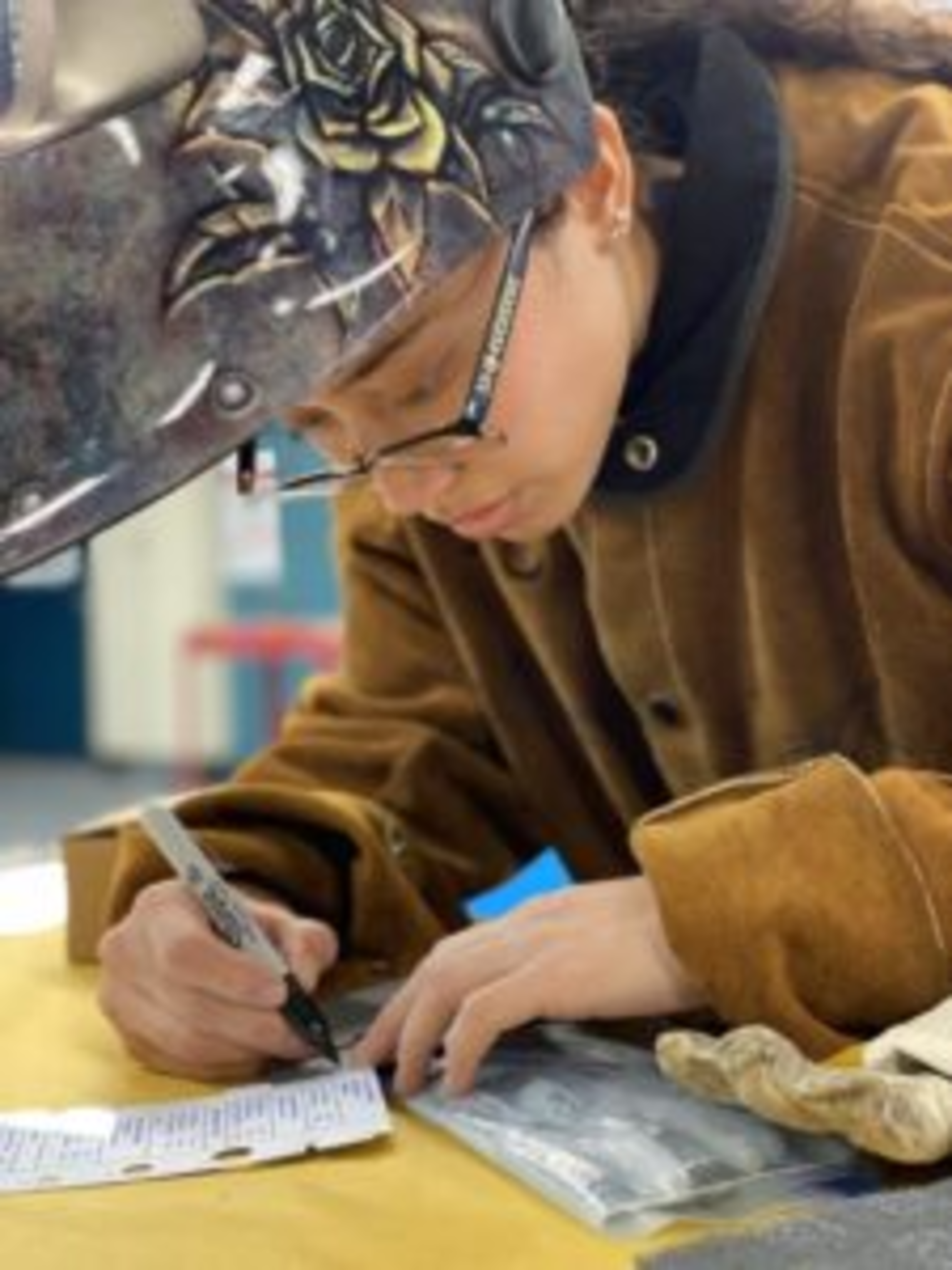
Featured image: Former Contra Costa College Collision Engineering Program (CEP) student Cinthia Pool works during an I-CAR welding course. (Credit: Contra Costa College)