
Industry responds to federal bill requiring NHTSA guidelines for ADAS calibrations

The ADAS Functionality and Integrity Act, recently approved by a U.S. House subcommittee, has sparked conversation and conflicting views from both calibration and glass specialists.
H.R. 6687 would give the National Highway Traffic Safety Administration (NHTSA) the authority to develop calibration guidelines for advanced driver assistance systems (ADAS).
The Independent Glass Association (IGA) says the requirements would threaten their industry, while the ADAS Coalition, comprised of Burke Porter, Dealer Tire, Opus Inspection and DEKRA, says the requirements should extend further by mandating calibrations as routine maintenance.
The bill would require auto manufacturers, standard-setting organizations, and independent automotive aftermarket companies and dealers to develop and publish guidelines for ADAS to maintain functionality when a vehicle is modified or customized.
This would include calibration procedures following repairs and confirmatory test protocols, and performance validation metrics that allow owners, service providers, and independent repair facilities to verify the operational integrity of ADAS after calibration.
It would also have to be possible for validation criteria to be applied across vehicle platforms and assessed over the lifecycle of a vehicle, the bill says.
NHTSA would be required to study the feasibility, capabilities, safety needs, and the development/maintenance costs of the industry guidelines to support the functionality of ADAS installed in vehicles after modification or customization.
The study would include proper ADAS calibration procedures following repair, modification, or component replacement, and confirmatory test protocols and performance validation metrics that allow owners, service providers, and independent repair facilities to verify the operational integrity of ADAS after calibration.
The IGA announced its opposition to the bill in recent days, stating that it threatens small auto glass businesses.
“While the association supports increased access to vehicle safety data, it warns that the bill in its current form creates a dangerous ‘liability trap’ and an unfunded financial burden for small businesses,” an IGA press release says.
Gary Hart, IGA executive director, says in the release that H.R. 6688 mandates a secondary testing process without ensuring shops get paid for the extra labor.
“We are already seeing insurance companies and TPAs cap what they pay for standard calibrations at rates that barely even cover overhead,” Hart says. “They certainly aren’t going to volunteer to pay for an extra federal testing step unless the law forces them to.”
Without requirements for insurance companies to reimburse shops, the bill effectively forces small businesses to provide a government-mandated safety guarantee for free.
The liability is also shifted to the shop, the release says.
“The legislation creates a scenario where a shop could follow OEM calibration perfectly, yet be held liable if the vehicle fails a subsequent ‘functional’ test due to software or component issues outside the shop’s control,” the release says.
Hart states that the industry is at a breaking point with billing.
“TPAs are denying the use of OEM glass, which we know is often essential and/or required by the OEM for a successful recalibration, and then they’re ‘capitating’ the payout for the calibration itself,” the release says. “This bill adds more work, more equipment costs, and 100% of the legal liability onto the shop, while the insurers sit back and reap the benefits of the safety data. We cannot ask independent shops to sign a safety certificate that the insurance companies refuse to pay for.”
The ADAS Coalition sent a letter to the chairmen and ranking members of the U.S. House Committee on Energy and Commerce and Subcommittee on Commerce, Manufacturing and Trade praising steps the bill takes toward establishing ADAS guidelines. However, it says more steps are needed, which should be included in the Motor Vehicle Safety title of the upcoming Surface Transportation Reauthorization (STR) bill provisions.
The letter says ADAS technologies depend on proper calibration and recalibration as part of regular maintenance and post-collision repair.
The STR should include guidelines requiring motor vehicle repair businesses to determine whether a vehicle needs ADAS calibrations as part of maintenance or periodic inspection and collision repair procedures, the letter says.
“Such a provision ensures that consumers are made aware of their vehicle’s potential need for recalibration and can then decide if they would like to have their vehicle’s ADAS technologies recalibrated,” the letter says.
It recommends that ADAS technologies be calibrated at regular intervals, for example, every 15,000 miles or yearly as part of a regular maintenance schedule.
The letter also proposes requirements for the qualification of repair businesses to perform ADAS calibrations and procedures for testing the calibration status of ADAS post-collision and post-repair.
OEMs should also notify consumers yearly about the requirements, the letter recommends. It also asks NHTSA to conduct research on the functionality of ADAS installed in vehicles over their lifetime.
Mike Reynolds, Southern Automotive Service Association vice chairman, also sent a letter to the chairmen and ranking members responding to the ADAS Coalition’s recommendations.
He calls a mileage-based requirement for ADAS calibrations “ridiculous.”
“When you think of vehicle maintenance, you think of things like oil changes, brake pad replacement, tire replacement… components that wear out,” Reynolds says in the letter. “Oil breaks down, brake pad material is consumed, and tires wear out. But the truth is, there are no wear-related items in an ADAS system.”
Reynolds gives an example of a camera that controls lane centering shifting from its position on the windshield. He writes that a calibration would be required to relearn the camera’s new position.
“To justify a camera requiring calibration every 15,000 miles, you would have to claim that the camera is shifting in its mounting, or that the bracket or windshield that holds the camera in place is a wear item,” he says.
Reynolds adds he’s a firm believer that ADAS designers and manufacturers are the only ones qualified to decide when vehicles should be calibrated.
“What I also want to touch on is the lack of skilled technicians performing these calibrations, which is a real issue,” Reynolds writes. “When it comes to ADAS calibrations, there is a lot of room for error on a technician level. This isn’t new for our industry, but the technology is. Historically, the automotive technician was mechanically inclined, and we have struggled to train technicians on this new technology as it is changing every year.”
The ADAS Coalition is asking Congress to establish qualifications for businesses, Reynolds writes.
“They want you to decide what companies can perform vehicle service,” he says. “In our industry, multiple national organizations, like ASE and I-CAR, have been focused on training and certifying technicians specifically on ADAS systems.”
Reynolds adds that it seems like the coalition is looking for the government’s assistance “in controlling the competitiveness of the ADAS market.”
Image
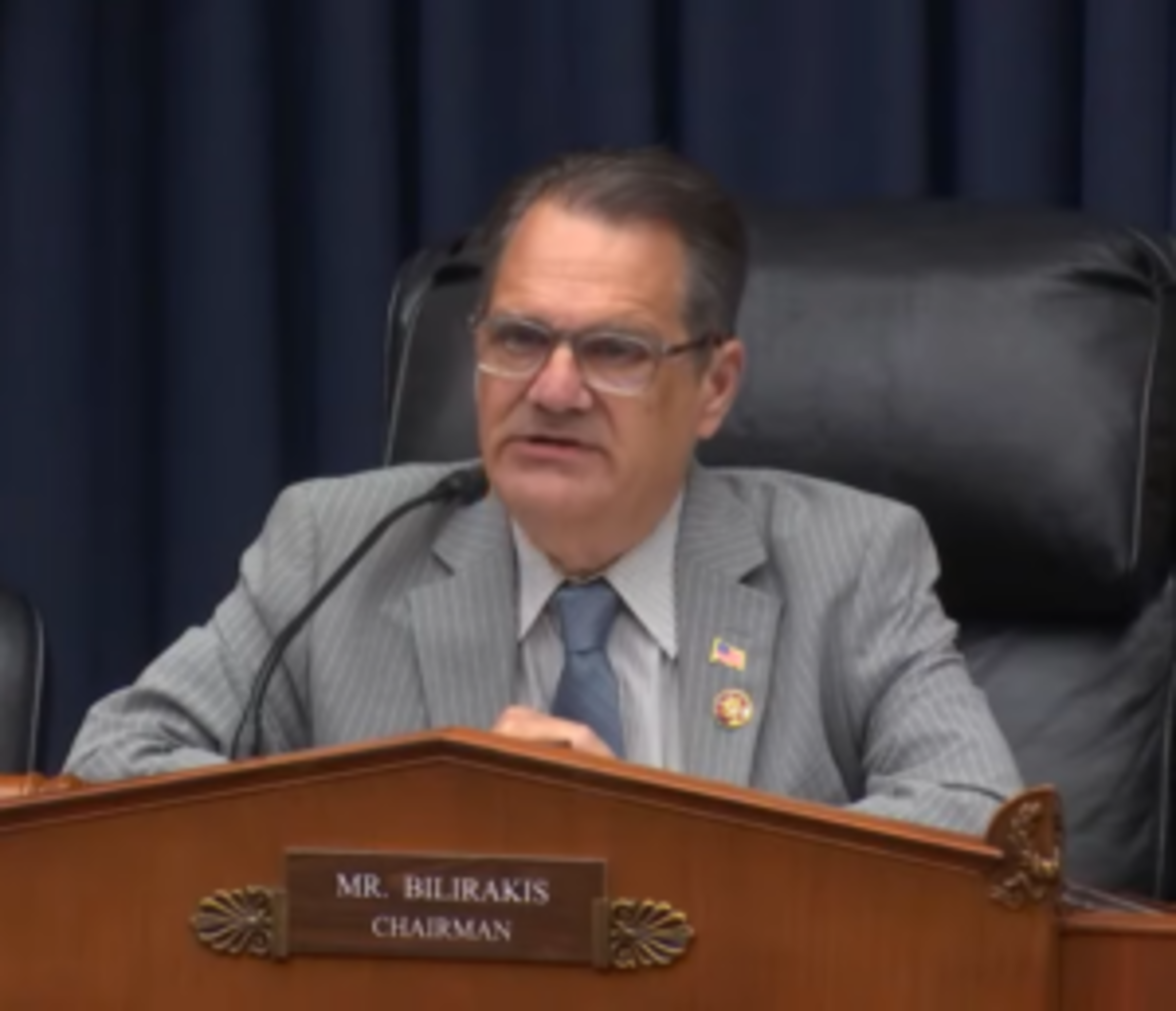
Featured image: Chairman Gus Bilirakis (R-FL-12) speaks during the Feb. 10, 2026, House Subcommittee on Commerce, Manufacturing, and Trade’s markup hearing. (YouTube screenshot)