
American manufacturer partners with Canadian tech institute on EV battery safety education course

With over 153,000 EVs on the Canadian highways, the demand for skilled EV technicians is skyrocketing, according to the nonprofit organization, Clean Energy Canada.
To support this growing fleet, the British Columbia Institute of Technology (BCIT) is offering training to drive the future of sustainable transportation using a Connecticut manufacturer’s lithium battery safety solutions in all of its automotive courses.
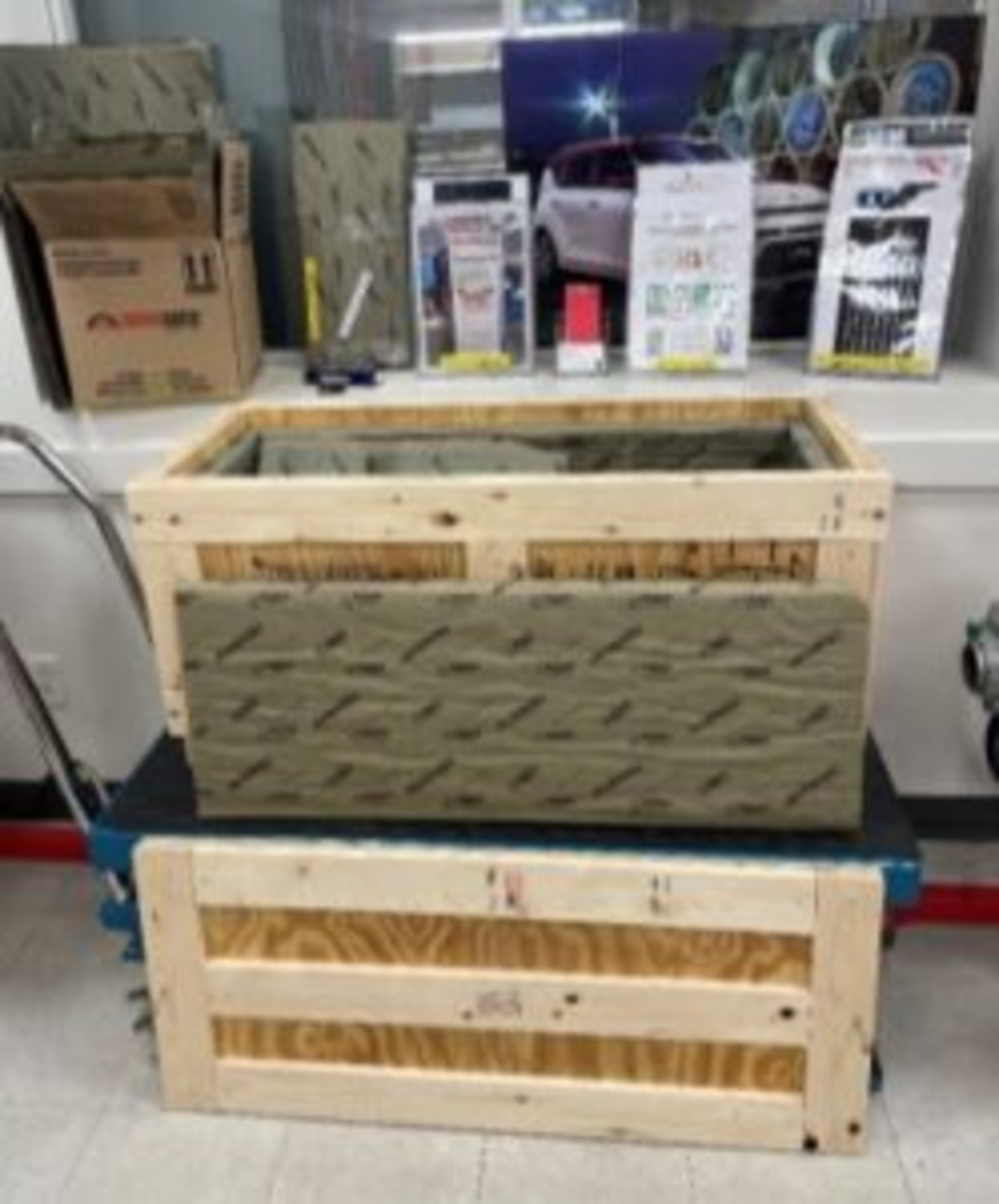
BCIT has adopted Packaging And Crating Technologies’ (PACT) patented Thermo Shield line of fire-suppressant paper wrap into its curriculum to ensure protection for the next generation of skilled EV mechanics.
Clean Energy Canada reports that in 2024, nearly 23% of all new vehicle registrations in British Columbia were zero-emission vehicles — the highest rate in North America.
“The BCIT School of Transportation stands as a prominent leader in training learners and business partners across North America for the demands of the dynamic automotive sector,” said Jim Berladyn, BCIT automotive technologist instructor, in a press release. “With the rise of electric vehicles on the road comes new methods of service and repair that require advanced safety measures and specialized training.”
Berladyn said he first encountered PACT’s innovative Thermo Shield products at the 2023 National Battery Show in Novi, Michigan.
PACT Thermo Shield was invented in 2019 as a thermal management system for shipping and storing items containing lithium batteries. It consists of thin, lightweight paper material coated with proprietary ink.
When a lithium battery goes into thermal runaway and burns, the special ink releases a moisture barrier that creates a vapor cloud to immediately cool the internal contents of the package, which stops a fire entirely, while limiting oxygen around the package to prevent the battery temperature from escalating to 1,500° Fahrenheit, when lethal gases form, the release states.
The material has been tested by several independent American and Canadian third-party organizations and is a preferred product of the U.S. Department of Defense.
PACT also developed the TR Sleeve, which mitigates thermal runaway propagation between lithium battery cells within EVs, battery packs, and renewable energy storage systems.
“TR Sleeve stands at the forefront of safety, sustainability, and efficiency in battery technology,” said Rodger Mort, PACT’s chief operating officer, in the release. “Its unique features not only address critical safety concerns but also contribute to a greener and more cost-effective future for EVs, E-buses, E-bikes, E-scooters, and other modern mobility equipment that use lithium batteries.”
Berladyn said the TR Sleeve will be used as a valuable teaching device in BCIT’s Electric Vehicle Technology and Service course, which prepares automotive service technicians to safely diagnose, service, and repair high-voltage electric vehicle systems and develop the knowledge and skills required to work on the majority of EV brands.
CCC Intelligent Solutions and the Collision Repair Education Foundation (CREF) recently published a workforce study based on a survey of students and young professionals that shows they hold a positive perception of the collision repair industry.
The “Future of Collision Repair Workforce Study” also highlights the 475 respondents’ eagerness to pursue a career that combines hands-on work with advanced technology in a field they view as stable and rewarding. The survey includes high school, college, and technical/vocational students, as well as recent graduates considering careers in collision repair.
Images
Featured image: The British Columbia Institute of Technology is incorporating Packaging And Crating Technologies’ (PACT) patented Thermo Shield line of fire-suppressant paper wrap into its EV technician training curriculum. (Provided by Clean Energy Canada)