
Congress subcommittee shows wide favor of SELF DRIVE Act, some safety criticisms cited

The House Subcommittee on Commerce, Manufacturing, and Trade spent most of a nearly three-hour markup hearing on a list of transportation and safety-related bills Tuesday, debating the Safely Ensuring Lives Future Deployment and Research In Vehicle Evolution (SELF DRIVE) Act and the Right to Equitable and Professional Auto Industry Repair (REPAIR) Act.
Both bills were passed to the full Committee on Commerce and Energy.
The SELF DRIVE Act was passed with a 12-11 vote. The bill’s purpose, which is sponsored by Rep. Robert Latta (R-OH-5), is stated to “ensure continued United States leadership in the global automotive and autonomous driving sector, improve road safety, mobility, and accessibility, and create American jobs by creating rules and regulations that relate to the design, construction, and performance of ADS-equipped vehicles and by encouraging the testing and of such vehicles.”
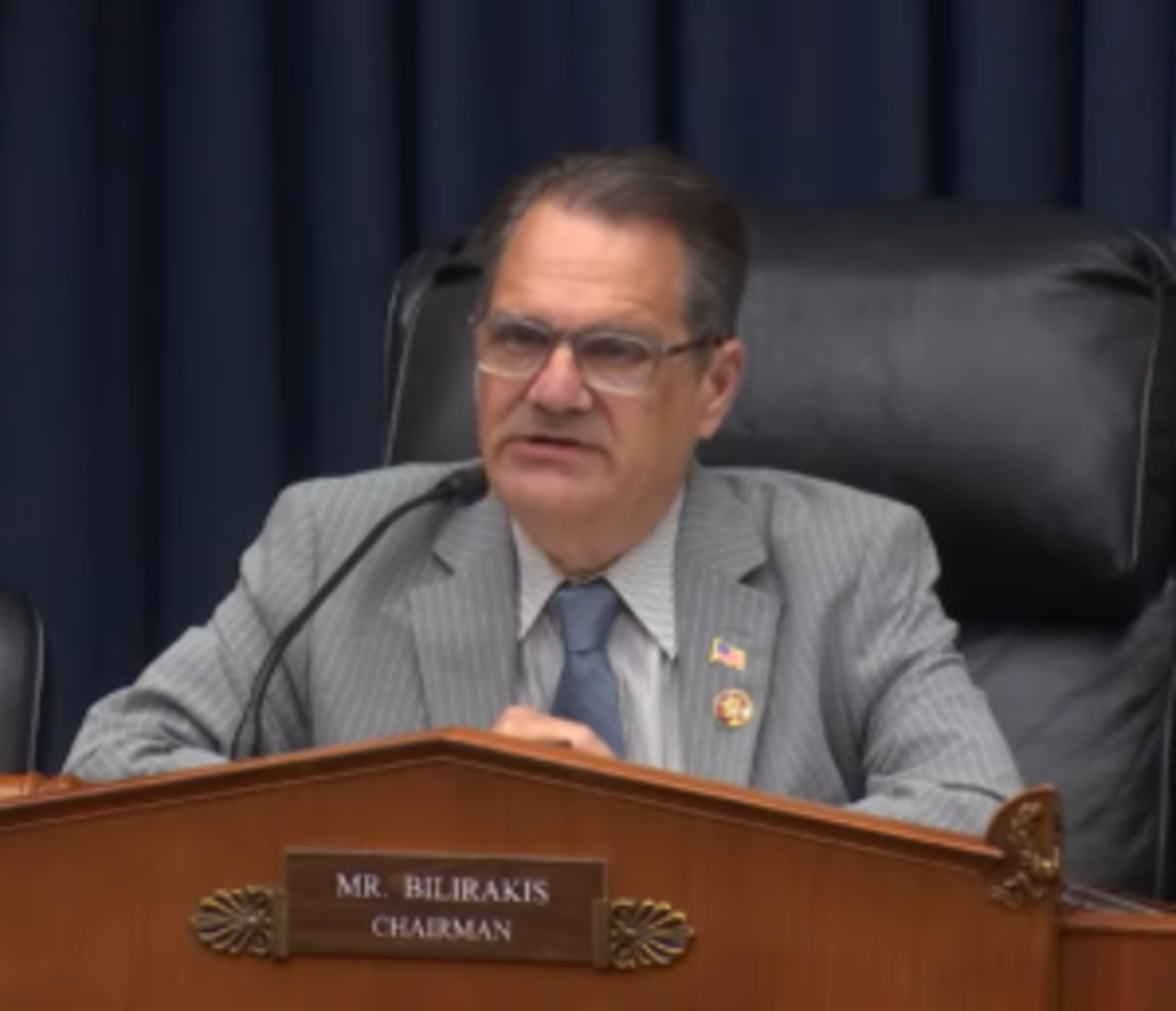
Chairman Gus Bilirakis (R-FL-12) said the bill is vital and would establish a federal framework for the safe deployment of autonomous vehicles.
“Autonomous vehicles hold enormous potential, not just as a technological advancement, but as a tool to save lives by reducing human error, which is responsible for most crashes,” he said. “AVs can prevent accidents before they happen. They also offer new mobility and independence for seniors and people with disabilities. Finally, accessibility must remain central to our approach to mobility.
“Through a safety case, rulemaking, and the AV Data Repository, this bill directs NHTSA to advance AV deployment in the safest way possible.”
Committee member Rep. Debbie Dingell (D-MI-06) urged passage of the bill for the safety of passengers on U.S. roads and to compete with China in the AV sector.
“In 2017, this committee passed a bipartisan bill that cleared the House,” she said. “A decade later, despite technological advances in real-world deployments, Congress has yet to pass a federal framework. Autonomous vehicles are no longer just a concept. They’re on our streets, in cities and communities, and congressional districts across the country. Yet in 2026, we’re still relying on a patchwork of state laws and outdated guidance that does not reflect the realities of today’s technologies.
“Meanwhile, our competitors are moving fast. China has a coordinated national strategy for AVs. It’s deploying robo taxis, automotive freight, and large-scale testing zones. Chinese automakers are expanding into Canada and Mexico and looking for partners here, and it’s only a matter of time before they really get into the U.S. market. China is positioning itself to dominate the global market and undercut American manufacturers, supply chains, and workers, and wants to put us out of business.”
Craig Goldman (R-TX-10), along with several other legislators, spoke in support of the bill.
“The SELF Drive Act takes a clear approach to regulating autonomous vehicles by pairing innovation with clear, enforceable safety expectations,” he said. “At the core of the bill is the requirement that manufacturers develop and document a safety case for their autonomous vehicles, backed by engineering data and evidence demonstrating their ability to operate safely. That includes complying with traffic laws, protecting vulnerable road users, responding to emergency vehicles, maintaining cybersecurity, and operating only within approved parameters.
“These requirements are enforced by the National Highway Traffic Safety Administration and subject to its civil penalty authority. The bill
also modernizes vehicle design rules by allowing the removal of unnecessary manual controls, while still requiring a stop mechanism for occupants. It strengthens transparency by establishing an autonomous vehicle safety data repository, so the National Highway Traffic Safety Administration receives timely crash and incident data. Importantly, the legislation allows limited commercial deployment under strict federal oversight while preserving state and local authority over traffic laws, insurance, and consumer protection.”
He also shared similar concerns to Dingell’s regarding competition with China.
“China is surging, flooding the global markets with advanced AV technology, while the U.S. falls behind due to fragmented federal guidance,” he said. “The SELF DRIVE Act is a vital national security and an important imperative. It saves countless lives and enhances mobility for all Americans and fuels job creation.”
Some Congress members criticized the partisan nature of the bill in its current form compared to the discussion draft.
Lori Trahan (D-MA-03) said bipartisan collaboration show the subcommittee as being credible and that it could tackle complex issues together, even if that draft needed further work.
“Autonomous vehicles are not a partisan issue,” she said. “They’re already on some of our roads, and early data from companies leading on safety, like Waymo, suggests that these systems can reduce serious crashes compared to human drivers. That’s why Congress needs to act, but how we act will determine what we pass.”
She added that part of working together across the aisle means transparency of the regulatory model so that it’s known how safety cases will be produced, updated, and evaluated, and whether a safety case is the best model.
“It means certainty on liability,” Trahan said. “Knowing accidents with AVs can and will happen, and clarity on preemption so that states can fill the regulatory gaps in ways that make sense.”
Kevin Mullin (D-CA-15) brought forth two amendments to the bill, citing safety and accountability concerns. He withdrew the amendments upon agreement that the issues would later be discussed.
“For more than two years, I have been calling on NHTSA to require more data from AV operators,” he said. “Unfortunately, this bill includes no meaningful data reporting requirements beyond what NHTSA is already collecting about collisions, which I believe is insufficient. First, reporting on collisions alone tells us almost nothing about how safe different types of AVs are.
“While this bill does mention the need to collect vehicle miles traveled, this is meaningless without specifying that they must be miles traveled on public roads. Companies should not be able to report miles driven on test tracks or in the middle of a wide-open desert. We also need an additional level of detail about where and how the miles were driven to understand the safety record of vehicles compared both to human drivers and peer companies.”
He added that AVs also cause traffic jams and block transits as well as first responders, due to unplanned stops.
“We have been experiencing hundreds of incidents like this in and around my district in San Francisco and the peninsula for years now, and they are happening wherever they are being tested, yet they aren’t comprehensively reported anywhere,” he said.
“The industry has touted that AVs have driven more than 145 million miles in the U.S. so far. For comparison, Californians alone drive 340 billion miles every year. That is why we need the data.”
He said his amendment would add the provisions of his safety data act to address the gaps in data reporting he identified. Mullin said he is also concerned about a lack of guidance for police, fire, emergency medical personnel, and tow trucks when an AV is involved in an emergency.
“For example, a little over a month ago, there was a power outage in San Francisco that led to more than 1,500 unplanned stoppages across the city, according to the AV company itself,” he said. “Emergency responders had to deploy dozens of vehicles with little information about what to do and no clear plan. While this was an extreme case, public officials have been dealing with these issues for years in and around my district. There have also been various documented cases of AVs driving through construction zones or areas cordoned off by police during an active shooter situation.”
Other bills discussed were:
-
- H.R. 6688, ADAS Functionality and Integrity Act, was forwarded to the full committee by a voice vote.
- H.R. 7389, Motor Vehicle Modernization Act of 2026, was forwarded, as amended, to the full committee by a voice vote.
- H.R. 5221, PART Act, was forwarded to the full committee by a voice vote.
- H.R. 2110, Safe Vehicle Access for Survivors Act, was forwarded to the full committee by a voice vote.
- H.R. 3360, Driver Technology and Pedestrian Safety Act, was forwarded, as amended, to the full committee by a voice vote.
- H.R. 3385, To direct the Secretary of Transportation to issue certain regulations to update the definition of motorcycle, and for other purposes, was forwarded to the full committee by a voice vote.
- H.R. 7372, Safety Is Not for Sale Act, was forwarded to the full committee by a voice vote.
- H.R. 7377, Know Before You Drive Act, was forwarded to the Full Committee by a voice vote.
- H.R. 6947, Securing Accessible Functional Emergency (SAFE) Exit Act of 2026, was forwarded to the Full Committee by a voice vote.
- H.R. 7353, Magnus White and Safe Streets for Everyone Act of 2026, was forwarded to the Full Committee by a voice vote.
H.R. 6688 would require the National Highway Traffic Safety Administration (NHTSA) to establish guidelines for advanced driver assistance system calibration, modification, and tolerance.
It would also not allow the manufacture for sale, sell, offer for sale, introduce or deliver for introduction into interstate commerce, or import into the U.S. of any automated driving system or ADS-equipped vehicle unless the manufacturer has developed a safety case for the equipped vehicle.
Safety case requirements under the bill are to provide claims backed by arguments and evidence that support the conclusion of the manufacturer that the design, construction, and performance of the automated driving system won’t present an unreasonable risk of accidents, death, or injury.
Images
Featured image: Chairman Gus Bilirakis (R-FL-12) speaks during the Feb. 10, 2026, House Subcommittee on Commerce, Manufacturing, and Trade’s markup hearing. (YouTube screenshot)