
Hyundai and Kia developing ‘groundbreaking’ real-time obstacle avoidance tech

Hyundai Motor Co. and Kia Corp. are developing “Vision Pulse,” a new driver safety technology the companies dub “groundbreaking” in its ability to pinpoint vehicle obstacles.
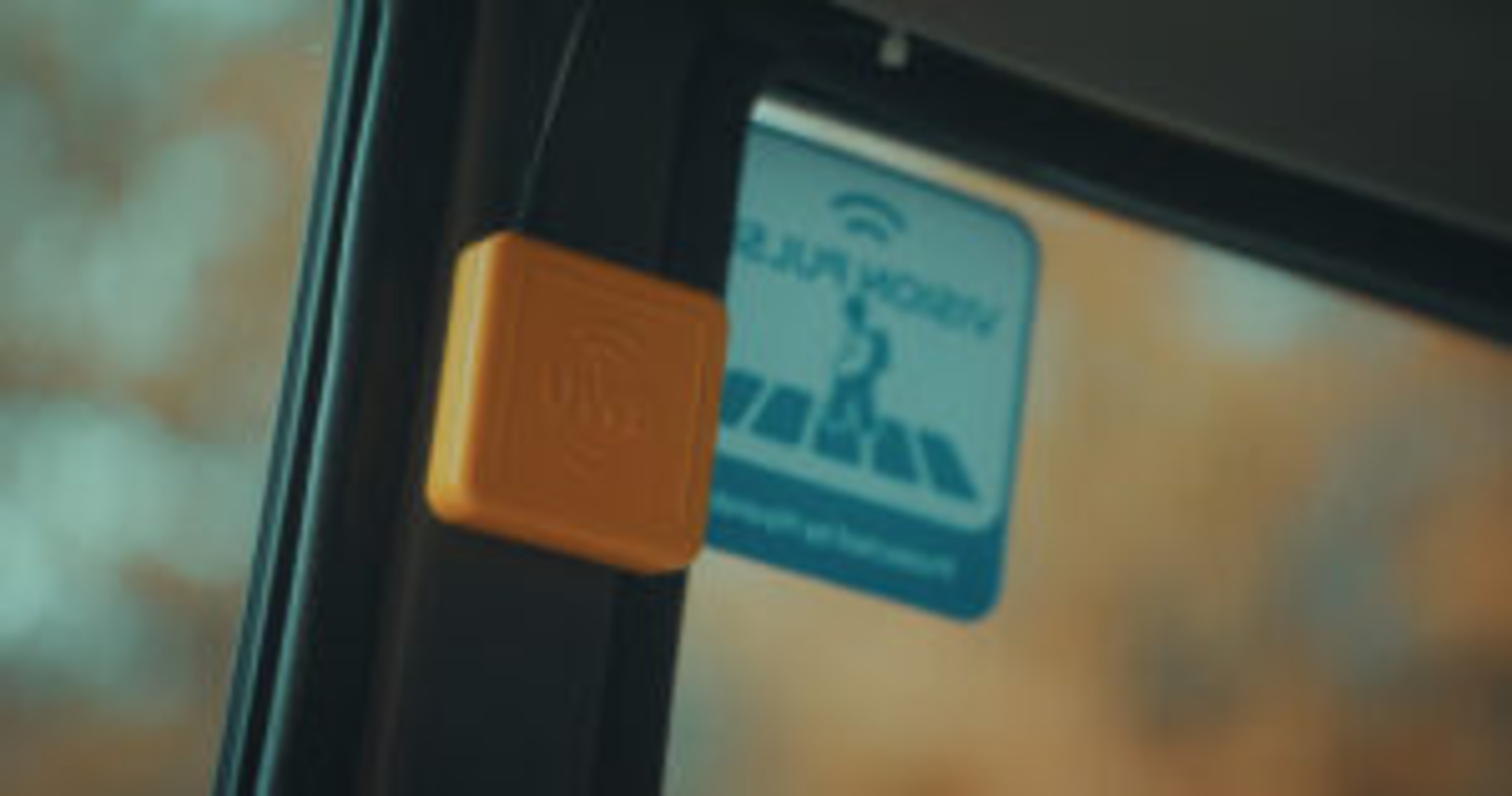
Using ultra-wideband (UWB) modules equipped on vehicles to emit signals, the technology accurately discovers the positions of obstacles around a vehicle in real time, according to a Hyundai press release.
If nearby vehicles, bicycles, or pedestrians also have UWB modules — such as certain smartphones, wearables, and trackers — the system measures the time it takes for signals to travel between the modules to calculate their exact positions. When a potential collision is detected, the system issues alerts, reducing the likelihood of an accident and greatly enhancing safety, the release states.
The technology can be integrated into vehicles through additional UWB modules. Vehicles equipped with the Hyundai and Kia “Digital Key 2” already have the modules.
“Current blind spot detection technologies rely on fixed devices or relatively slow communication networks, hindering their accuracy and processing speed,” the release states. “‘Vision Pulse’ eliminates these limitations by leveraging UWB modules for precise and rapid communication via UWB radio waves, ensuring high accuracy, while also offering cost efficiency by utilizing UWB modules that are already integrated into many vehicles. Furthermore, it reduces reliance on expensive sensors such as lidar and radar.”
It adds that UWB operates via a gigahertz bandwidth to reduce interference from other signals and provide exceptional diffraction and penetration capabilities.
Vision Pulse can detect objects in complex urban intersections with a 10-centimeter margin of error across a 100-meter radius, the release states. It says the technology maintains over 99% detection accuracy under adverse weather or nighttime conditions and offers communication speeds of 1–5 milliseconds.
Hyundai and Kia are enhancing the practicality of the technology by developing and applying algorithms to accurately predict the positions of multiple objects, even when they are moving at high speeds around the vehicle, the release states.
Hyundai and Kia expect Vision Pulse to extend its utility beyond driving assistance.
For example:
-
- “Industrial mobility: Prevent collisions in work environments, such as warehouses, by adapting mobility in industrial conditions, thereby reducing industrial accidents.
- “Disaster response: Locates individuals buried under debris during emergencies.
- “School buses: Ensuring the safety of kindergarten children [with] protective keyrings featuring a guardian angel design, which can be easily attached to backpacks.
Vision Pulse technology is currently being tested in live industrial settings, including the Kia PBV Conversion Center in South Korea and the Busan Port Authority.
The OEMs noted that Vision Pulse is an advanced pre-development technology, so its potential application on mass-production vehicles remains under consideration.
Images
Featured image provided by Hyundai