
Ford building in-house smaller and smarter ‘vehicle brain’

Ford is developing an in-house-built computer that will serve as the “brain” of its future software-defined vehicles, according to a recent blog post by the company.
Ford says 35 million modules have been produced to deliver exceptional hardware performance that consistently outperforms engineering standards.
“That is a testament to exceptional quality at a scale of 10 million modules per year and growing,” the blog post states. “By bringing this development in-house and expanding the team, we are simultaneously increasing our internal capabilities while decreasing the total number of physical modules in the vehicle. This approach delivers significant cost savings of 10-15% per module. These savings are critical because they allow us to reinvest in the talent driving this transformation.”

At this year’s Consumer Electronics Show (CES), Ford unveiled its new high-performance compute center, noting it isn’t just another computer.
“It is a pivotal in-house module specifically designed for our future, unifying infotainment (IVI), ADAS (Advanced Driver Assistance Systems), audio, and networking into a single, compact powerhouse,” the post states.
Ford says its upcoming Universal Electric Vehicle (UEV) architecture incorporates a five-fold increase for the in-house module design, providing five times more control over critical semiconductors, resulting in higher performance, lower cost, and a smaller footprint within the vehicle.
The new technology supports the foundation for its future software-defined vehicles.
“By combining IVI and ADAS on a single, optimized platform, we dramatically reduce complexity and boost flexibility for future features,” the post states. “This strategic vertical integration ensures we control the entire hardware and software stack.”
In October, General Motors announced it plans to launch a centralized computing platform and next-generation electrical architecture across electric and gas-powered vehicles, starting with the Cadillac ESCALADE IQ in 2028.
The new design represents a fundamental reimagining of how GM vehicles are built and how they can be updated over time, according to a press release.
GM says it’s moving toward a centralized computing design to unlock new levels of performance, scalability, and software efficiency while also simplifying design. Doing so will enable faster software updates and improve reliability, the release states.
Images
Featured image: Developed by the Ford in-house electronics team, the OEM says the High Performance Compute Center is a “pivotal” in-house module specifically designed for our future, unifying infotainment (IVI), ADAS (Advanced Driver Assistance Systems), audio, and networking into a single, compact powerhouse. (Provided by Ford)
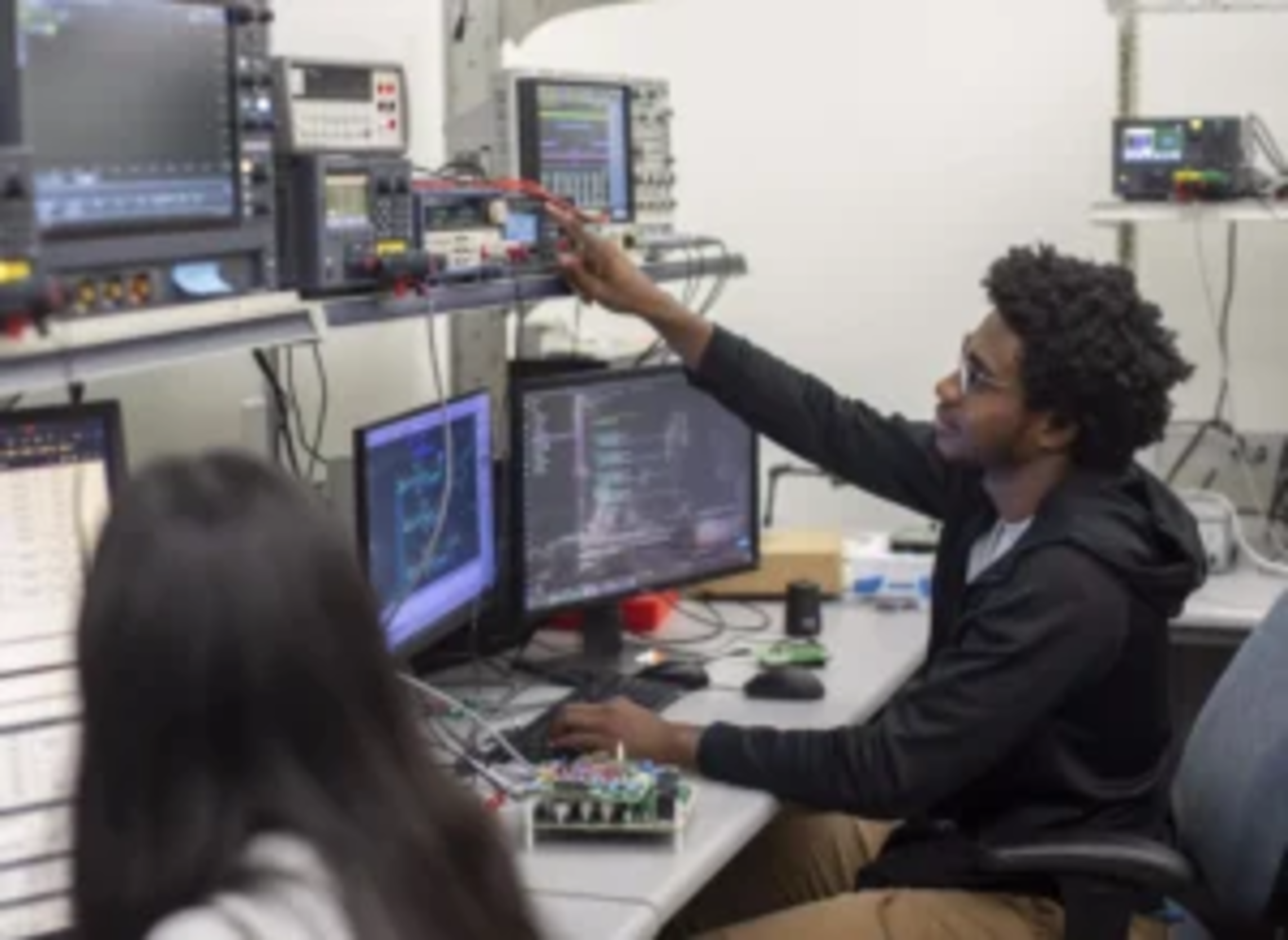
The in-house engineering team has produced 35 million Ford modules, delivering exceptional hardware performance that consistently outperforms engineering standards. (Provided by Ford)