
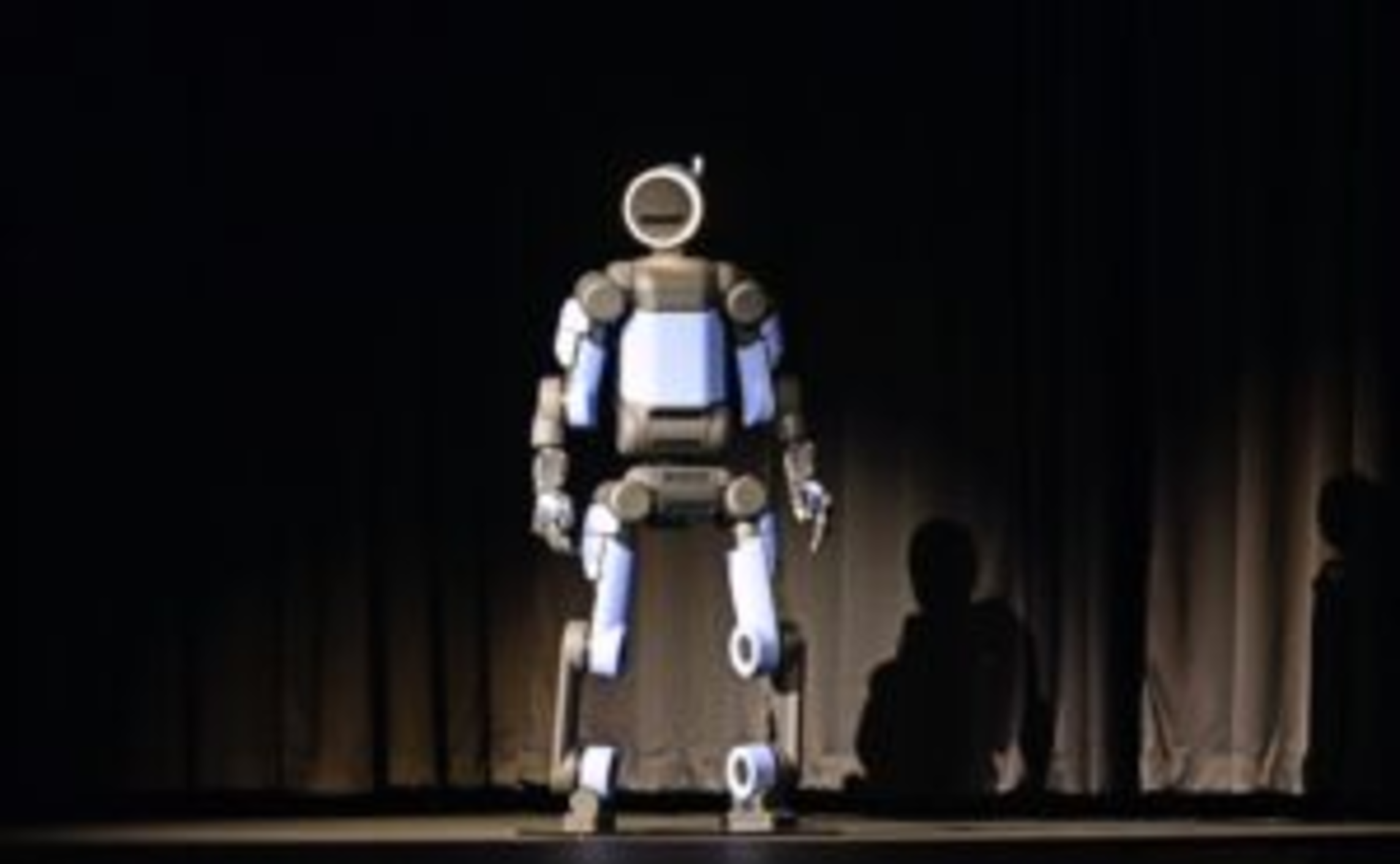
Hyundai showcases humanoid at CES, plans 30,000 units by 2028

A Hyundai-owned business, Boston Dynamics, unveiled its humanoid robot, Atlas, for the first time on Monday, announcing its plans to manufacture 30,000 robot units annually by 2028.
The humanoid will be deployed across the automaker’s global network, starting at its plant in Savannah, Georgia, where it will perform real-world tasks on-site. Atlas will gradually expand through process-by-process validation.
Hyundai plans to introduce Atlas to processes such as parts sequencing at the start of 2028. By 2030, plans for Atlas include component assembly and other tasks that involve repetitive motions, heavy loads, and other complex operations.
“As its performance is validated, the group aims to progressively scale adoption across entire production sites,” a press release says.

Hyundai maintains that this goal exemplifies the group’s vision for “human-centered automation.” This includes people maintaining full control while fostering a collaboration between robots and humans.
“Robots will handle labor-intensive or high-risk tasks, allowing human workers to focus on training the robots and providing oversight,” the release says. “In the long term, AI Robotics will naturally integrate into everyday life, generating new value and enriching human experiences. This approach establishes a foundation for large-scale robot commercialization and creates a future where humans and robots coexist and collaborate seamlessly.”
Atlas is a prototype that serves as a research model, testing core capabilities essential for future products, a release says. The humanoid is equipped with advanced rotational joints and sensors. It can navigate complex industrial environments, perform repetitive tasks, and leverage AI-driven learning.
“The Atlas product ushers in a new phase of industrial robotics,” the release says. “With 56 degrees of freedom (DoF), most with fully rotational joints, and human-scale hands with tactile sensing, Atlas is engineered to handle demanding tasks autonomously. It supports a range of applications, including material sequencing, assembly, and machine tending, while prioritizing safety, reliability, and collaboration in shared workspaces.”
Hyundai says the humanoid can learn most tasks in under a day, operate independently, lift up to 110 pounds, and is water-resistant.
The company is building a Group Value Network for central AI Robotics Strategy, the release says. It will be an End-toEnd (E2E) AI Robotics Value Chain leaning on the automaker’s production infrastructure and the technological capabilities of its affiliates.
Overall, the group plans to invest 125.2 trillion South Korean Won in Korea and $26 billion in the United States over the next four to five years for the development of its physical AI business.
“This approach enables the advancement of AI Robotics capabilities, accelerates mass production, and expands service applications – forming a core strategy for the Group to lead the Physical AI era,” the release says.
The group’s software-defined factory (SDF) approach integrates real-world production data to optimize robots’ learning and performance, the release says. SDF is an advanced smart factory powered by data and software.
“In these smart manufacturing platforms, robots are continuously updated by analyzing vast process datasets and sharing insights with manufacturing facilities,” the release says.
The Robot Metaplant Application Center (RMAC), set to open this year, is where robots will learn human collaboration by mapping movements such as lifts, turns, and recoveries.
“Behavioral datasets combining training data from RMAC and real-world operational data from SDF create a cyclical synergy that enables continuous retraining,” the release adds.
Hyundai is partnering with NVIDIA to achieve these goals by using NVIDIA’s AI infrastructure, simulation libraries, and frameworks, the release says. The OEM also recently signed an MoU with the Ministry of ICT of the Republic of Korea and NVIDIA to enhance national Physical AI capabilities.
The OEM also plans to integrate customer management services to provide ongoing support after humanoid deployment, the release says. This includes over-the-air (OTA) software upgrades as well as hardware maintenance, repair, and overhaul (MRO) services.
Subscription plans could provide customers with immediate ROI, the release says.
“By handling maintenance, software updates, hardware scaling, and remote monitoring, the Group ensures long-term value for its customers while maintaining performance improvements through real-world data integration,” according to the release.
The RaaS model has already been deployed with global partners including DHL, Nestle, and Maersk, the release says.
“This end-to-end RaaS strategy positions the group not only as an AI Robotics manufacturer, but also as a long-term service and operations partner, enabling customers across multiple industries to benefit from sustainable, real-world robotics solutions,” the release says.
A phased rollout strategy for Atlas is planned, the release says.
“Based on the Group’s global network, this is expected to generate demand for tens of thousands of Atlas units,” the release says. “Through Atlas, the Group aims to continuously learn from accumulated real-world data and improve usability, moving beyond automobiles into other manufacturing sectors.”
Boston Dynamics is also deploying two robots, Spot and Stretch, to retail customers. Spot is a quadruped that conducts industrial inspections for enterprise asset management, helping to keep people out of harm’s way through public safety applications. Stretch is a box-moving robot.
BMW Humanoid Project
In November, two humanoid robots completed an 11-month project at BMW Group Plant in Spartanburg, South Carolina, according to Figure AI, maker of the humanoids.
The Figure 02 robots ran 10-hour shifts Monday through Friday with 1,250 hours of runtime, a press release says. It adds that the robots loaded more than 90,000 parts and contributed to the production of over 30,000 BMW X3 vehicles.
While deployed at BMW, the robots performed what the release calls a “classic pick-and-place task” by loading sheet metal. The robot picked sheet metal parts from racks or bins and placed them on a welding fixture. A traditional six-axis industrial robot then welded and fed the parts into the main line.
The robots had three goals to meet: cycle time, placement accuracy, and interventions. To meet the cycle time goal, the robot was required to load the sheet metal parts within 37 seconds and complete the entire task in 84 seconds.
It was expected to have a 99% success rate per shift in loading/placing the sheet metal accurately. Figure AI also tracked the number of times a human must pause or reset the robot, with the goal being zero per shift.
The release does not share data on how well the humanoids performed in meeting those goals.
Figure AI says the project taught it how to improve the robot for its Figure 03 design.
“Six months of daily runtime yielded invaluable insights for our mechanical and reliability teams,” the release says. “Across 1,250-plus operational hours, Figure 02 recorded minimal hardware failures while generating critical data that informed the build procedures, component architecture, and mechanical design of Figure 03.”
IMAGE
Feature and embedded photos of Atlas courtesy of Hyundai.