
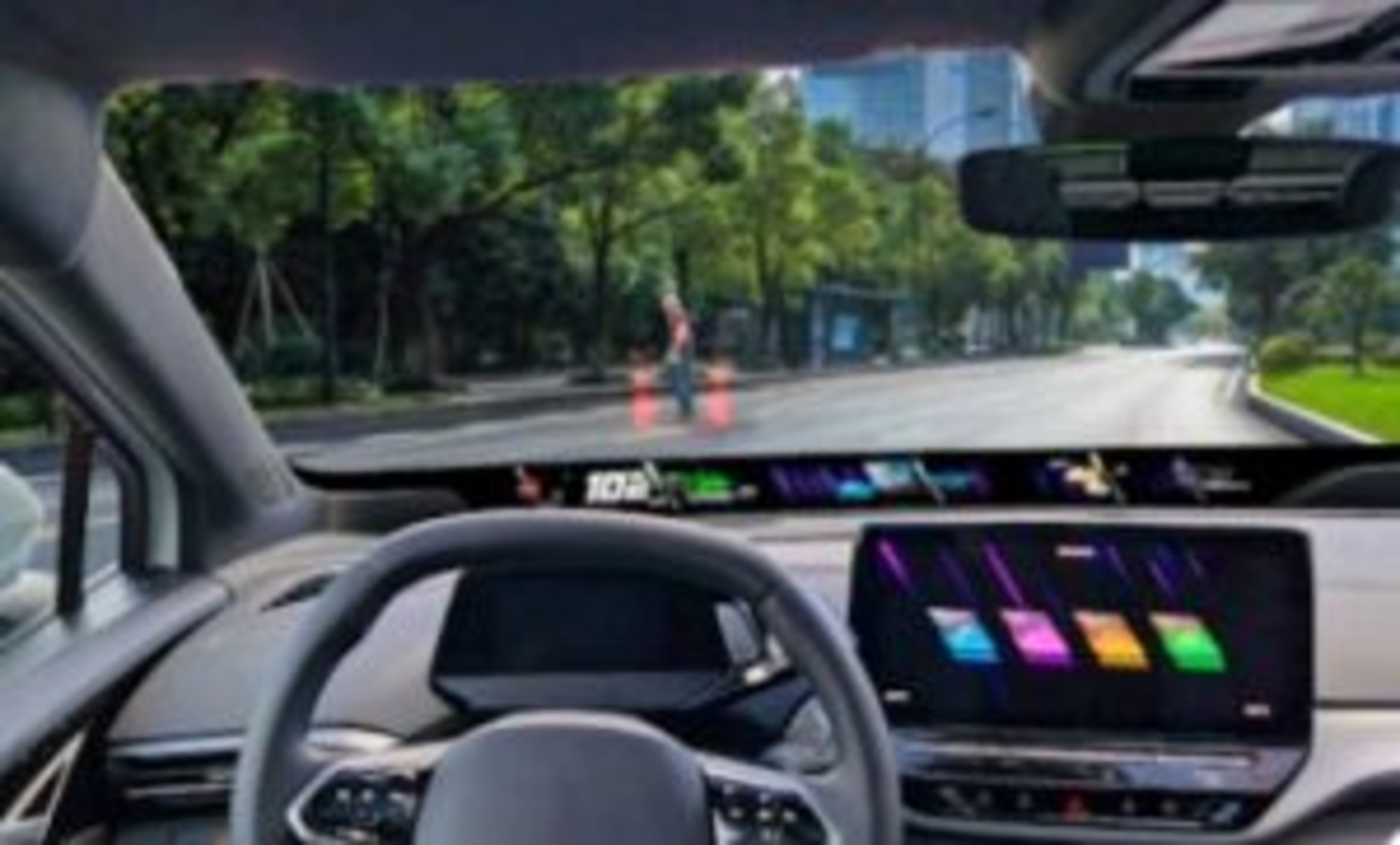
Panovision vehicle display that tracks driver’s gaze showcased at CES

Valeo, a leader in full system design, and Seeing Machines, an advanced computer vision technology company, announced Monday their joint In-Cabin Monitoring Solutions (ICMS) for driver and occupation applications, which will be featured during demonstrations at CES 2026 in Las Vegas.
“By combining Valeo’s leadership in full system design, integration. and application development with Seeing Machines’ advanced perception capabilities, the partnership delivers a best-in-class, fully integrated interior sensing solution aligned with upcoming safety regulations and growing global demand,” a press release says.
Demonstrations at CES 2026 will include a Valeo Panovision head-up display which features an adaptive warning system based on gaze tracking. Through the gaze tracking, the software will determine whether the driver has identified a hazard, the release says. If the driver has not detected a hazard, the system will project a warning on the relevant area on the display to ensure immediate and intuitive awareness, a CES press kit says.
The head-up display also transforms the entire windshield into a pillar-to-pillar information surface, projecting driving data and safety alerts into the driver’s field of view.
A Valeo Safe InSight will demonstrate a multi-layer approach to driver and interior monitoring. Using a network of three interior cameras, users can navigate the vehicle’s interior using intuitive touchscreen gestures to verify if an object has been left behind, a media kit says.
A SmartCluster Helmet Detection for two-wheelers will detect if a helmet is absent before a ride begins, and will be demonstrated during CES.
“What we’re showcasing at CES 2026 proves that advanced monitoring—whether gaze-based alerts, full interior analysis, or even helmet detection — creates immediate value for carmakers and real protection for drivers and riders,” Marc Vrecko, Valeo Brain Division CEO, says in a release.
Paul McGlone, Seeing Machines CEO, said this technology achieves the company’s purpose of getting everyone home safely.
“Combining Seeing Machines’ advanced software and hardware embedding capabilities with Valeo’s superb system design expertise will ensure we are better placed to win more production programs together as regulation in Europe comes into force and OEMs continue to compete on the global stage,” McGlone says in the release.
The demonstration can be viewed at the Valeo booth in the Las Vegas Convention Center (LVCC) Central Plaza, Booth #145.
Future of data in vehicles
During a 2024 OEM Collision Repair Technology Summit panel hosted by SCRS during the SEMA Show, Auto Innovators, Senior Vice President of Policy Hilary Cain shared that automakers are focusing on innovations in crash avoidance and post-crash care vehicle features.
A lot of the data collected by vehicles can help make consumer experiences with crashes more efficient and lead to better outcomes, she said.
Cain indicated how more vehicle data collected means more information about the severity of the crash or other information that may be useful to first responders.
“Using things like sensors sensing velocity and direction of force, whether there have been multiple impacts — that additional information can provide a more robust situational awareness to first responders… How many people are in the vehicle? Are there people in the backseat? [That’s] useful information as first responders are going to the scene of the crash to respond, determining if anyone’s going to need medical care and what kind of medical care they’re going to need.”
Heart rate sensors in seat belts are also an example innovation that Cain says could have obvious benefit for improved post-crash care because first responders can tell faster who to help first. The same is the case with in-cabin cameras in letting first responders know where passengers are in the vehicle post-crash.
During the Q&A portion of the session, Cain was asked how OEMs would protect data from going to the right people in the right situation, such as first responders post-crash, and not to health insurers, for example.
“That’s exactly the right question. I think it’s what everyone is struggling with and trying to figure out,” Cain said. “I do think there are some interesting models that we’re seeing emerge.”
She provided one example being debated in Europe that she said she could see eventually making its way to the U.S.
“Think of a scenario where there’s lots of data coming off of your vehicle and it’s going into a cloud and then you, as the owner of that vehicle, control which third parties under what circumstances get access to your vehicle’s data,” Cain said. “You may be able to say, in the case of a collision, ‘I would really like that type of health-related or biometric information to go to first responders who can help me but I sure as heck don’t want it going to anybody else beyond that.’
Image
Photo courtesy of Valeo